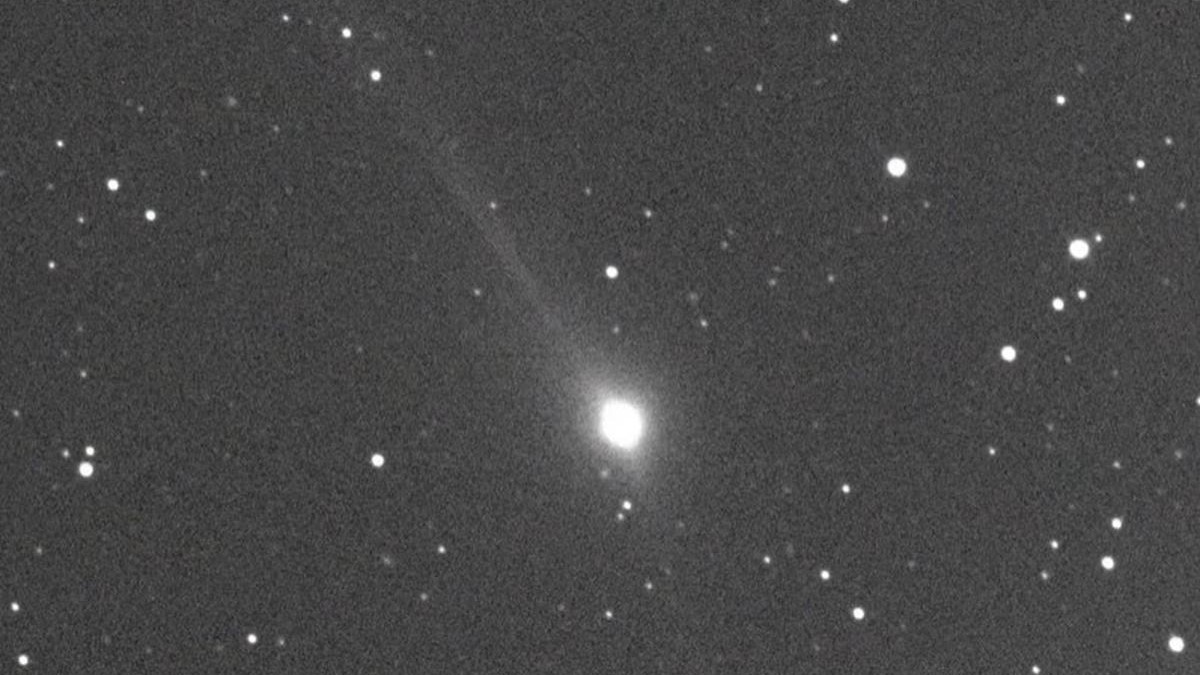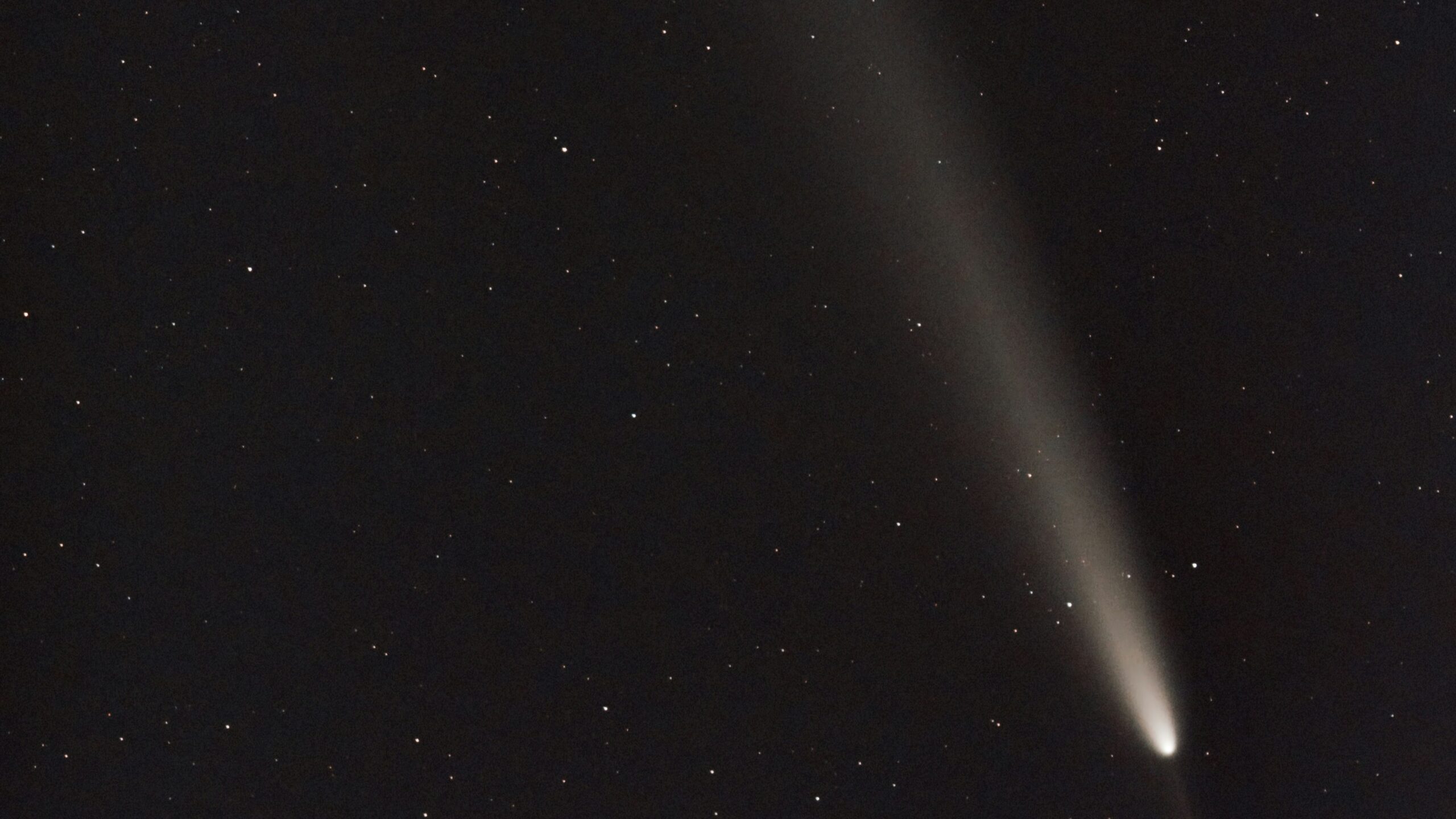
A recent cosmic anomaly named 3I/ATLAS has sparked renewed interest in the search for extraterrestrial life. Discovered in July 2023 by a survey telescope in Chile, this interstellar object is only the third of its kind to pass through our solar system. While most astronomers believe it to be a natural comet composed of ice and dust, the possibility of an artificial origin has not been entirely dismissed.
As 3I/ATLAS approached its closest point to Earth, set for December 19, 2023, the scientific community mobilised to gather more data. The Breakthrough Listen project, a prominent initiative aimed at detecting signs of intelligent life, directed the Green Bank Telescope, the world’s largest fully steerable radio telescope, to monitor the object. Researchers aimed to capture any potential electronic signals that could indicate technological origins.
High-Stakes Search for Signals
The Green Bank Telescope conducted observations just before the object’s closest approach. Scientists were eager to detect any stray signals within the radio spectrum that might suggest communication from an intelligent source. A report detailing the findings from this listening session has been prepared, although it has yet to undergo peer review.
“No artificial radio emission localised to 3I/ATLAS was detected,” noted the Search for Extraterrestrial Intelligence Institute (SETI) on their website.
The results indicated that 3I/ATLAS is silent and likely devoid of life. SETI confirmed that the data collected during the observation window suggests the object behaves as expected for natural astrophysical phenomena. Despite the lack of detected signals, researchers maintain that 3I/ATLAS remains an intriguing target for further study, given the rarity of interstellar objects.
Ongoing Debate Among Scientists
The absence of signals has not quelled discussions regarding the object’s nature. Avi Loeb, a physicist at Harvard University, continues to investigate 3I/ATLAS for irregularities that cannot be easily explained by standard physics. He has identified what he describes as ‘anomalies’ in the object’s size and trajectory, which appears to be finely tuned as it approaches major planets like Mars and Jupiter.
Loeb devised a metric known as the Loeb scale to evaluate the likelihood of interstellar objects being artificial. In his assessment, 3I/ATLAS was rated at a four soon after its discovery, indicating some potential for artificial origin. He has stated that he will not update this rating until more data from its closest approach is publicly analyzed.
The Breakthrough Listen paper acknowledges the lack of evidence supporting the notion that 3I/ATLAS is anything but a natural object. Nevertheless, researchers caution against dismissing the idea entirely, given the limited number of known interstellar objects—only three to date. They argue that further research is essential, especially considering the plausibility of interstellar probes as a possible technosignature.
Skeptics suggest that if 3I/ATLAS were an alien craft, it would likely emit signals, particularly in light of Earth’s substantial radio emissions. The silence recorded thus far supports the theory that this object is primarily composed of carbon dioxide and water ice.
As scientists continue to analyze the data from 3I/ATLAS, the debate surrounding its origins remains alive. The full dataset from the object’s closest approach will require extensive review, a process that may take months before any definitive conclusions can be drawn. Until then, the search for understanding this interstellar visitor continues.