UPDATE: President Donald Trump has just announced a bold initiative for regime change in Venezuela, confirming that the United States will actively oversee a political transition following recent military operations targeting dictator Nicolás Maduro. This critical development comes as the U.S. launches airstrikes aimed at destabilizing Maduro’s regime, marking a significant escalation in U.S. foreign policy.
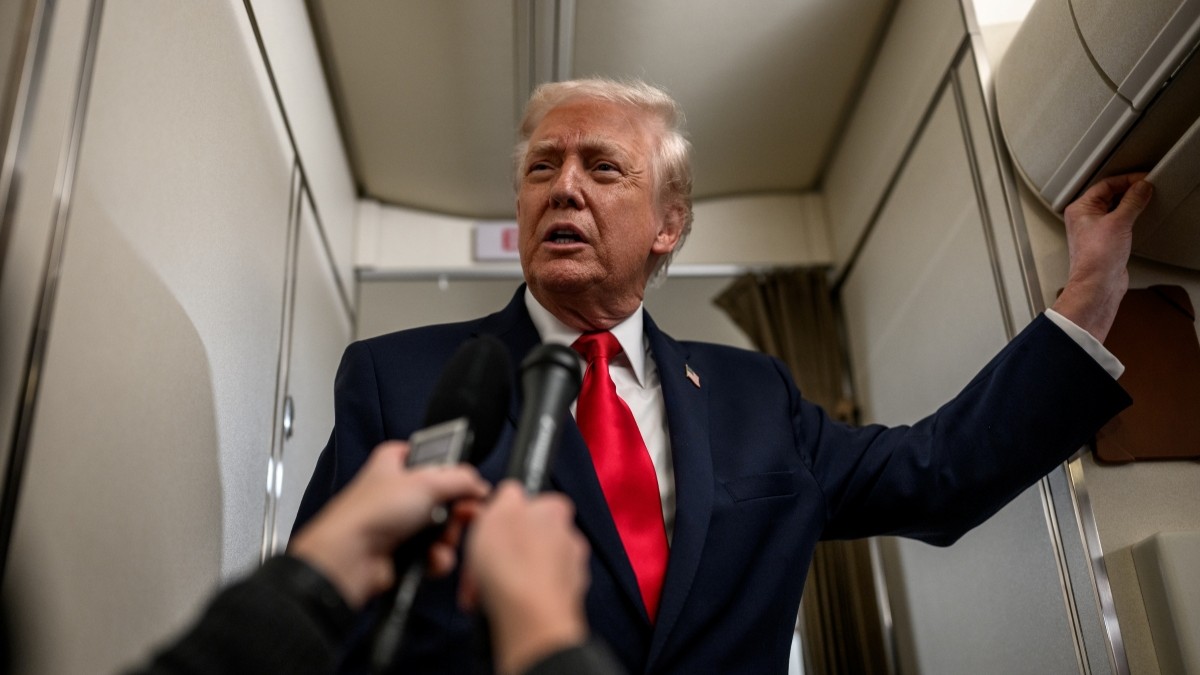
During a press conference earlier today, Trump declared, “We are not afraid of boots on the ground,” indicating a willingness to engage directly in Venezuelan affairs. This announcement raises urgent questions about the implications for both U.S. military involvement and the future of Venezuelan governance.
The operation follows months of speculation about Trump’s foreign policy direction, particularly regarding Venezuela, a country that has become emblematic of authoritarianism in Latin America. Observers had previously doubted Trump’s commitment to regime change, but today’s aggressive stance signals a decisive shift.
Experts are now grappling with why analysts consistently misjudged Trump’s intentions. Many believed he would avoid direct military intervention due to his aversion to prolonged conflicts. However, the President’s recent actions suggest a readiness to engage in what could be termed a “snatch-and-grab operation,” utilizing special forces rather than a full-scale invasion, a tactic that aligns with his administration’s unconventional approach to foreign policy.
Trump’s remarks today reflect a confidence in the U.S. ability to “run” Venezuela, suggesting that plans are already in motion to establish a new government structure following Maduro’s potential ousting. He noted that the Venezuelan vice president is reportedly willing to cooperate, stating, “She doesn’t have a choice.” This assertion adds another layer of complexity to the situation, as it hints at possible internal divisions within the Venezuelan leadership.
As international observers react, the implications of this announcement extend beyond Venezuela’s borders. The U.S. military’s involvement in the Caribbean is escalating, with forces positioned nearby and ready for further action. Analysts are keenly watching how this will affect U.S. relations with other nations in the region, particularly with Russia and China, both of whom have vested interests in Venezuela.
The backdrop of this operation includes a broader narrative about Trump’s foreign policy, which has often been characterized by unpredictability. Trump’s actions seem to defy traditional strategic categories, complicating efforts by analysts to predict his next moves. This unpredictability may be rooted in internal power dynamics within his administration, where hawkish voices—such as Marco Rubio, Secretary of State—have pushed for stronger actions in Latin America, contrasting with a generally cautious approach elsewhere.
As the situation develops, all eyes will remain on how the U.S. military conducts its operations and what this means for the future of Venezuelan governance. The potential for U.S. entanglement in another foreign conflict looms large, raising questions about the sustainability of such an intervention and its consequences for U.S. foreign policy moving forward.
In summary, Trump’s announcement today marks a significant pivot in U.S. foreign policy, one that could redefine the geopolitical landscape in Latin America. Analysts and policymakers alike are now tasked with understanding the full scope of this operation and its long-term implications for both Venezuela and the United States.