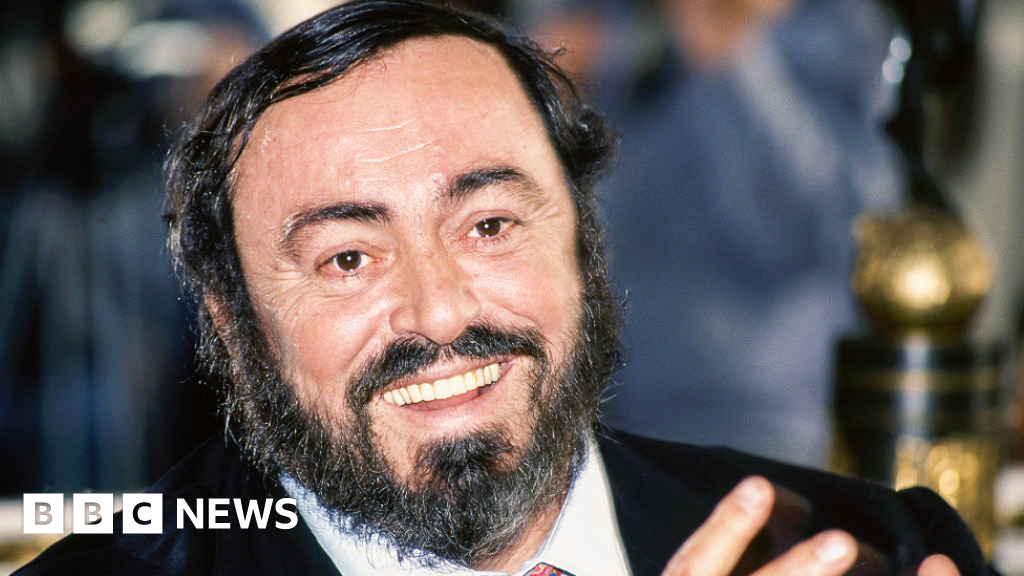
Luciano Pavarotti’s remarkable journey from a 19-year-old choir member to one of the world’s most celebrated tenors is being commemorated with the release of recordings from a concert he held in Llangollen, Wales, in 1995. This release by the Decca record label marks both the 70th anniversary of Pavarotti’s original triumph at the Llangollen International Music Eisteddfod and what would have been his 90th birthday.
In 1955, Pavarotti, then a trainee teacher, arrived with his father and a modest choir from Modena, Italy, to compete in the prestigious festival. Despite their amateur status, the choir won first place, a victory that significantly influenced Pavarotti’s future in music. His widow, Nicoletta Mantovani, emphasized the importance of this event in Pavarotti’s life, stating, “For him, it was really meaningful.”
The competition marked Pavarotti’s first major international exposure. He often recounted the moment of victory, recalling the suspense as they awaited the results. “They didn’t call us as fifth, then not as fourth, and then not as third. Then we started to say, ‘impossible, impossible.’ And then they won,” Mantovani recounted. This landmark experience instilled in him the belief that a career in music was indeed possible.
After that initial success, Pavarotti dedicated himself to vocal training and made his professional debut in 1961 at the Teatro Municipale in Reggio Emilia. His career rapidly ascended, leading him to perform at iconic venues, including the Metropolitan Opera House in New York. By the late 1960s, he had become a household name, particularly after his stirring rendition of “Nessun Dorma” during the Italia ’90 football World Cup.
The 1995 concert at Llangollen held special significance for Pavarotti, who returned to the festival at his own request. His participation required extensive negotiations between his management and the event organizers. During the concert, he performed alongside the Corale Rossini, the same choir that had won his heart decades earlier.
Pavarotti was named president of the eisteddfod for one day during the festival and insisted that his father join him in this role. In front of a captivated audience of 4,500 people, Pavarotti expressed gratitude for the opportunity. He stated, “When they ask me what is a day more memorable in my life, I always say that it is when I won this competition because it was with all my friends.”
The newly released recording, titled The Lost Concert (Live at Llangollen, 1995), also includes two performances from Pavarotti’s original appearance with the Corale Rossini in 1955. Mantovani expressed her appreciation for Decca’s decision to include these early recordings. “If we have to imagine the first time we hear Luciano, it is there,” she said.
Although Pavarotti never learned Welsh, he made an effort to teach Mantovani the correct pronunciation of Llangollen, showcasing his affection for the place that had such a profound impact on his life. Mantovani noted, “He did it right, but we had so much fun together trying to teach me.”
This summer, she renewed the Pavarotti connection with Llangollen by attending the eisteddfod for the first time. During her visit, she presented the Pavarotti Trophy to the winners of the Choir of the World competition and the Pendine Trophy in the International Voice of the Future contest. Reflecting on the experience, Mantovani remarked, “It was really special for me because through the memories of Luciano, I found exactly what he told me about the people, about the places.”
The release of these recordings not only celebrates Pavarotti’s enduring legacy but also highlights the importance of community and cultural exchange that shaped his illustrious career. As the world remembers this iconic tenor, this concert serves as a poignant reminder of the roots that nurtured his extraordinary talent.