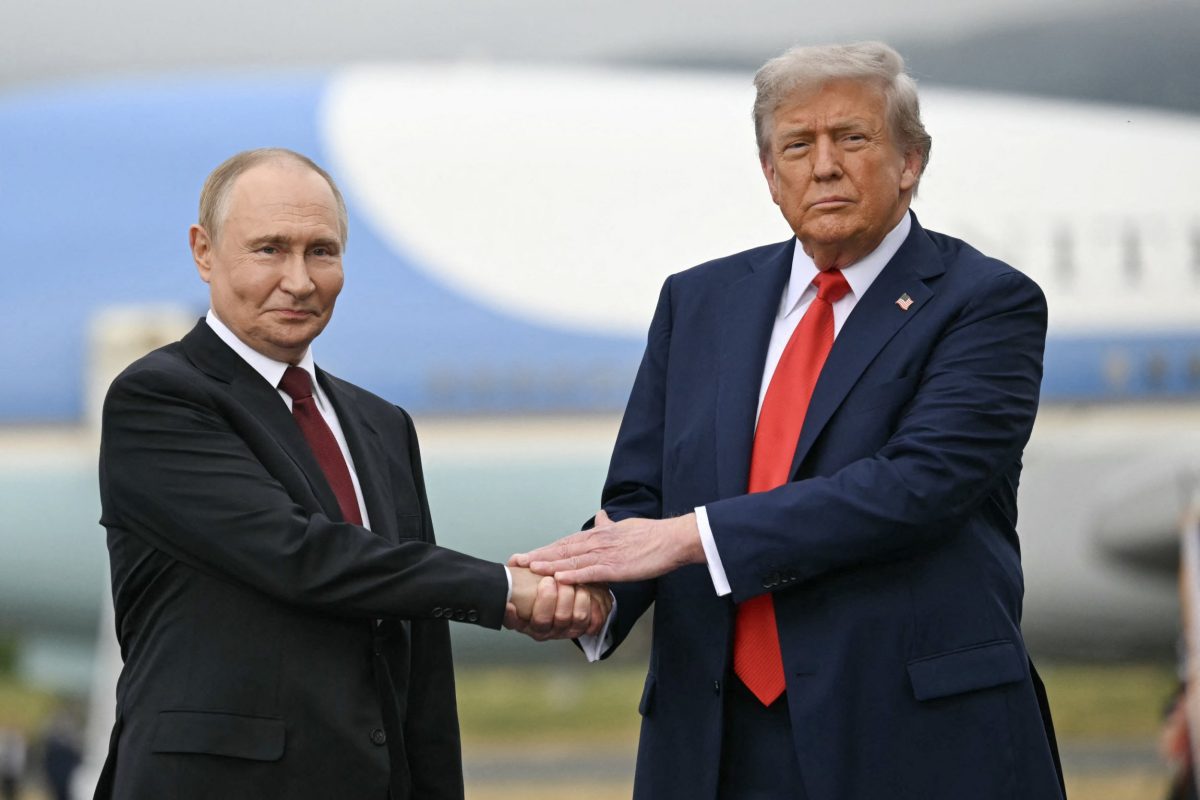
Ukraine’s former Prime Minister Arseniy Yatsenyuk has sharply criticized the ongoing peace negotiations led by Donald Trump, characterizing them as ineffective and likening them to a “KGB operation.” In a recent interview with The i Paper during the Munich Security Conference, Yatsenyuk stated that these efforts have not advanced Ukraine’s position in the conflict with Russia.
Since Trump resumed his role in the White House early last year, his administration has been involved in facilitating discussions aimed at ending the war initiated by Russia. However, Yatsenyuk claims the negotiations have stalled, with Russia insisting that Ukraine relinquish significant territories in the east as a prerequisite for any ceasefire agreement. He described the current state of talks as a “sham,” asserting that they merely serve to amplify Russian demands under the auspices of President Vladimir Putin.
Yatsenyuk expressed his skepticism regarding the effectiveness of the talks, stating, “I do not envisage this as talks… I call it sham talks, sham consultations.” He emphasized that such discussions have not benefitted Ukraine, suggesting that they have instead strengthened Putin’s position by providing him with a platform to present maximalist demands.
The former prime minister articulated that Trump’s belief in the possibility of convincing Putin through dialogue is misguided. “He understands only the language of strength,” Yatsenyuk noted. He argued that the notion of Ukraine ceding territory to Russia for the sake of peace is not only flawed but also counterproductive, insisting that Russia would not accept any concessions leading to a lasting resolution.
Currently, Russia occupies approximately 20 percent of Ukraine, having altered its constitution to assert claims over these territories. Yatsenyuk pointed out that any attempts to negotiate based on territorial concessions would only reinforce Russia’s maximalist stance, stating, “Ukraine and Russia’s positions are irreconcilable completely.”
Yatsenyuk called for the international community, particularly the United States and Europe, to adopt a more aggressive approach towards Russia. He suggested implementing secondary sanctions targeting those purchasing Russian oil, a critical resource for sustaining the military conflict. Additionally, he advocated for actions against Russia’s allies, such as China and North Korea, which have been instrumental in supporting Russia’s war efforts.
U.S. Secretary of State Marco Rubio, also present at the Munich Security Conference, acknowledged the growing concerns about the sincerity of Russia’s commitment to peace negotiations. According to Yatsenyuk, this skepticism reflects a broader realization among U.S. officials that the situation on the ground remains unchanged.
Despite the criticisms, NATO Secretary-General Mark Rutte defended the ongoing negotiations, asserting that the U.S. plays a crucial role in supporting Ukraine, including supplying advanced weaponry like Patriot missiles. He expressed confidence in the diplomatic process, stating, “It always takes time to get these difficult things done.”
As the conflict continues, the international community watches closely to see if any meaningful progress can be achieved in the search for peace in Ukraine.