Peace talks between Ukraine and Russia have stalled, prompting a significant escalation in military action. The Kremlin has launched a wave of drone strikes, deploying nearly 140 kamikaze drones to target Ukrainian positions overnight. This aggressive move comes after discussions involving Ukraine, Russia, and the United States ended without a resolution in Abu Dhabi.
Discussions concluded with Steve Witkoff, the White House envoy, describing the negotiations as “constructive,” despite the lack of a deal. The Kremlin continues to emphasize its claim on the Donbas region, with spokesman Dmitry Peskov reiterating that territorial control remains a core issue for Russia. Peskov stated, “It’s no secret that this is our consistent position… the territorial issue is of fundamental importance to the Russian side.”
Escalating Military Actions
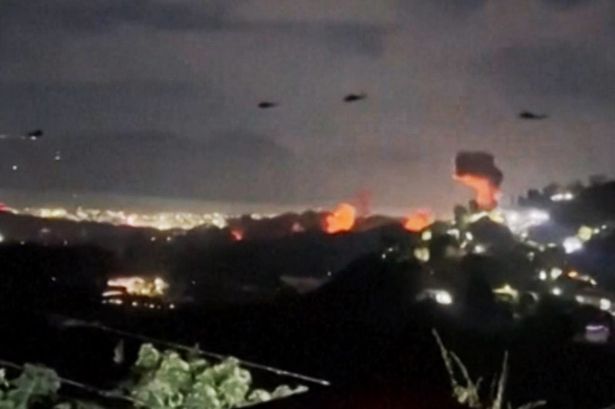
The Russian military’s recent assault focused on overwhelming Ukraine’s air defenses. As many as 138 drones were launched from multiple directions, primarily targeting the north and east of the country. Ukrainian air defense forces reportedly intercepted around 110 drones, but 21 managed to hit 11 locations, causing significant damage and raising concerns about civilian safety.
The drone strikes have primarily targeted the Zaporizhzhia region, where several civilian structures were struck, igniting substantial fires. Fortunately, no casualties have been reported from these attacks. Ukrainian officials have noted that Iranian-designed drones, including the Shahed and Gerbera UAVs, were among the arsenal used against them. A defense source indicated that the Kremlin is increasingly deploying decoy drones to deplete Ukraine’s air defense resources, aiming to weaken Kyiv’s capability to fend off future assaults.
Impact on Peace Negotiations
Despite the breakdown in talks, Ukrainian President Volodymyr Zelensky expressed cautious optimism regarding future negotiations. He highlighted the importance of security guarantees from the United States in the event of a peace settlement. During a recent visit to Lithuania, Zelensky underscored the shared risks faced by Eastern European countries due to Russian aggression, asserting, “We have a common enemy.”
The upcoming talks are scheduled to resume on February 1, 2025. However, with the Kremlin’s firm stance on the Donbas region, the path to a lasting agreement appears fraught with challenges. As fighting along the front lines continues, with at least 66 battles reported yesterday, both sides exchanged missile and drone strikes in a conflict that shows little sign of abating.
The ongoing drone and missile attacks have severely impacted Ukraine’s heating and electricity infrastructure, leading to significant hardships for millions as they face unprecedented energy blackouts this winter. As the situation develops, the international community watches closely, hoping for a resolution to the ongoing conflict that has persisted for more than four years.