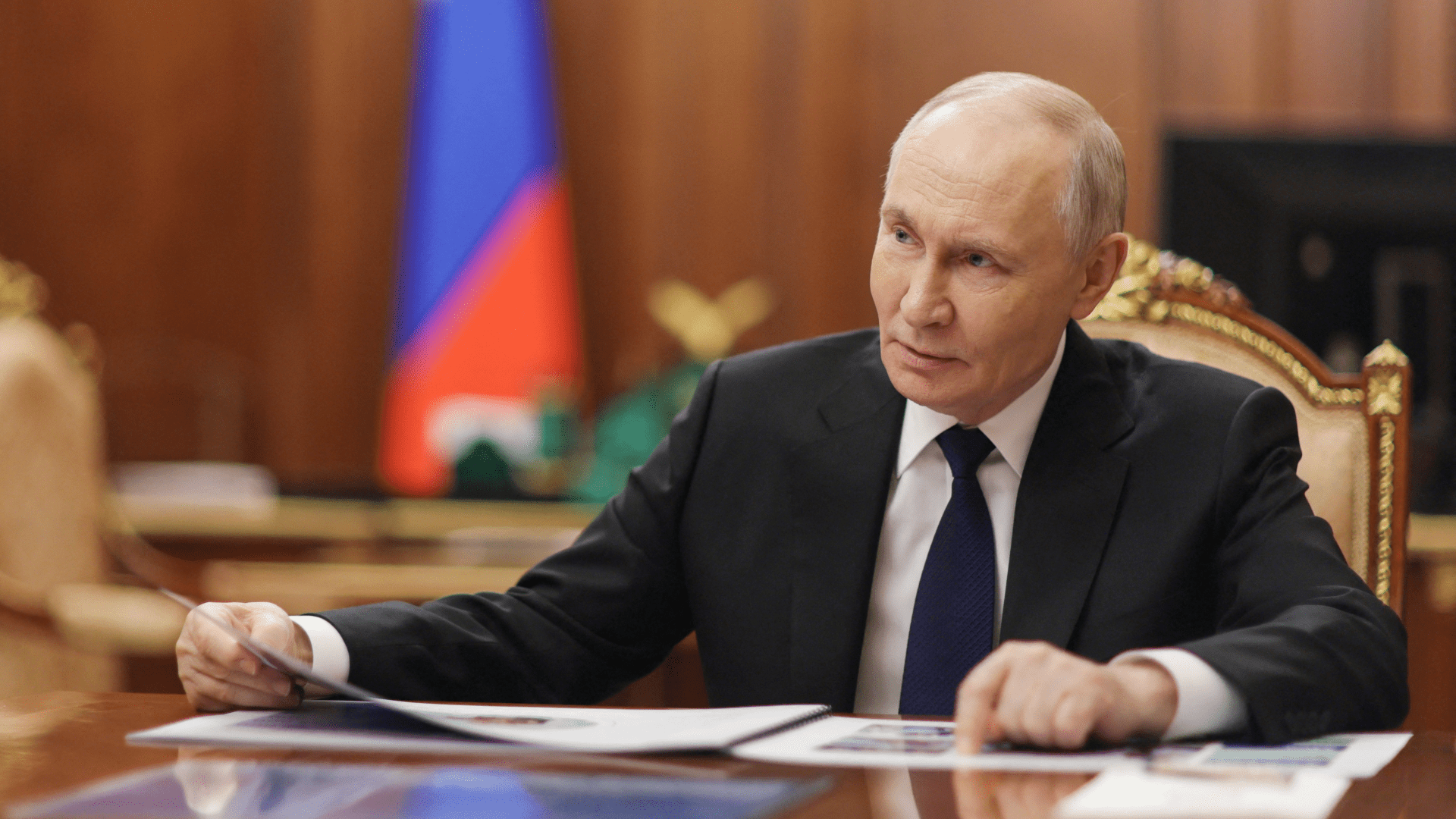
Russian authorities have announced sweeping restrictions for New Year’s Eve celebrations, significantly altering traditional festivities. President Vladimir Putin has implemented a nationwide alcohol ban, cancelled fireworks in major cities, and warned of potential disruptions to mobile internet services. These measures are attributed to ongoing security concerns amid the conflict with Ukraine.
In a move that affects at least 64 of the country’s 89 regions, public fireworks displays have been cancelled in prominent locations, including St. Petersburg and Moscow. Only the remote region of Chukotka, located near Alaska, is set to proceed with its usual celebratory fireworks. State media outlet TASS reported that the cancellations are expected to continue leading up to December 31, 2025, which is traditionally one of the most important holidays in Russia.
The Kremlin’s decision to restrict public festivities has been framed as a necessary precaution due to the ongoing military conflict. Authorities suggest that fireworks could create confusion, resembling the explosions of warfare, and may even pose risks of drone strikes. This rationale has prompted a broader crackdown on celebrations, with many Russians expressing concerns that the measures are less about safety and more about public control.
In addition to limiting fireworks, officials have imposed strict regulations on alcohol sales. Some regions, such as Kyzyl, have enacted a complete ban on alcohol from December 31, 2025, to January 11, 2026, affecting many social gatherings. Only select bars and restaurants will be exempt from this prohibition. Furthermore, Omsk has gone a step further by banning energy drinks at public events, while in Irkutsk, attendees are prohibited from bringing their own alcohol to public celebrations.
Residents of St. Petersburg and Moscow have been warned that mobile internet services may be disrupted, particularly in busy areas where celebrations are planned. This measure is part of a broader effort to reduce potential vulnerabilities during the holiday period. Authorities have indicated that mobile connectivity could be limited, a precautionary step that reflects heightened security measures.
These restrictions come in the wake of reports suggesting that mobile internet shutdowns have increased throughout 2025, with the government citing security threats as the primary reason. Analysts believe this trend is part of a broader strategy by the Kremlin, which may culminate in a complete separation of Russia from the global internet in 2026.
The absence of fireworks in iconic locations like Red Square marks the fourth consecutive year without such celebrations. This year, Red Square will be closed to the public and heavily policed. The shift in New Year’s traditions has raised questions among citizens, many of whom feel that the government is using the guise of security to suppress public enjoyment and enforce tighter control.
As traditional customs are curtailed, the Russian populace is reminded that the New Year celebration typically involves gathering with family, exchanging gifts, and welcoming Grandfather Frost, Russia’s equivalent of Santa Claus. Despite the official narrative surrounding safety, many are wary of the implications these bans hold for personal freedoms and the public’s ability to celebrate.
In conclusion, as the New Year approaches, the atmosphere across Russia is markedly subdued, with a sense of unease replacing the usual festive spirit. The government’s stringent measures reflect not only current geopolitical tensions but also a broader strategy to maintain control over public life during a time usually defined by joy and celebration.