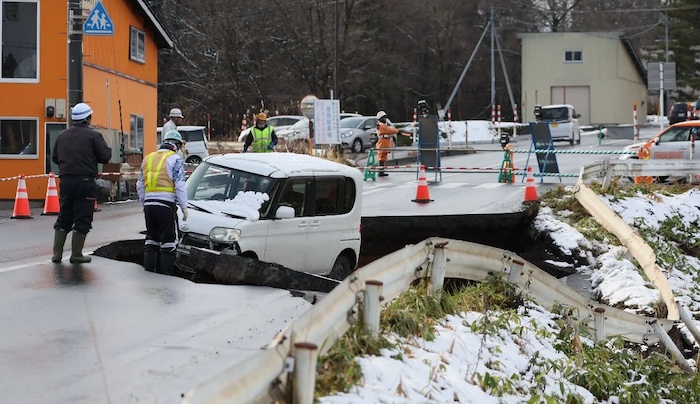
A powerful earthquake measuring 7.5 on the Richter scale struck northeastern Japan late on Monday, resulting in multiple injuries and significant evacuations. The tremor occurred at 23:15 local time (14:15 GMT), with its epicenter located approximately 80 kilometers off the coast of Aomori, at a depth of 50 kilometers. The Japan Meteorological Agency reported that the quake triggered tsunami alerts, with waves reaching up to 70 centimeters, although these warnings were later lifted.
Authorities reported at least 30 injuries as a result of the earthquake, while nearly 2,700 homes in Aomori experienced power outages. Train services along the northeastern coast have been suspended as officials conduct safety assessments to ensure the welfare of passengers and residents.
Government Response and Evacuations
In response to the disaster, around 90,000 residents were ordered to evacuate from affected areas. Prime Minister Sanae Takaichi urged citizens to review their emergency preparedness plans, emphasizing the importance of securing furniture and having emergency kits ready. Takaichi stated, “Reconfirm your daily earthquake preparedness and be ready to evacuate immediately if you feel shaking.”
Chief Cabinet Secretary Minoru Kihara confirmed that a government emergency team has been activated to coordinate rescue and relief efforts. Fortunately, Japan’s energy operator, Tohoku Electric Power, reported no abnormalities at the Higashidori or Onagawa nuclear plants. There were also no issues at the Fukushima Daiichi facility, which suffered extensive damage during the catastrophic earthquake and tsunami of March 11, 2011.
Seismic Activity in Japan
Japan is situated along the highly active Ring of Fire, experiencing approximately 1,500 earthquakes annually. Experts have consistently warned about the potential for a massive earthquake in the Nankai Trough, estimating a 60–90% chance of such an event occurring within the next 30 years. Should this happen, it could lead to devastating financial losses and mass casualties.
As the situation develops, officials continue to monitor the region closely and advise residents to remain vigilant. Strong aftershocks are anticipated in the coming days, with authorities urging the public to stay on high alert for at least a week. The resilience of the Japanese people in the face of such natural disasters remains a testament to their preparedness and community spirit.