A former British soldier, Hayden William Davies, has been sentenced to 13 years in a Russian prison for his involvement in the conflict in Ukraine. The court in the Russian-controlled Donetsk People’s Republic labeled him a “mercenary,” a designation that has raised significant concerns regarding his treatment and rights as a prisoner of war.
Davies, aged 30 and originally from Southampton, was captured by Russian forces while fighting for Ukraine last winter. According to court documents, he arrived in Ternopil, Ukraine, in August 2024, where he enlisted with the International Legion of Defence of Ukraine. After completing military training, he participated in hostilities against the Armed Forces of the Russian Federation in the Donetsk region.
The court indicated that during his service, Davies was equipped with a personal firearm and engaged in armed conflict. When asked about his plea during the trial, he responded simply with “Yes,” indicating his acceptance of the charges against him.
Concerns Over Treatment and Rights
Reports suggest that Davies has developed a growth on his left eyelid, which has reportedly worsened since his capture, with no medical treatment provided by Russian authorities. After his arrest, he was initially taken to Moscow for unspecified investigative actions, but his trial occurred in Donetsk, raising questions about the transparency of the judicial process he underwent.
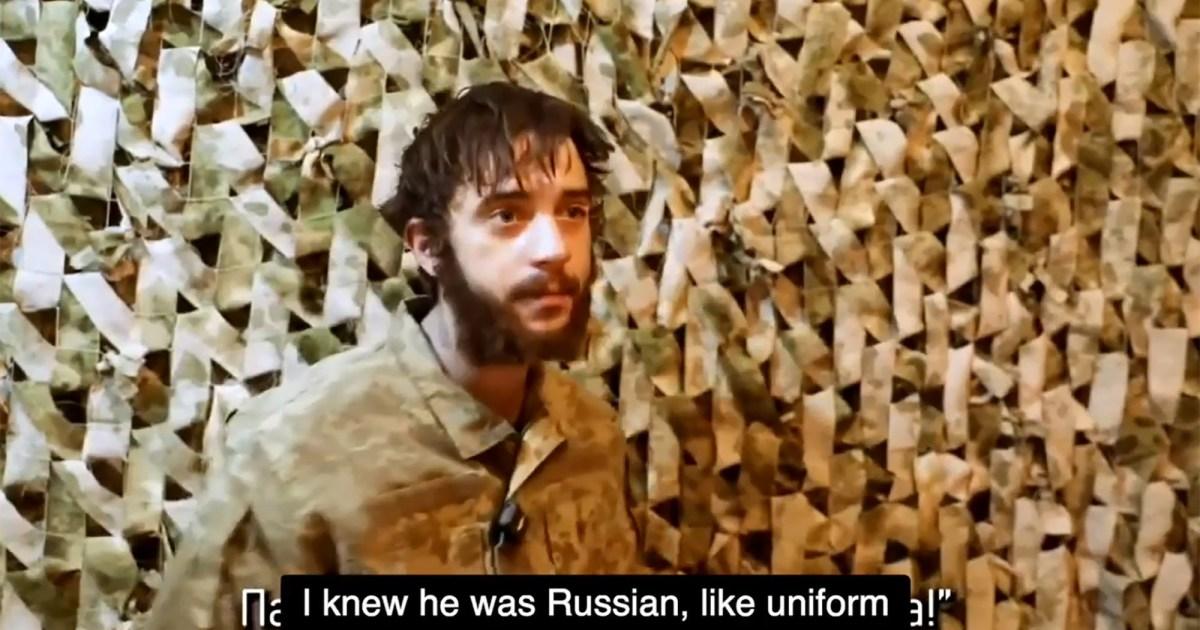
In a video released by Russian military authorities following his capture, Davies mentioned being discharged from the British Army in 2023 due to drug use, specifically “smoking marijuana.” He stated that this experience led him to join the fight for Ukraine.
The British government has condemned Russia for using Davies and fellow prisoner James Anderson for political propaganda. According to Ankur Narayan, UK Politico-Military Counsellor at the UK Delegation to the OSCE, the designation of “mercenary” is inaccurate. He asserted, “They are Prisoners of War. Ukraine has confirmed that both are members of the Ukrainian Armed Forces. They must be provided all the rights and protections afforded to Prisoners of War under the Geneva Conventions.”
Background and Implications
Davies served in the British Army for 13 years, participating in missions across Germany, Cyprus, Canada, and Afghanistan. He specialized in operating Javelin man-portable anti-tank guided missiles. His capture has drawn attention not only for the legal implications but also for the potential use of his case in propaganda efforts by Russian state media.
In the aftermath of his capture, pro-Putin commentators have leveraged his statements to disseminate narratives against Ukrainian forces. Notably, one commentator, Vladimir Solovyov, stated, “He served for the British Crown as an anti-tank gun operator. For his love of weed, he was kicked out. Curiosity and stupidity brought him to Ukraine, where everyone is accepted.” This sentiment reflects the broader strategy of utilizing captured foreign fighters to discredit Ukraine on the international stage.
The situation remains critical as the British government continues to engage with Russian authorities concerning the treatment of Davies and the legal implications of his sentencing. The case highlights the complex interplay of international law, military engagement, and human rights in the ongoing conflict in Ukraine.