UPDATE: A devastating rail crash in Cordoba, Spain has left 45 people dead and more than 150 injured, according to preliminary findings from the Railway Accident Investigation Commission (CIAF). Initial reports confirm evidence of track fractures at the collision site, igniting urgent concerns about rail safety.
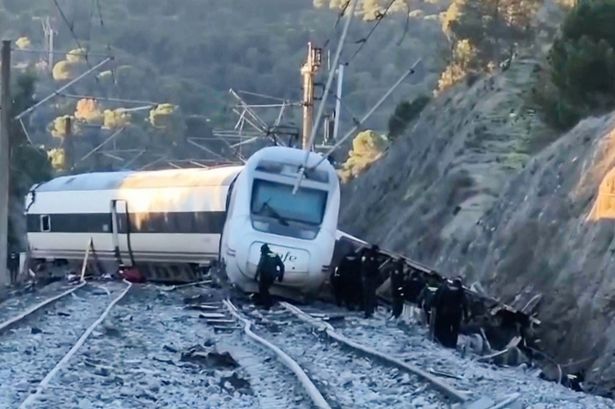
The horrific incident unfolded when a train traveling from Malaga to Madrid derailed, colliding with an oncoming train heading toward Huelva. Both trains were reportedly speeding at approximately 130 mph (209 km/h) at the time of impact, leading to catastrophic consequences. Eyewitnesses described a scene of chaos as the front of one train bore the brunt of the collision, causing several carriages to tumble down a four-meter slope.
Investigators have noted “nicks” on the wheels and “deformations” on the tracks, indicating a severe structural failure likely caused by a broken rail. The leading hypothesis suggests that the track fracture occurred before the first train passed over it, resulting in the subsequent derailment. While this theory is under investigation, authorities have not ruled out other possible causes.
To further understand the failure, samples of the rail lines have been sent for detailed laboratory analysis. Experts aim to determine whether the break was due to wear, environmental factors, or other structural issues. This analysis is critical to ensuring the safety of future rail operations.
The impact of this tragedy is deeply felt, especially in the local communities. More than half of the deceased victims, specifically 27 out of 45, were residents of the Huelva province. Regional President Juanma Moreno expressed “profound sorrow” over the loss and declared a period of mourning for the community.
The severity of the crash was evident, with some victims’ bodies discovered hundreds of meters away from the crash site. Harrowing images from the scene reveal train seats ejected onto the rocky terrain, and carriages lying overturned. The force of the impact has shocked the nation and raised questions about rail safety protocols.
In the aftermath, authorities have praised the rapid response of emergency teams and volunteers who rushed to assist. The bravery of Civil Guard officers, who utilized dogs to search the wreckage, has been commendable as they worked tirelessly to recover victims’ belongings from the debris.
As investigations continue, the CIAF is expected to release a more detailed report examining the crash further. The focus remains on ensuring accountability and preventing future tragedies on Spain’s railways.
Stay tuned for updates on this developing story as officials work to uncover the full circumstances surrounding this horrific incident.