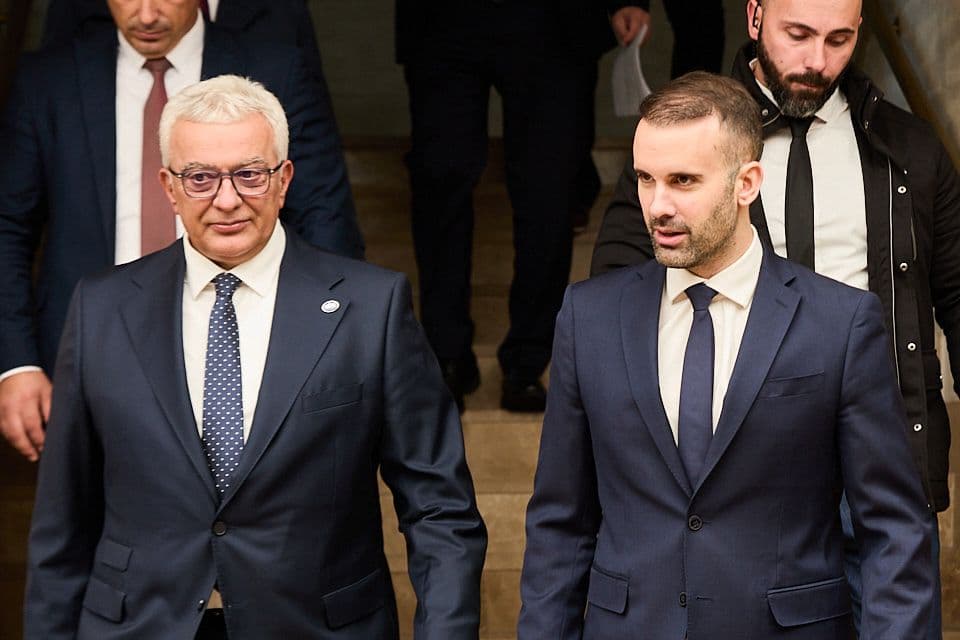
UPDATE: Tensions are escalating in the Balkans as Serbian President Aleksandar Vučić warns that the current government in Montenegro could be destabilized at any moment. This alarming statement comes in response to remarks made by Montenegro’s Prime Minister Milojko Spajić, who supports a simultaneous EU membership for all Western Balkan countries.
In a striking declaration, Vučić stated, “First jump, then say ‘hop’,” implying that Andrija Mandić, the President of Montenegro’s Assembly, has the power to disrupt the functioning of the existing administration. This sentiment was echoed by Croatian analyst Davor Đenero, who described Vučić’s comments as indicative of a “mafia-like threat.”
These developments arrive just ahead of critical meetings in Brussels with top EU officials, including Ursula von der Leyen, President of the European Commission, and Antonio Costa, President of the Council of Europe. Vučić reiterated a long-standing vision for the region: a unified EU accession for all Western Balkan nations, which he believes is vital for both regional and European stability.
Vučić emphasized, “The entry of the Western Balkans into the EU is the best idea. If someone is left out, what will we do with those countries?” He plans to formally present this proposal during the meetings in Brussels, asserting that it would benefit all parties involved.
Spajić, responding to Vučić, expressed agreement on the need for EU integration but stressed Montenegro’s readiness to join by 2028. He urged Serbia to accelerate the process for other candidates in the region. Vučić swiftly replied, expressing confusion over Spajić’s urgency, stating, “I would have liked to hear Spajić’s reaction on much more important issues.”
The political landscape is fraught with tension as Vučić criticized Croatia, claiming that it operates against Serbia through hidden agendas. “I will not flatter them,” he stated, alluding to perceived insults and provocations from Montenegrin authorities.
The responses from both sides have drawn significant attention, with Spajić’s party, the Movement for Europe Now (PES), indicating that Serbia will negotiate with Montenegro as an EU member. Meanwhile, Ivan Vujović, leader of the Social Democratic Party, accused Vučić of attempting to undermine Montenegro’s EU aspirations, labeling his sudden push for regional unity as a “nightmare” for Montenegro’s EU membership.
As the political drama unfolds, analysts warn that the ongoing tensions between Serbia and Montenegro could have serious implications for the region’s EU integration. Đenero cautioned that the current coalition in Montenegro might face significant challenges if it relies on support from elements loyal to the Serbian government.
In light of these developments, the situation remains fluid. Observers are keenly watching for further reactions and the potential impact on Montenegro’s EU accession process. The next steps for both Vučić and Spajić will be crucial in determining the future political stability of the region, with potential ramifications as early as 2026.
Urgent calls for a unified approach to EU integration are being overshadowed by these political tensions, raising concerns about the long-term stability of the region. The international community is urged to pay close attention as the situation continues to evolve.