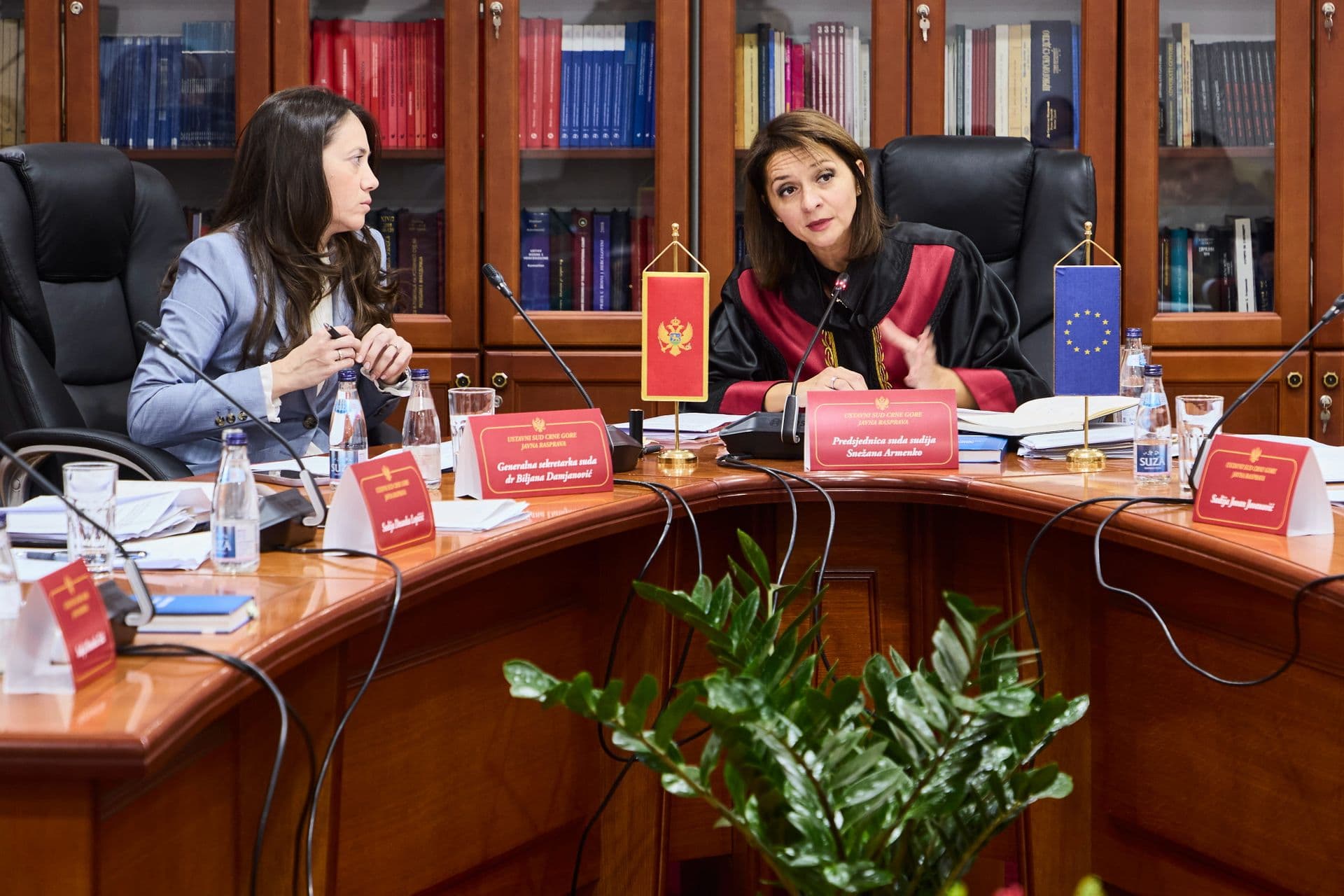
UPDATE: Montenegro’s Constitutional Court is set to review the controversial agreement with the United Arab Emirates (UAE) on tourism and real estate rights. This urgent matter arises from a public discussion on July 14, 2023, where six legal experts argued that the agreement regulates foreign property rights, falling under the court’s jurisdiction to assess its constitutionality.
The court’s engagement comes after local parliament member Đorđe Zenović and the Center for Protection and Study of Birds (CZIP) submitted initiatives questioning the legality of the ratified law, which was passed by a simple majority of 41 votes, rather than the required two-thirds majority. This has ignited concerns over the implications for foreign investments and local rights.
While legal experts assert the court’s authority to review the agreement, the government, led by Minister Majda Adžović, contends that the court lacks the power to evaluate international agreements. Adžović emphasizes that adhering to the Venice Commission’s recommendations is crucial to avoid jeopardizing Montenegro’s international obligations.
Zenović vehemently opposes the government’s position, warning that dismissing the court’s role could undermine the Constitution itself, leading to potential violations of citizens’ rights. He stated, “This creates a dangerous precedent where any bilateral agreement could override our constitutional obligations.”
Critics, including CZIP’s director Jovana Janjušević, fear that the agreement could allow investors to circumvent environmental protections, threatening Montenegro’s status as an ecological state. Janjušević emphasizes that the deal could lead to exploitation of protected areas without proper environmental assessments.
Adžović has argued that the court risked breaching international law by reevaluating ratified agreements, a stance she claims is supported by past court practices, including decisions related to Montenegro’s NATO accession.
Legal experts are divided, with some suggesting that the court must assert its authority to determine whether the agreement implicates property rights, which would necessitate a two-thirds majority for ratification. Former Constitutional Court judge Nebojsa Vučinić highlights the necessity for a thorough examination of the agreement’s content, insisting that the court’s jurisdiction is paramount in safeguarding constitutional integrity.
As the debate unfolds, public interest grows over the potential consequences for Montenegro’s legal landscape and its international standing. The Constitutional Court is expected to release a statement on its findings and the next steps following this critical public discussion.
Stay tuned for further updates as this situation develops.