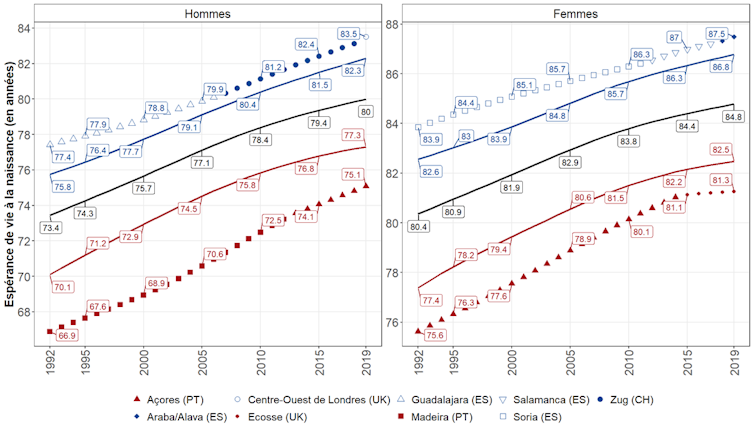
Recent research published in Nature Communications has unveiled significant regional disparities in life expectancy across Europe. The study, which analyzed data from over 450 regions from 1992 to 2019, highlights changing mortality trends and raises questions about the future of human longevity on the continent.
For over a century, life expectancy in wealthier countries has steadily increased, particularly during the 20th century. This rise correlates with advancements in cardiovascular medicine and a decrease in infectious diseases. Nevertheless, experts have raised concerns about the potential plateauing of these gains, particularly in several Western nations where improvements have stagnated.
The comprehensive study examined mortality and demographic data from national statistics offices across 13 Western European countries, including Spain, Denmark, Portugal, and Switzerland. Researchers harmonized this varied data to account for differences in regional size and detail. They then recalculated annual gains in life expectancy at birth, revealing critical trends that reflect mortality across all age groups.
Findings on Longevity Trends
The findings indicate that human longevity has not yet reached its limits. Regions identified as longevity champions continue to demonstrate consistent annual gains, with men in these areas seeing an increase of approximately two and a half months in life expectancy each year, while women see about one and a half months. In 2019, notable regions included Northern Italy, Switzerland, and various provinces in Spain. In France, areas surrounding Paris and regions like Hauts-de-Seine reported life expectancies of 83 years for men and 87 years for women.
The second key finding reveals a troubling trend for regions with lagging life expectancy rates. While these areas experienced rapid gains in the 1990s and early 2000s, progress has since slowed significantly, particularly post-2005. Regions such as East Germany, Wallonia in Belgium, and parts of the United Kingdom now face stagnant or declining life expectancy rates. The data shows a stark contrast, with progressive regions continuing their upward trajectory and lagging areas experiencing reversals in gains.
Age-Specific Mortality Insights
A deeper analysis focused on mortality rates for specific age groups, particularly those between 55 and 74 years old. It was found that the changes in life expectancy cannot be attributed to rising infant mortality or increasing deaths among those over 75, but rather to mortality rates among middle-aged individuals.
In the 1990s, mortality rates for this age group dropped significantly due to better access to cardiovascular treatments and changes in health behaviors. However, since the early 2000s, this downward trend has slowed or even reversed in some regions, notably affecting women in France’s Mediterranean coastal areas and many parts of Germany.
This stagnation in mortality rates among those aged 55 to 74 is particularly concerning, as it can significantly impact overall life expectancy. Factors such as smoking, alcohol consumption, poor nutrition, and lack of physical activity are believed to contribute to these trends. Furthermore, the economic downturn in 2008 exacerbated these disparities, particularly in areas with fewer job opportunities and lower educational attainment.
The study underscores that while life expectancy can still increase, there are stark regional differences that need to be addressed. In some areas, progress continues, while others fall behind.
The future of human longevity in Europe may hinge less on biological limits and more on collective efforts to address the disparities in health outcomes. The researchers caution that without intervention, Europe risks becoming increasingly divided, with a minority of regions advancing in longevity while the majority struggle to maintain gains.
For those interested in exploring the detailed results of this study, an interactive online application is available, offering insights into regional data and trends across Europe.