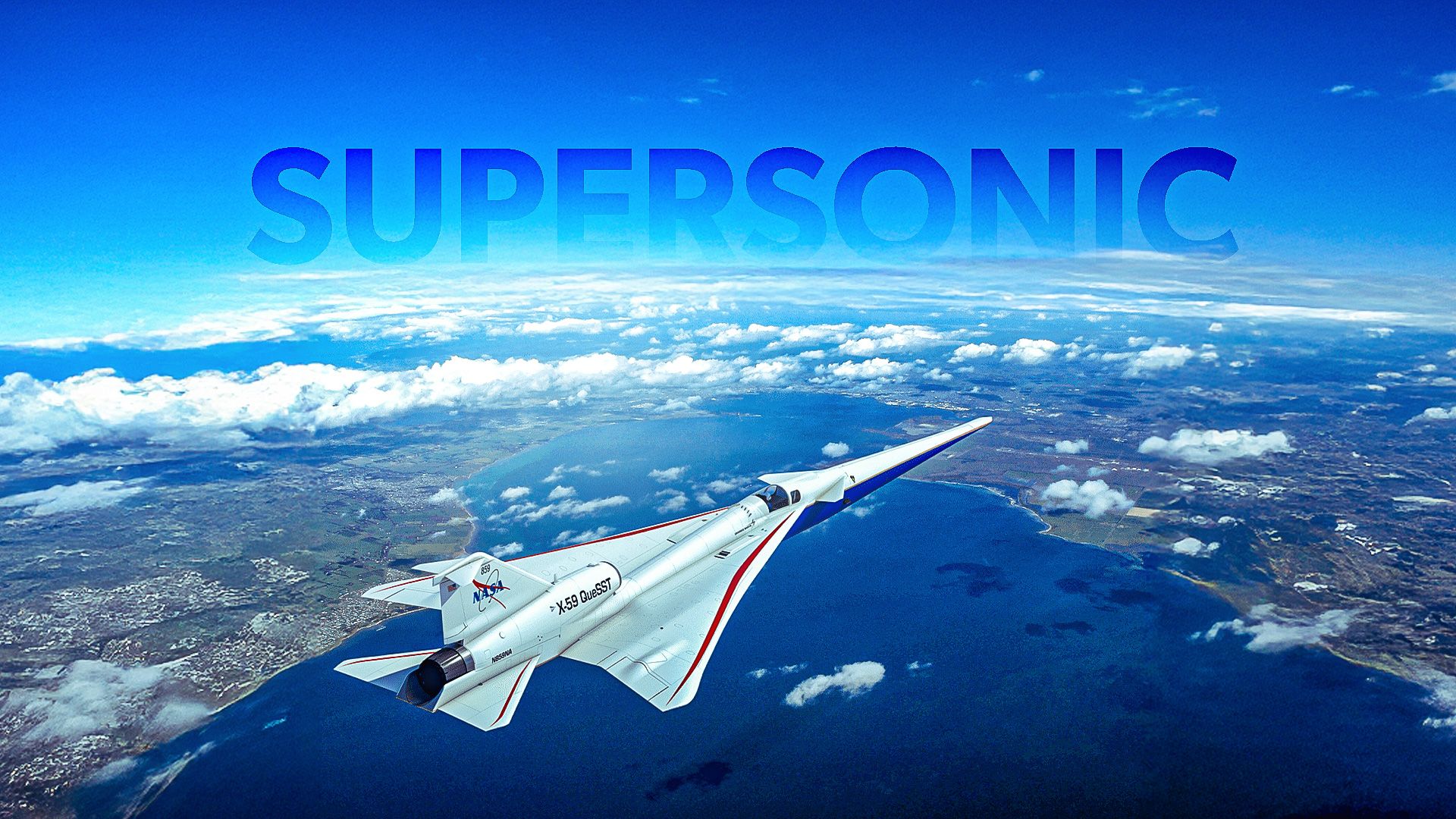
BREAKING: NASA’s groundbreaking X-59 QueSST has successfully completed its first flight, paving the way for a new era in supersonic travel. The aircraft, designed to reduce sonic booms to a mere thump, took off from Palmdale, California, and landed at NASA’s Armstrong Flight Research Center on October 15, 2025. This pivotal moment signals a potential shift in commercial aviation, as the X-59 aims to overcome the sonic barriers that previously plagued supersonic jets like the Concorde.
The X-59 QueSST, developed by Lockheed Martin, is a revolutionary aircraft that could change air travel forever. By transforming the disruptive sonic boom into an acceptable noise level of around 75 PLdB, the X-59 intends to allow supersonic flights over land, which were previously banned. The aircraft flew “exactly as planned,” confirming its initial flying capabilities and air data performance, according to Lockheed Martin.
Why does this matter right now? If successful, the X-59’s technology could lead to commercial supersonic flights, allowing passengers to travel at speeds twice that of current jetliners. This would not only cut travel times dramatically but also provide new economic opportunities for airlines and their passengers.
NASA’s ambitious plan includes extensive testing between 2026 and 2027, where the X-59 will undergo supersonic flight trials at optimal speeds and altitudes to validate its reduced noise output. The agency will then gather public feedback from communities below to inform future regulations on supersonic flight noise levels.
The sonic boom issue is critical; it was a major factor in the Concorde’s eventual demise, which faced stringent bans on supersonic travel over land due to its disruptive noise. NASA aims to change that narrative.
“Our goal is to reduce the loudness of the sonic boom to a gentle thump,”
stated a NASA spokesperson. This data-driven approach could reshape the future of air travel.
However, challenges remain. The X-59 is a single-pilot demonstrator, and scaling this technology for larger commercial aircraft will require careful aerodynamic modeling and engineering. Additional considerations include integrating larger engines and accommodating a passenger-friendly cabin without compromising the aircraft’s low-boom capabilities.
As the aviation industry looks to the future, new players like Boom Supersonic and Spike S-512 are also vying to tackle the challenges of supersonic travel. Boom’s Overture aims to utilize sustainable aviation fuel and modern materials to create a more efficient aircraft, while still addressing the sonic boom problem.
Government regulations are also evolving. In June 2025, the U.S. President signed an executive order directing the FAA to reconsider the prohibition on civil supersonic flights over land, signaling a potential regulatory shift that could facilitate the X-59’s commercial viability. However, experts warn that it could take years for these changes to take effect across various jurisdictions.
As NASA embarks on this transformative journey, the X-59 QueSST stands at the forefront of a new aviation frontier. If successful, it could redefine how we think about air travel, making once-unimaginable speed a reality for passengers worldwide. Stay tuned for further updates as the X-59 begins its critical test campaign and the implications for global travel unfold. This is a story that will continue to develop, and one that aviation enthusiasts and travelers alike will be watching closely.