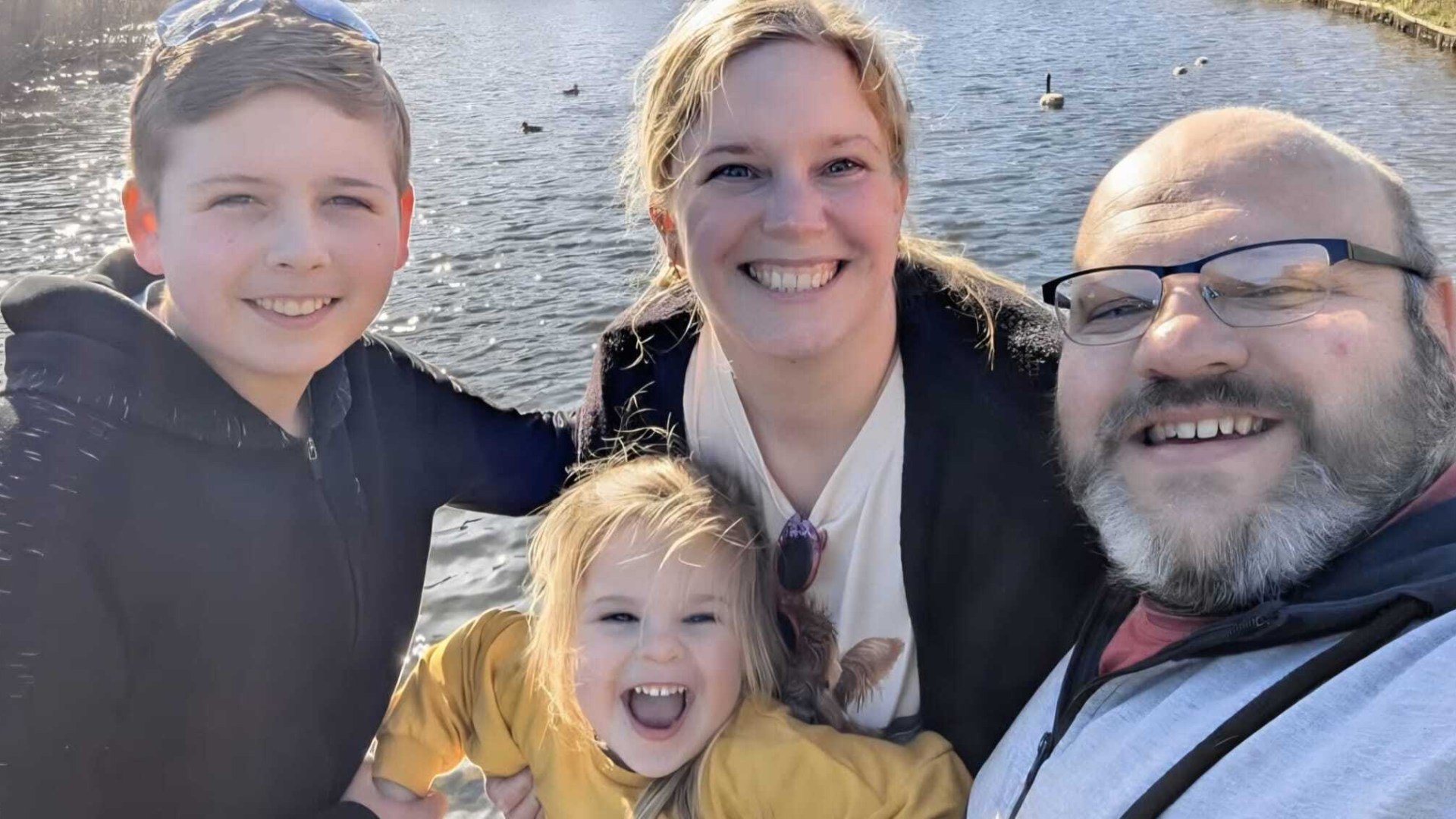
A mother from Illinois has shared her experience with the subtle signs that led to her daughter’s diagnosis of a rare form of childhood dementia known as Sanfilippo syndrome type B. Megan Kempf, 37, and her husband, Kyle, welcomed their daughter, Poppy, into the world with high hopes for a bright future. However, as Poppy grew, her parents began to notice concerning changes in her behavior and development.
At the age of three, Poppy displayed a regression in her drawing skills. As Megan noted, “She would be able to draw bodied characters, and suddenly she’d regressed to drawing circles.” These changes prompted the family to seek medical advice, especially as Poppy started school and her differences became more apparent. She was diagnosed with a mild intellectual disability, which involves slower development in cognitive, social, and processing skills.
As concerns continued to mount, Poppy’s increasing anxiety around bedtime led to further investigations. Megan mentioned that they discovered Poppy had sleep apnoea, a condition that disrupts normal breathing during sleep and can lead to difficulties in concentration, mood swings, and fatigue. Despite these findings, medical professionals advised the family to “wait and see,” leaving them feeling unsettled.
Eventually, a neurologist referred Poppy to a geneticist, who conducted whole genome sequencing. The results revealed a diagnosis of Sanfilippo syndrome type B, a rare condition characterized by progressive dementia due to genetic disorders. Sanfilippo syndrome disrupts the body’s ability to break down a large molecule called heparan sulphate, leading to harmful build-up in cells, which ultimately affects brain function.
Megan recalled the moment of diagnosis with a mix of relief and dread: “To have a diagnosis provided a sense of relief, but never in a million years did we expect to get a life expectancy for our children.” Most children with Sanfilippo syndrome type B do not survive beyond the age of 19, a reality that weighed heavily on the Kempf family. Poppy is currently nine years old, meaning she is already halfway through the expected lifespan associated with the condition.
The diagnosis also raised fears for Poppy’s younger brother, Oliver, who was just two years old at the time. Megan stated, “We needed to get our son, Oliver, tested too,” and unfortunately, the results confirmed that Oliver also tested positive for the syndrome. The family faced a heartbreaking truth: both children were at risk of the same devastating fate.
Despite the grim prognosis, the Kempfs have not lost hope. They have actively engaged in fundraising efforts, raising approximately $5.5 million to support enzyme replacement therapy, which they believe could provide a breakthrough treatment for Sanfilippo syndrome. According to Megan, “We are hopeful that the drugs will be on the market next year, but it will take a lot of attention and effort to get there.”
The couple is working alongside the Cure Sanfilippo Foundation, which advocates for promising treatment options, and they are determined to bring awareness to this rare disease. They understand the challenges of bringing treatments to market for rare pediatric conditions, especially when the life expectancy of patients is limited.
Sanfilippo syndrome, also known as MPS III, affects approximately 140 children in the UK alone, according to the Society for Mucopolysaccharide Diseases. Symptoms typically emerge after the first year of life and can include learning difficulties, behavioral issues, and physical challenges. As the condition progresses, children may experience a decline in speech and mobility, leading to significant health complications.
While the Kempf family navigates this difficult journey, they remain committed to advocating for their children and others affected by Sanfilippo syndrome. Megan concluded, “We mostly want there to be an answer for all these children.” Their story highlights the importance of awareness and the urgent need for medical advancements in the treatment of rare childhood diseases.