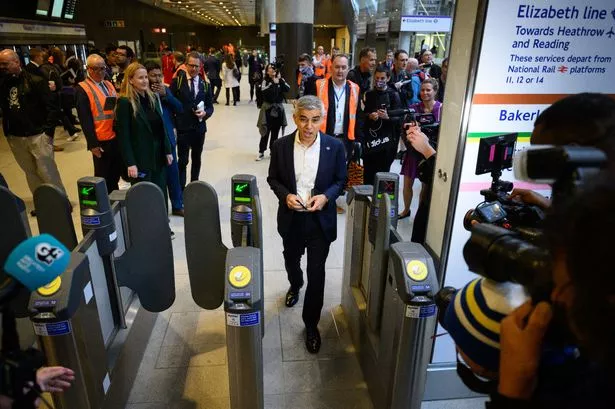
UPDATE: A groundbreaking report from the London Assembly Budget and Performance Committee has revealed that London could cut the cost of major transport projects by up to 50% if officials adopt planning and financing methods used in other European countries. The report, titled ‘Mind the Funding Gap’, was just announced and calls for immediate action from the Mayor of London and Transport for London (TfL).
The committee’s findings come at a crucial time as several significant projects, including the Bakerloo Line extension and the West London Orbital, have been stalled due to rising costs. Current delivery expenses for London’s transport initiatives are alarmingly high, with the Jubilee Line extension costing over ten times more per mile than similar projects in Madrid.
The report emphasizes that a reformed approach to planning and financing could enable London to develop its transport infrastructure more efficiently. The committee urges the Mayor to restart the development of Crossrail 2, which aims to connect national rail networks in Surrey and Hertfordshire through a new tunnel in central London. A “clear pipeline” for transport projects leading to 2040 is also recommended.
Committee chairman Neil Garratt stated, “Delivering new transport infrastructure has wide-reaching benefits for London, Londoners, and the wider country, yet challenges remain with funding and spiraling development costs.” He highlighted that other major cities have successfully completed large-scale projects at a fraction of London’s costs, suggesting that the capital could significantly reduce expenses by adopting similar strategies.
The report draws attention to the 35-mile extension developed in Madrid, which cost only £2.1 billion between 1995 and 1999, due to concentrated power at the city level and streamlined project management. Gareth Dennis, a railway engineer, pointed out that London’s fragmented economy leads to excessive costs, as numerous interfaces require legal and commercial oversight.
The committee’s recommendations signal a potential turning point for London’s transport initiatives, as they propose that reducing costs by 20% to 50% is achievable if efficient practices are implemented. Ben Hopkinson from the Centre for Policy Studies emphasized that adopting best practices from Europe could make substantial savings feasible.
As Londoners await updates on stalled projects, the urgency for reform is palpable. The committee’s recommendations could pave the way for a more connected, efficient, and affordable transport network, vital for London’s growth and appeal as a thriving urban center.
TfL and the Department for Transport have been contacted for comment regarding these urgent findings. Stay informed on the latest developments in London transport by signing up for our newsletter, ensuring you never miss an update on your commute!