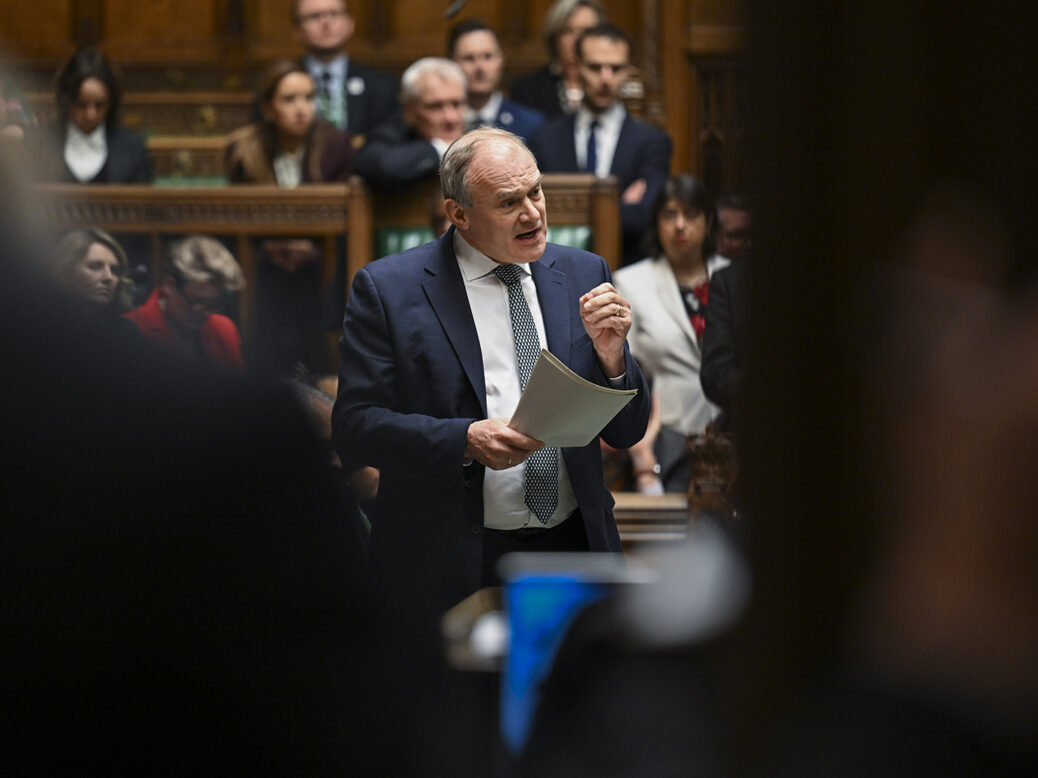
UPDATE: The Liberal Democrats have just secured a significant political win that could reshape the UK’s 2026 election landscape. On December 9, 2025, a crucial Ten Minute Rule bill championed by the Lib Dems passed in a tie-break vote, calling for the government to initiate negotiations on joining a bespoke customs union with the EU. This victory, significant yet understated, marks a pivotal moment for the party, which aims to position itself as a leading force against populism.
The bill’s passage, confirmed by deputy speaker intervention, has been hailed as a “historic victory” by Ed Davey, the Lib Dem leader. Despite receiving minimal media coverage, this moment reflects the party’s determination to gain traction in a political climate dominated by insurgents like Nigel Farage and his Reform UK party.
The urgency of this development cannot be overstated. As the political landscape becomes increasingly fragmented, with five parties vying for attention, the Lib Dems are positioning themselves as a bulwark against the rising tide of populism. Davey himself has the highest favorability ratings among UK party leaders, but the question remains: how will he leverage this momentum?
The backdrop of the Lib Dems’ struggle is painted by their recent performance in local elections, where they have capitalized on widespread dissatisfaction with the traditional parties. In a recent surge, they won more council seats than Labour, the Conservatives, and the Greens combined during by-elections. This trend indicates that the party is not just surviving but thriving in a landscape where both major parties are faltering.
As campaigners gear up for the local elections in 2026, the Lib Dems are focusing on local issues, which they believe can resonate nationally. The party even launched a new regional media team to amplify its presence on local news outlets. “We’re finally getting some cut-through,” one optimistic MP remarked, highlighting the party’s grassroots appeal.
However, the Lib Dems face a dual challenge. While they are making strides locally, they must articulate a clear national message to avoid being perceived solely as an opposition to Reform. Former cabinet member Kemi Badenoch recently dismissed the party as merely “good at fixing their church roof,” a remark that has been turned into a rallying cry for the Lib Dems to showcase their local successes.
The party’s strategy hinges on addressing pressing issues such as the cost of living, which has risen to the top of voter concerns, overshadowing even immigration. With estimates suggesting that Brexit is costing the Treasury £90 billion annually, the Lib Dems are seizing on the economic argument to re-engage voters disillusioned by the Brexit debate. Their recent customs union motion garnered support from 13 Labour Party MPs, signaling a potential alignment on key issues.
The Lib Dems’ strategy is clear: they aim to redefine their identity in a fragmented political landscape. With Farage’s Reform party drawing attention, Davey has framed the Lib Dems as the primary alternative, stating, “It’s between us and Reform.” This message resonates deeply as they continue to gain ground locally, suggesting that they have the potential to challenge Reform directly.
As the UK’s political dynamics shift, the Lib Dems are poised for a critical year ahead. With their focus on local governance and a renewed argument against Brexit’s economic fallout, they are ready to seize the moment. As one senior party source put it, “There is absolutely no ceiling on our ambition.”
What happens next? The upcoming local elections will be a litmus test for the Lib Dems as they aim to solidify their position as a formidable force in British politics. With a strategy that combines local engagement and national relevance, the stage is set for a potentially transformative year for the party.
Stay tuned for further updates on this developing story as the Lib Dems prepare for a critical election season!