UPDATE: A significant policy shift from the Labour Party has emerged, as they announce a rise in the inheritance tax threshold for farms to £2.5 million, effective April 2025. This decision, aimed at alleviating financial pressure on farmers, has sparked mixed reactions, with many questioning its long-term effectiveness.
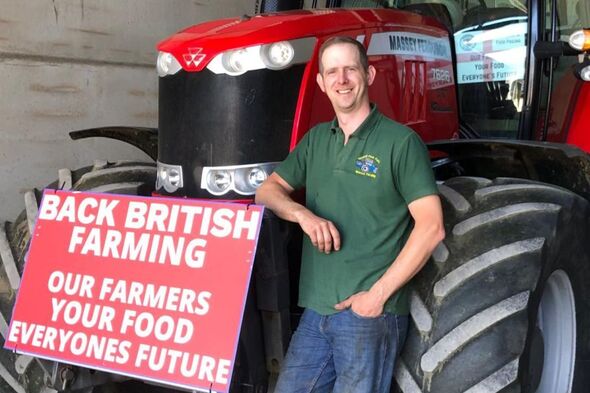
Philip Weston, a 40-year-old farmer from Northamptonshire, expressed skepticism about Labour’s latest move, labeling it a “smokescreen” that fails to address the core issues plaguing the farming industry. “This climbdown will protect us in the short term, but it doesn’t solve the fundamental problems we face,” he stated, emphasizing the ongoing financial strain on family farms.
The revised policy will allow couples to inherit up to £5 million without incurring inheritance tax, while the number of farms affected is expected to drop from approximately 2,000 to around 1,100. However, Weston warns that this change merely postpones the inevitable financial challenges as land values and operational costs continue to rise.
Weston, whose family has owned Hartwell Park Farm since 1820, detailed his experience of navigating the tax implications following his father’s death three years ago. He anticipates a tax bill of £200,000, payable over ten years, making the prospect of long-term planning increasingly daunting.
“This announcement is being celebrated as a victory for farmers, but costs are escalating, and many are diversifying to survive,” he remarked. “The industry is at a critical point; payments for produce are low, and costs are horrendously high.”
Despite the Labour Party’s attempt to ease the burden, Weston, along with other farmers, is calling for a complete abolition of the inheritance tax, which they argue threatens the viability of family-run farms—vital to the UK’s food security. The Daily Express has also joined this call to action, urging Chancellor Rachel Reeves to reconsider the tax implications on farms.
Weston’s concerns reflect a broader sentiment within the agricultural community, with many feeling betrayed by the government’s inconsistent policies. “This U-turn shows a complete lack of resolve. We have no idea what they’re going to do next,” he added, highlighting the uncertainty that complicates long-term agricultural planning.
In parallel, the UK has witnessed a surge in farm closures, with a record 6,365 agriculture, forestry, and fishing businesses ceasing operations in the year leading to June 2025. This alarming trend underscores the urgent need for robust policies that genuinely support farmers.
Former NFU head Baroness Minette Batters noted that inheritance tax remains a critical issue for farming viability, while NFU President Tom Bradshaw described the recent amendments as a “huge relief” for many family farms. However, experts warn that the increased threshold may still leave numerous estates vulnerable to unexpected tax liabilities.
Clive Pinton, a tax expert, cautioned farmers not to view this change as a blanket solution. “Many farming estates may still fall within scope, especially with rising land values,” he advised, stressing the importance of proactive estate planning.
As the Labour Party faces scrutiny for its policy decisions, Conservative leader Kemi Badenoch emphasized that the “fight isn’t finished,” while Liberal Democrats are urging a full repeal of the inheritance tax, citing ongoing financial struggles for many family farms.
Environment Secretary Emma Reynolds acknowledged the importance of farmers in ensuring food security and pledged to work closely with them to secure a profitable future for British agriculture.
With the farming community rallying to demand better support, the urgency to address these pressing issues has never been more critical. Farmers like Weston continue to advocate for their livelihoods and the future of family-owned farms, which serve as the backbone of the UK’s rural economy. “If I can’t make a farm that’s been here since 1820 work, how can someone new to farming ever hope to succeed?” he questioned, underscoring the emotional toll of these challenges.
As this story develops, stakeholders in the agricultural sector are implored to remain vigilant and proactive in advocating for policies that genuinely support the industry’s long-term sustainability.