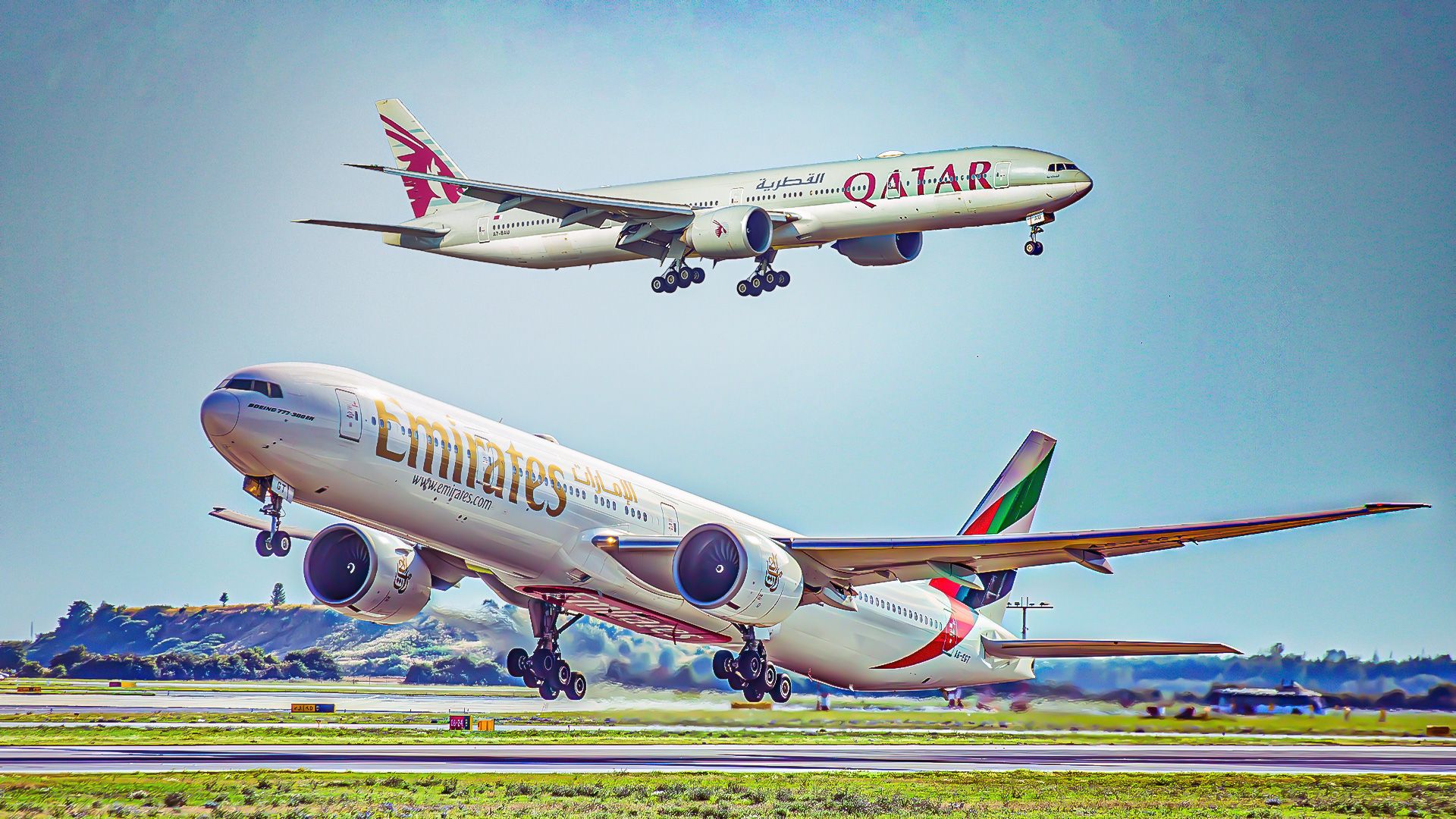
UPDATE: New data reveals a fierce competition between Emirates and Qatar Airways over their Boeing 777 fleets, crucial for their global operations. As of 2025, Emirates holds a staggering 140 Boeing 777s, while Qatar Airways operates 92. This battle is significant for travelers and aviation enthusiasts as both airlines redefine long-haul connections from their Gulf hubs in Dubai and Doha.
Both carriers have invested heavily in the Boeing 777, with its efficiency and range allowing them to serve destinations across Europe, Asia, Africa, and the Americas. The latest fleet disclosures highlight the differences in how they utilize this iconic aircraft, shaping passenger experience and cargo operations.
Emirates leads the charge with 140 Boeing 777s, including 119 powerful 777-300ERs. This model serves as the airline’s primary long-haul passenger aircraft, efficiently connecting high-demand routes. Additionally, Emirates operates 11 777-200F freighters and 10 777-200LR variants, maximizing its capacity for both passenger and cargo services.
Qatar Airways, while operating fewer aircraft, boasts a high-performance fleet with 28 777-200F freighters, 7 777-200LR, and 57 777-300ERs. This structure allows Qatar to manage its passenger services alongside a robust cargo operation, essential for feeding its expanding network out of Doha.
As the demand for air travel continues to surge, the role of the Boeing 777 cannot be understated. For Emirates, the aircraft is integral to its hub-and-spoke model, facilitating quick connections between major global markets. Qatar Airways, on the other hand, leverages its smaller fleet to maintain a premium travel experience, particularly with the highly regarded Qsuite business-class product on many of its 777-300ERs.
The competition extends beyond numbers; it’s about passenger experience. Emirates typically offers a denser economy configuration with ten-abreast seating, prioritizing capacity on busy routes. Conversely, Qatar Airways provides a mix of nine and ten-abreast layouts, focusing on passenger comfort even with fewer seats. This strategic approach allows Qatar to position itself as a premium airline in the long-haul sector.
What’s Next: As airlines prepare for the next chapter in aviation, both Emirates and Qatar Airways are gearing up for the introduction of the Boeing 777X, anticipated to further enhance their long-haul capabilities. The battle for supremacy in the 777 arena continues, with each carrier showcasing distinct strengths that cater to different traveler preferences.
With the global aviation market evolving rapidly, the rivalry between these Gulf giants will be pivotal in shaping future air travel. The question remains: will Emirates’ sheer numbers prevail, or will Qatar Airways’ premium offerings and strategic fleet management win the hearts of passengers?
As this story develops, aviation enthusiasts and travelers alike are encouraged to stay tuned for the latest updates on how these airlines compete for dominance in the skies.