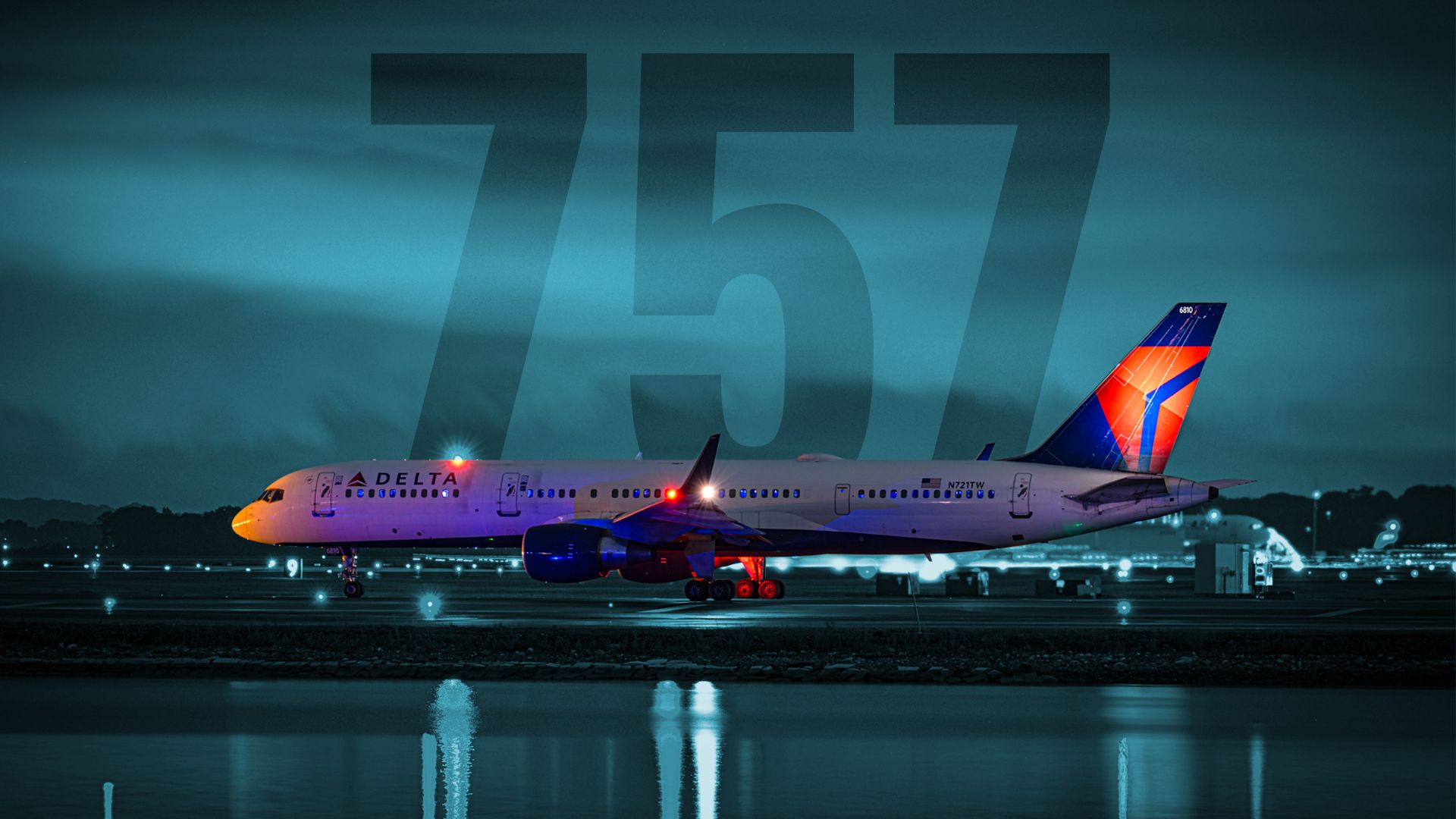
URGENT UPDATE: Delta Air Lines confirms it still operates 110 Boeing 757s as of December 2025, defying industry trends towards fleet modernization. This revelation comes as Delta continues to invest in its aging fleet, which boasts an average age of 27 years.
Delta’s commitment to the Boeing 757, known for its reliability and performance, highlights the airline’s strategy to maintain operational efficiency amid soaring travel demand post-pandemic. The airline currently has 86 active 757s, with the remaining 23 inactive aircraft likely set for retirement.
The Boeing 757 has been a staple in Delta’s fleet since it joined in 1984, making it a vital asset for both domestic and international routes. Notably, Delta operates the largest fleet of 757s in the world, a testament to its enduring popularity and operational success.
Why does Delta continue to operate these older jets? Officials report that the 757s are fully paid off, allowing the airline to generate profit without the immediate financial burden of replacing them. Delta’s maintenance capabilities, backed by its Delta TechOps division, enable the airline to keep these aircraft flying efficiently.
Furthermore, Delta’s 757s play a crucial role in meeting the increased travel demand. With routes like Atlanta to Orlando leading the charge, Delta operates 700 flights monthly on this route alone, catering to over 139,000 passengers each month. The aircraft’s ability to accommodate high passenger volumes makes it an invaluable asset for Delta’s operations.
Delta’s fleet includes two primary variants of the Boeing 757: the 757-200 and the 757-300. Currently, Delta has 71 active 757-200s, configured for various domestic routes, while the 15 757-300s serve higher-density markets. The latter, known as the “flying pencil,” has a capacity of 234 seats and is essential for routes with significant passenger demand.
As Delta gradually phases out its older aircraft, it remains focused on integrating newer models, such as the A321neo, into its fleet. However, the airline plans to keep the 757-300s operational until at least 2032, reflecting their ongoing utility in Delta’s network.
With Delta recently retiring 23 aircraft this year, the pace of retirements is accelerating, leading to a 26% reduction in available 757 flights compared to last year. Despite these changes, Delta continues to prioritize its 757 operations, which have proven to be financially rewarding.
The airline’s strategy hinges on balancing the legacy of the 757 with the introduction of newer aircraft, ensuring that operational needs are met while maintaining profitability. As it navigates this transition, Delta’s fleet of Boeing 757s remains a pivotal part of its future, catering to passenger needs and bolstering the airline’s financial performance.
Stay tuned for more updates on how Delta Air Lines continues to shape its fleet and respond to evolving market demands.