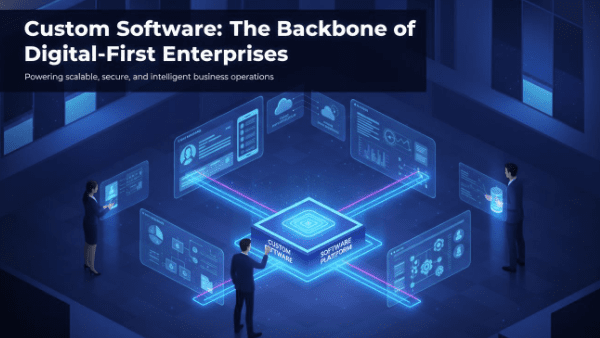
In an increasingly competitive digital landscape, custom software development has emerged as a vital element for businesses aiming to thrive. By 2026, enterprises that prioritize tailored software solutions are positioning themselves to enhance operational efficiency and customer engagement, ultimately gaining a significant edge over competitors.
Understanding Custom Software Development
Custom software refers to applications specifically designed to meet the unique needs of an organization. Unlike off-the-shelf solutions, these tailored applications address the distinct challenges faced by individual businesses. Custom software can encompass anything from mobile applications to comprehensive web platforms. A variety of agencies, such as NexusLink Services, specialize in creating bespoke software solutions, working closely with clients to align their technology with business objectives.
The necessity for custom software development arises from the limitations of ready-made solutions, which often fail to cater to the specific requirements of a business. As operations become more complex and customer expectations evolve, organizations must adopt software that not only meets current demands but is also adaptable for future growth.
Advantages of Custom Software for Digital Enterprises
The benefits of custom software are manifold. One primary advantage is that it is crafted to fit the precise needs of a business’s operational processes. Each organization has unique requirements that can’t always be met by generic software solutions. Custom software ensures seamless integration with existing systems, allowing for optimized workflows.
Scalability is another crucial component. As businesses expand, their software must evolve accordingly. Custom solutions are designed with this growth in mind, enabling modifications to accommodate an increasing customer base without necessitating costly overhauls. For instance, a rapidly growing company can adjust its software infrastructure to support new users and features.
Security is also a pressing concern. Custom software can be fortified with stringent security measures tailored to specific industry regulations, such as GDPR and HIPAA. This level of customization allows businesses to maintain control over sensitive data and reduce the risk of breaches.
Moreover, enhancing customer satisfaction is a common goal for digital-first enterprises. A custom solution allows for the creation of features that resonate with target audiences, fostering improved user experiences and stronger customer relationships. Businesses often rely on various software for different functions, such as accounting, inventory management, and sales. Custom software can be designed to work in harmony with these tools, further enhancing overall efficiency.
Comparatively, ready-made software presents challenges regarding scalability and data security. These platforms can be cumbersome to adapt and often do not offer the same level of protection as custom solutions. Quick integration and deployment are additional advantages of custom software, allowing businesses to bring solutions to market faster than with off-the-shelf options.
When selecting a custom software development company, several factors should be evaluated. It is essential to assess the company’s expertise in managing large-scale projects and the specific technologies necessary for your software. Investigating the skill levels of their developers and whether they have dedicated front-end and back-end teams is also crucial. Reputable companies typically showcase their portfolios, providing insight into their capabilities.
Certifications such as ISO 27001 and SOC 2 are indicators of a company’s commitment to quality and security. It’s also important to ensure that you are comfortable with the development company’s approach and methodology, particularly regarding future support and scalability of the software.
Common use cases for custom software include the development of tailored CRM and ERP systems that streamline daily operations and drive revenue growth. Industry-specific applications can help businesses target audiences more effectively. Additionally, customer-centric platforms can facilitate feedback collection, enhancing service offerings and building long-term relationships.
While the initial investment for custom software may be higher than that for ready-made solutions, the long-term benefits often outweigh the costs. Tailored applications eliminate unnecessary features and recurring licensing fees, enhancing overall efficiency and return on investment (ROI).
The timeline for developing custom software varies depending on project complexity. Simpler applications may be completed within weeks, while more intricate enterprise-level solutions can take several months. Factors such as planning, design, development, testing, and integration significantly influence this timeline.
In terms of security, custom software offers robust protections compared to most ready-made options. Tailored solutions can be developed to comply with industry standards and data protection regulations, minimizing the risks associated with data breaches.
NexusLink Services stands out as a trusted provider of custom software solutions in India. With a team of over 200 full-stack developers, the company offers services including custom web and mobile app development, AI solutions, UI/UX design, and ongoing support. Their structured approach encompasses planning, design, development, testing, and maintenance, ensuring high-quality, scalable software that meets the evolving needs of businesses in the digital age.