UPDATE: Disturbing revelations emerge as 345 bodies returned from Israel to Gaza reveal shocking signs of trauma and potential abuse. Families, who had endured a two-year nightmare searching for their loved ones, are grappling with new horrors as they confront the remains of their relatives.
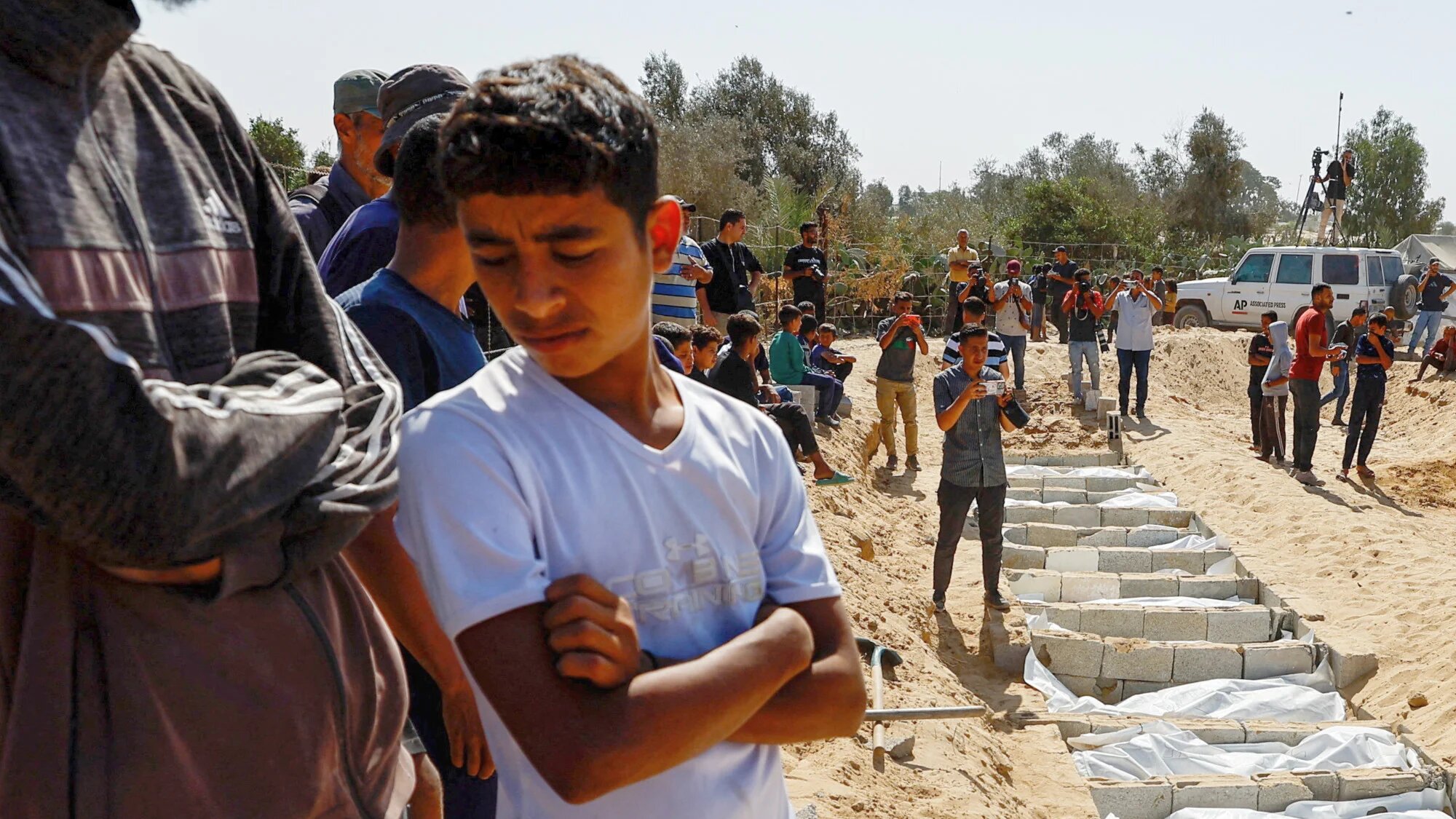
The bodies, delivered frozen and numbered to Nasser Hospital in Khan Younis, have left families in shock and questioning what happened while their loved ones were in Israeli custody. Many of the remains are difficult to identify, with some showing severed body parts and stitched incisions. This has sparked fears that vital organs may have been removed.
Khalil Hamada, director general of forensic medicine in Gaza, stated that the bodies arrive in such extreme freezing conditions that forensic teams often wait days for them to thaw before they can be examined. “Handling the bodies is extremely difficult. We cannot conduct full forensic examinations due to a lack of equipment,” he said. With only 99 of the 345 bodies identified, many families are left with unanswered questions.
Muhammed Ayesh Ramadan, a resident of Deir al-Balah, recounted the painful search for his brother Ahmed, who went missing at the war’s onset. After days of searching, Ramadan identified Ahmed, but his brother’s body bore troubling signs: “There was a stitched incision running vertically from his chest downward,” he revealed. “My brother had never undergone any surgery.”
Families have reported that many bodies bear signs of torture, with some showing fractures and binding marks. The return of these bodies is part of a ceasefire agreement signed with Hamas in October 2023, but the lack of information provided by Israeli authorities is deeply troubling. Families receive no forensic reports or cause-of-death information, complicating their grieving process.
The Palestinian Ministry of Health displayed photos of the bodies for families to identify, but many have turned to online resources as viewing periods are short. These photos include close-ups of distinctive features, but the emotional toll of identifying remains is immense.
Zeinab Ismail Shabat from Beit Hanoun identified her brother Mahmoud through distinctive features: “It was clear that he was martyred while restrained,” she stated. “He was completely stripped of clothing. There was a gunshot in his thigh.”
As families begin to bury their loved ones, many are left with more questions than answers. Hamada confirmed that Israeli authorities often amputate body parts before returning the remains, further complicating the identification process. “They may take just the tip of a finger or the entire thumb for DNA purposes,” he noted.
The Ministry of Health continues to invite families to Nasser Hospital for identification, but with many still unaccounted for, the grief and uncertainty persist. “We are forced to bury many without names,” Hamada lamented.
As this situation develops, the international community watches closely. The need for clarity and accountability in these tragic circumstances is urgent. Families are calling for proper investigations into the treatment of their loved ones during their detention.
This is a developing story, and as more details emerge, the impact on the families of Gaza remains profound. The emotional weight of identifying loved ones under such circumstances is a burden that will last long after the bodies are laid to rest.