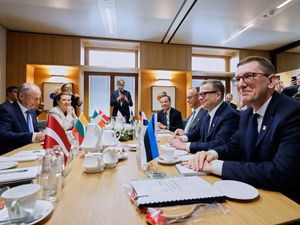
UPDATE: Belgium has urgently demanded “ironclad guarantees” from its European Union partners before supporting a critical loan for Ukraine, as leaders convene in Brussels for a high-stakes summit. The EU is considering using frozen Russian assets, totaling approximately 193 billion euros, to finance Ukraine’s military and financial needs over the next two years.
At the summit, which is taking place on October 16, 2023, Belgian Prime Minister Bart De Wever emphasized the necessity of protection against potential Russian retaliation. “Give me a parachute and we’ll all jump together,” De Wever stated, highlighting Belgium’s hesitation to proceed without firm assurances. He conveyed his concerns to the Belgian parliament just before the summit commenced.
The proposed “reparations loan” from the EU could amount to 90 billion euros for Ukraine, with additional backing from countries like the UK, Canada, and Norway to cover any shortfalls. This plan is crucial as Ukraine faces a dire financial situation, risking bankruptcy without immediate funding. The International Monetary Fund estimates Ukraine requires up to 137 billion euros by spring 2024 to stabilize its economy.
European Commission President Ursula von der Leyen urged the leaders to find a solution, stating, “We will not leave the European Council without a solution for the funding of Ukraine for the next two years.” Meanwhile, EU Council President Antonio Costa committed to keeping negotiations ongoing until an agreement is reached, even if it takes days.
Belgium’s demands are fueled by fears of Russian retaliation, particularly following a lawsuit filed by the Russian Central Bank against Euroclear, the financial clearing house holding the frozen assets. Belgium is advocating for the inclusion of additional frozen assets from other European nations and assurances that Euroclear will be safeguarded against legal challenges.
The urgency of the situation was underscored by Polish Prime Minister Donald Tusk, who warned, “Now we have a simple choice. Either money today or blood tomorrow.” He called for unity among European leaders to rise to this critical occasion.
While EU envoys have been working tirelessly to bridge differences among the 27 member states, dissent remains. Countries like Hungary and Slovakia have expressed opposition to the reparations loan, with Hungarian Prime Minister Viktor Orban labeling the proposal as a “dead end.” Orban, a close ally of Russian President Vladimir Putin, stated, “To give money means war.”
As the summit unfolds, the stakes are high, and the outcome remains uncertain. Belgium’s position could significantly influence the EU’s decision-making process. The leaders are expected to make a definitive decision soon, with the potential for ramifications that could affect regional security and Ukraine’s immediate future.
With the clock ticking, the EU leaders have a monumental task ahead. The need for swift action has never been more pressing as they navigate the complexities of international finance and geopolitical tensions. The world watches closely, and any developments will shape the next steps in supporting Ukraine during this critical juncture in its ongoing conflict.