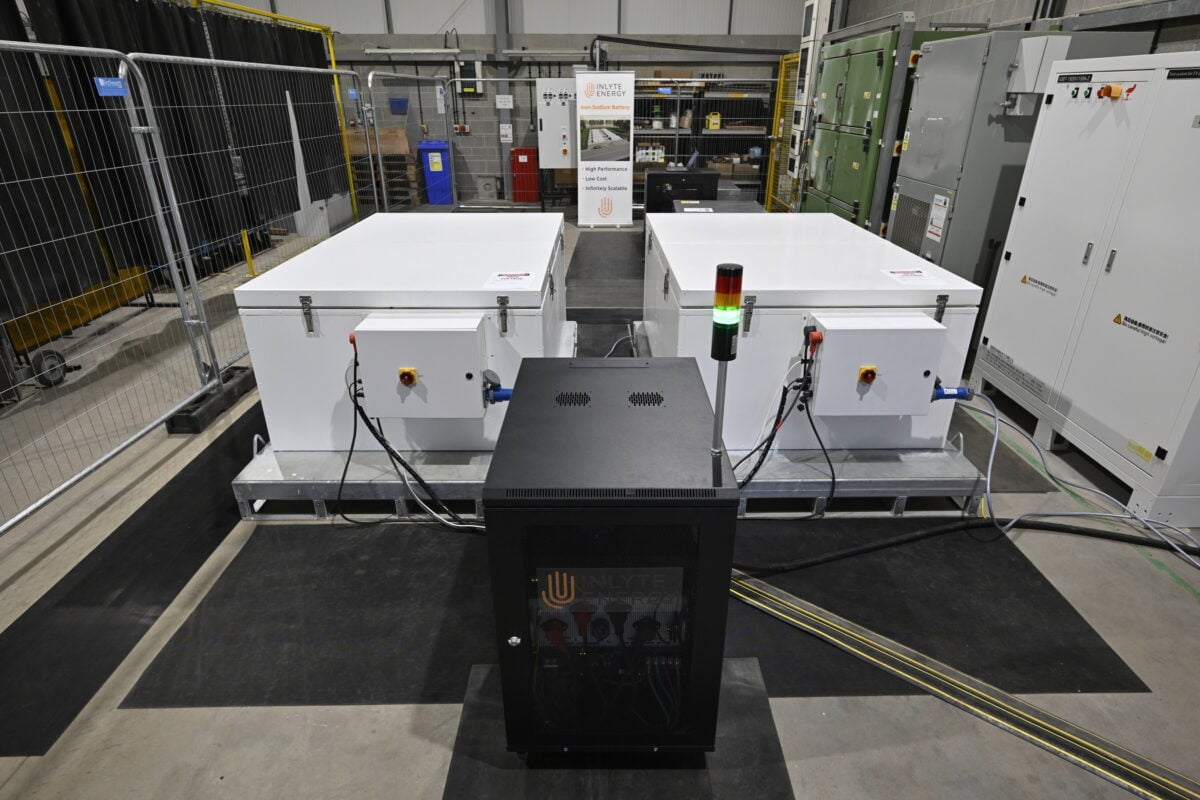
A new partnership between Swiss data centre operator NTS Colocation AG and US-based battery manufacturer Inlyte Energy aims to deploy 2 MW of iron-sodium battery capacity by 2028. The collaboration will kick off with a pilot installation at NTS’s facility in Bern, Switzerland, featuring a 600 kWh system expected to be commissioned by the end of this year.
The pilot project represents a significant step for both companies, as it will serve as a technical and operational validation of iron-sodium battery technology within a live data centre environment. NTS focuses on high-performance colocation data centres in Zurich and Bern, prioritizing renewable energy sources and incorporating waste heat recovery systems. This initial installation will evaluate the performance of the battery system and its integration with existing electrical and control systems.
Successful validation by the end of 2026 could pave the way for broader deployment of iron-sodium storage across NTS’s entire portfolio, positioning this technology as a scalable component of the company’s long-term energy strategy. Inlyte has highlighted the challenges associated with traditional lithium-ion (Li-ion) battery energy storage systems, which include fire safety risks, complex permitting for indoor installations, and degradation concerns for long-lived infrastructure.
In contrast, diesel generators, commonly used for backup power, present their own set of disadvantages. These include noise pollution, local air contaminants, the need for fuel storage, and ongoing maintenance requirements. Such issues complicate operations and undermine sustainability goals. Inlyte argues that it is expanding battery energy storage solutions for utility-scale and commercial sectors with a unique three-in-one solution that combines efficient daily load levelling, low-cost, long-duration backup, and high-performance uninterruptible power supply (UPS) capabilities.
The company also pointed out the challenges faced in Switzerland, including high grid fees, limited land availability, and stringent permitting requirements. Recent updates to the EU Energy Efficiency Directive mandate that data centres report fossil fuel consumption, including diesel used for backup generators. Although diesel is not banned, operators are now compelled to explore cleaner and more efficient options to enhance overall grid performance.
Inlyte’s innovative approach includes modules that exceed 300 kWh in storage capacity, which the company claims are the largest sodium metal chloride (SMC) battery cells ever built. CEO Antonio Baclig has stated that Inlyte has “reinvented the SMC battery for low-cost grid storage” following a breakthrough in cathode material development. The CEO emphasized key features of SMC batteries, which have been commercially available for over forty years, including their safety and durability, and their ability to function in extreme temperature conditions.
This initiative aligns with broader efforts in the energy sector. In June 2025, the US Department of Energy’s Office of Electricity announced funding of up to 15 million USD for three storage technologies. Inlyte is involved in one of these projects, which focuses on developing and showcasing an iron and sodium-based long-duration energy storage (LDES) system to enhance energy resilience at the Alliance Redwoods site in Occidental, California.
As the energy landscape evolves, the collaboration between NTS and Inlyte could mark a pivotal shift towards more sustainable and efficient energy solutions within the data centre industry.