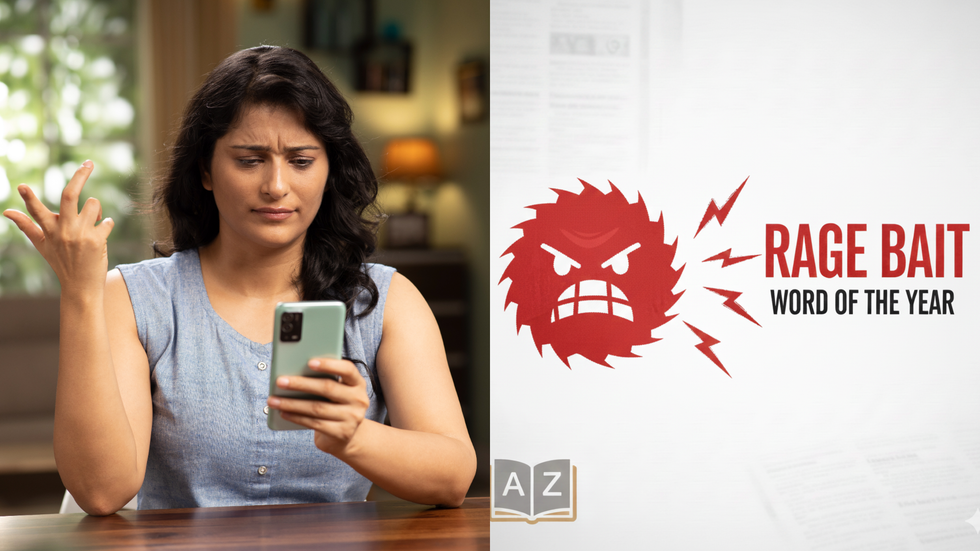
Oxford University Press has officially named “rage bait” as the word of the year for 2025, a decision announced on Monday that highlights the pervasive internet culture of the past year. This term refers to online content intentionally designed to provoke anger or outrage, reflecting a significant shift in how digital interactions shape public discourse.
The definition of rage bait is clear: it encompasses content that is frustrating, provocative, or offensive, aiming to elicit strong emotional responses. Unlike traditional clickbait, which primarily piques curiosity, rage bait directly targets emotional engagement. The underlying goal is straightforward—more traffic, increased shares, and higher engagement rates.
Casper Grathwohl, president of Oxford Languages, emphasized that the rise of this term indicates a growing awareness of manipulation tactics employed online. He noted that while last year’s word, “brain rot,” captured the mental fatigue associated with endless scrolling, rage bait underscores the strategies designed to spark outrage and discussion.
Analysis of the Term’s Popularity
“Rage bait” emerged as the frontrunner among other contenders, including “aura farming,” which refers to the cultivation of a confident public persona, and “biohack,” related to optimizing health or performance. The selection of rage bait as the word of the year reflects a broader cultural sentiment in 2025, where anger and outrage serve as catalysts for engagement across digital platforms.
The Oxford team conducted a thorough analysis of usage trends, online behavioral patterns, and the cultural impact of various terms before making their decision. This careful examination reveals the growing ubiquity of rage bait, with many social media users encountering it frequently, even if they are unfamiliar with the term itself.
Public Reaction and Cultural Implications
The reaction to the term has been robust, with many users and experts acknowledging its relevance. Lexicographer Susie Dent commented to the BBC on the phenomenon, explaining that content creators often thrive on the high engagement rates associated with outrage. Social media algorithms tend to amplify such content, leading to a cycle where provocation generates more interaction compared to more benign topics.
Rage bait is not a new concept, having first appeared in online discussions as early as 2002 within a Usenet post. Over the years, it has evolved into a term frequently used to critique various content networks. The notable spike in its usage in 2025 indicates both an increase in its application and a growing public consciousness around the emotional manipulation prevalent in digital media.
Past words of the year from Oxford University Press include “emoji,” “goblin mode,” and “selfie.” Grathwohl stated that rage bait continues the trend set by previous selections, illustrating how outrage-driven content attracts clicks, which in turn fuels algorithmic promotion, leading users to experience mental fatigue from relentless scrolling.
As digital landscapes evolve, the designation of rage bait as the word of the year serves as a reminder of the power and consequences of online content creation. The term encapsulates a critical moment in understanding how emotional engagement shapes interactions on social media platforms, emphasizing the importance of mindful consumption in an increasingly provocative digital world.