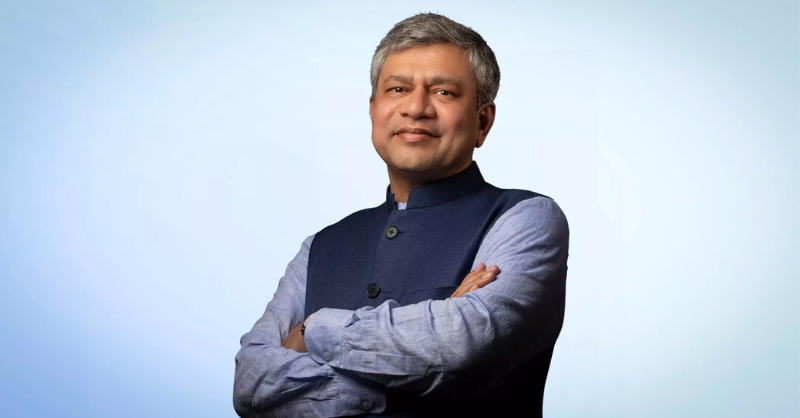
India has set an ambitious target to secure over $200 billion in investment for artificial intelligence (AI) infrastructure by 2028. This initiative aims to establish the country as a global leader in AI computing and applications. The plan was announced by Ashwini Vaishnaw, India’s Minister of Electronics and Information Technology, during the AI Impact Summit held in New Delhi. The summit attracted senior executives from leading technology firms, including OpenAI, Google, and Anthropic.
A significant portion of the anticipated investment will focus on enhancing AI infrastructure, which encompasses data centres and semiconductor systems. Notably, around $70 billion has already been pledged by major US technology companies like Amazon, Google, and Microsoft to bolster AI and cloud infrastructure within India. In addition to infrastructure enhancements, the government anticipates attracting approximately $17 billion in new investments directed towards deep-tech startups and AI-driven applications.
Government Support and Incentives
To facilitate this monumental push, New Delhi is implementing a range of incentives, including tax breaks, state-backed venture capital, and regulatory support to capture a larger share of the global AI supply chain. A new venture program, amounting to ₹100 billion (around $1.1 billion), has been established to support high-risk sectors, particularly in AI and advanced manufacturing. Furthermore, the government has extended the eligibility period for deep-tech startups to 20 years and raised the revenue threshold for startup benefits to ₹3 billion (approximately $33 million).
Vaishnaw remarked during a press briefing at the summit, “We have seen VCs committing funds for deep-tech startups. We have seen VCs and other players committing funds to big solutions and big applications. We have seen VCs committing funds for further research in cutting-edge models.” This enthusiasm from venture capitalists highlights the growing confidence in India’s potential as an AI powerhouse.
The Indian government also plans to enhance its shared computing capacity under the IndiaAI Mission. Currently, the nation has access to approximately 38,000 GPUs and aims to add another 20,000 units in the coming weeks. Vaishnaw emphasized that the next phase of the AI Mission will intensify its focus on research and development, innovation, and broader access to AI tools while continuing the expansion of computing resources.
Challenges Ahead
Despite the ambitious plans, practical challenges loom on the horizon. Large-scale data centres necessitate substantial amounts of electricity and water, and existing infrastructure may hinder swift deployment. Vaishnaw acknowledged these challenges but also pointed to India’s increasing clean energy capacity, which currently constitutes more than half of its installed power generation, as a potential advantage amid rising demand.
As India positions itself on the global stage, the success of these initiatives will be crucial in determining its role in the rapidly evolving AI landscape. The government’s proactive approach, coupled with significant investments, sets the foundation for a robust AI ecosystem that could reshape industries and drive innovation across multiple sectors.