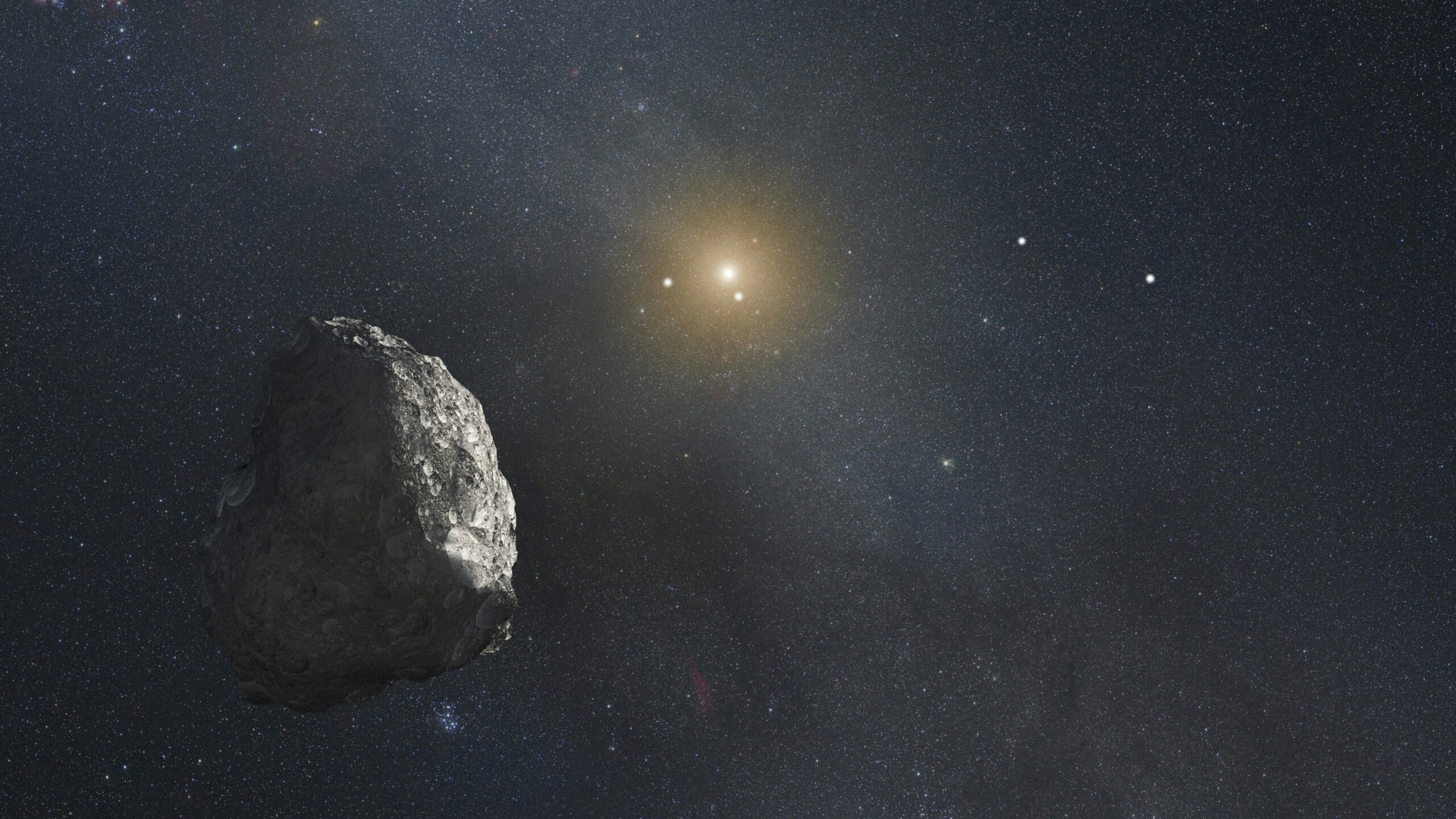
Harvard astrophysicist Avi Loeb has raised alarms regarding humanity’s preparedness for potential extraterrestrial encounters, particularly in light of the recent interstellar object known as 3I/ATLAS. This comet-like entity, which passed by Earth shortly before Christmas, has ignited discussions about its origins and implications for human safety.
Loeb has been analyzing 3I/ATLAS, detected for the first time in July 2023. His research suggests that, while many astronomers view it merely as a frozen mass of dust and gas, it could represent something far more significant: a messenger or even a technological artifact from another civilization. He commented, “In the first case, humanity need not do anything but await the arrival of this interstellar messenger with open arms. It is the second option which is of great concern.”
Public Fascination and Scientific Inquiry
The unusual trajectory of 3I/ATLAS suggests it originated from deep interstellar space, capturing the interest of both amateur and professional astronomers globally. The object has sparked an increase in public curiosity, with Google searches for “planetary defense” surging by nearly 300% as people ponder how prepared we are for unforeseen events from space. Meanwhile, celebrities like Kim Kardashian have also engaged in the conversation, albeit with varying degrees of scientific accuracy.
Loeb argues that the comet’s peculiar chemical composition and speed do not align with established natural models, prompting him to challenge mainstream astrophysical theories. He has long advocated for the consideration of alien technology in discussions about cosmic phenomena.
Despite the excitement surrounding 3I/ATLAS, NASA has reassured the public that there is no immediate danger, as the comet will pass at a safe distance of approximately 170 million miles from Earth. Nevertheless, Loeb warns that humanity may have inadvertently revealed its location to potential extraterrestrial civilizations. He referenced NASA’s Voyager 1 and Voyager 2 probes, which carry golden records showcasing greetings and music as signals of human existence sent into the cosmos. “We should be ready for the possibility of a visitor that detected them,” Loeb stated. “It may come to save us or destroy us.”
Challenges in Planetary Defense
Experts in planetary defense take the notion of threats from space seriously, although their primary concerns typically revolve around asteroids rather than alien spacecraft. Science journalist Dr. Robin Andrews, author of “How to Kill an Asteroid,” outlines two main strategies for averting asteroid impacts: deflection or destruction. This could involve techniques ranging from crashing a spacecraft into the object to employing nuclear devices to alter its trajectory.
3I/ATLAS travels at an astonishing speed of 42 miles per second, making interception a daunting task even for humanity’s most advanced technologies. Andrews cautions that if a comet were on a collision course with Earth, the scenario would be catastrophic. “The odds are tiny, but defending against it would be incredibly difficult,” he remarked.
Theoretical defense strategies against potential alien craft also present significant challenges. While Earth’s atmosphere would provide some natural resistance, causing any incoming vessel to heat to extreme temperatures, military options are limited. Current defense systems, such as the THAAD missile defense, would likely be ineffective against a civilization capable of interstellar travel.
In a lighthearted moment, filmmaker and UFO researcher Mark Christopher Lee joked about humanity’s best defense being a “War of the Worlds”-style twist where aliens might fall victim to Earth’s microorganisms, or perhaps a distraction through social media platforms. “Maybe we could distract them with TikTok,” he quipped.
In light of these discussions, Loeb advocates for increased global cooperation, more vigilant monitoring of space, and a humble approach to the unknown. He even proposes the establishment of an “alien alert system,” akin to the Richter scale, which would allow governments and scientists to gauge potential extraterrestrial threats and respond swiftly to the unexpected.
As humanity continues to explore the cosmos, the question remains: Are we truly prepared for what lies beyond our planet?