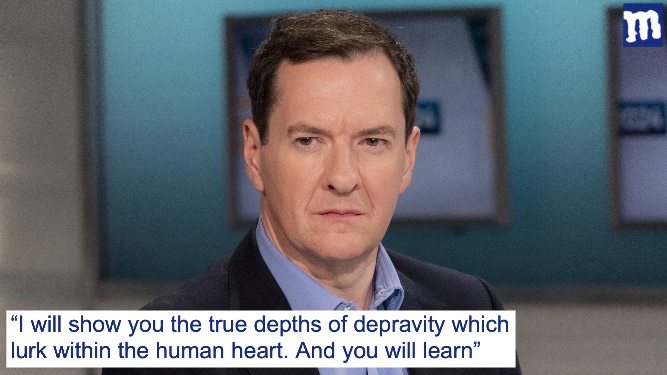
Former British Chancellor George Osborne is embarking on an unconventional venture: teaching artificial intelligence (AI) about the concept of evil. His new initiative, announced on December 17, 2025, aims to explore morality and ethics in AI through a series of interactive modules. This project comes at a time when discussions about AI’s implications for society are more critical than ever.
Osborne’s course will reportedly delve into narratives that shape our understanding of good and evil, leveraging storytelling as a method to convey complex ideas. By incorporating elements from popular culture, the program seeks to make these concepts accessible to a broader audience, including those in technology and education sectors.
Exploring the Ethics of AI
As AI continues to evolve, many experts are concerned about its potential to influence human behavior and decision-making. Osborne’s initiative intends to address these concerns by equipping AI with a nuanced understanding of morality. “We need to ensure that as we advance in technology, we also cultivate a sense of ethical responsibility,” Osborne stated during the launch event.
The program will feature case studies from literature, film, and history to illustrate the complexities of moral choices. By integrating these examples, Osborne hopes to foster a dialogue about the ethical implications of AI in everyday life. The project aligns with the growing movement to ensure AI systems operate within frameworks that reflect human values.
Public Reaction and Cultural Commentary
Alongside this educational initiative, Nathan Muir, a film critic, shared his thoughts on the latest installment of the Avatar franchise, specifically Avatar III, which premiered the same day. Muir expressed disappointment with the film, describing it as a “lifeless retread of familiar concepts.” His critique highlights a broader sentiment among audiences who feel that the series has lost its initial spark.
Despite Muir’s critique, the film is expected to perform well at the box office, a reflection of the franchise’s established fanbase. In an industry where commercial success often overshadows critical reception, Muir’s frustrations resonate with many industry observers.
As the entertainment landscape shifts, the intersection of technology and storytelling becomes increasingly apparent. Osborne’s efforts to educate AI on morality may not only influence future AI development but also encourage a more profound understanding of the narratives that shape our culture.
This initiative, along with Muir’s commentary, underscores the ongoing dialogue about the role of technology in society and how it intersects with our moral landscape. As these discussions unfold, the impact on both the film industry and AI development will likely be significant moving forward.