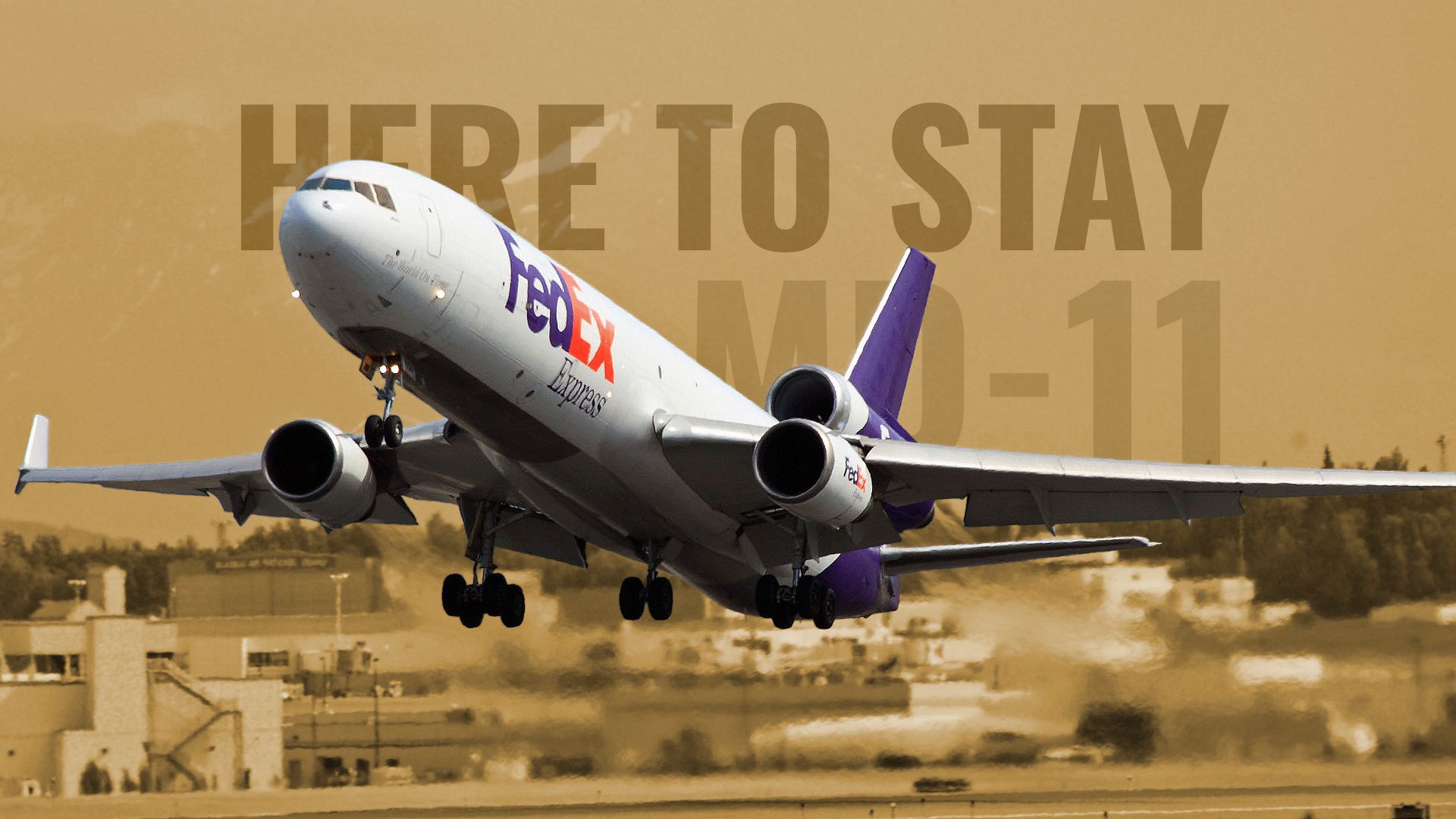
FedEx Express is reaffirming its commitment to the McDonnell Douglas MD-11, contrary to recent trends in the cargo airline industry. Following the retirement of the MD-11 by UPS Airlines after a tragic accident in Louisville last year, many believed the tri-jet was nearing the end of its operational life. However, FedEx is actively working to return its fleet of MD-11s to service, viewing the aircraft as a vital asset rather than a liability.
FedEx has announced plans to restore its 29 operational MD-11s by the end of May 2024. The company is collaborating with Boeing and the Federal Aviation Administration (FAA) to ensure that all necessary inspections are completed. The airline has already started a comprehensive inspection program that includes advanced Non-Destructive Testing (NDT) to assess the aircraft’s fuselage and wing-spar attachments.
Economic Factors Drive Decision
The decision to retain the MD-11 is rooted in economic necessity. FedEx recently raised its revenue growth forecast for the fiscal year 2026 to between 5% and 6%. In order to achieve this target, the airline requires all available capacity, which the MD-11 provides. Acting as a “middle gear,” the MD-11 bridges the gap between the smaller Boeing 767-300F and the larger Boeing 777F, allowing for efficient cargo transport.
The grounding of the MD-11 following the UPS accident resulted in a significant financial impact, costing FedEx an estimated $175 million in lost profits. By returning the MD-11 to service, FedEx is prioritizing long-term gains over short-term maintenance costs. The company stated, “We continue to work with Boeing and the FAA to address any required inspection and maintenance that may be needed to return our MD-11 aircraft safely to service.”
Competitive Advantages Over UPS
FedEx’s approach to the MD-11 contrasts sharply with UPS, which opted to retire its fleet, incurring a one-time charge of $137 million. UPS cited high maintenance costs and extended downtimes as reasons for its decision.
FedEx, on the other hand, has already conducted modifications on its MD-11s, including enhancements to the engine pylons, which were recommended in a service bulletin issued by Boeing. This proactive maintenance strategy has positioned FedEx advantageously. As a UPS engineer noted, FedEx’s pylons are “much more beefier and sturdy” compared to those of UPS.
Moreover, FedEx maintains the largest and most experienced MD-11 maintenance crew globally at its Memphis facility. With over 30 retired MD-11s kept for spare parts, FedEx is well-equipped to support its operational fleet amid a growing parts market following UPS’s retirements.
Strategic Importance to International Operations
The MD-11 plays a crucial role in FedEx’s strategy to expand its international operations. Since losing its air cargo contract with the USPS in 2024, FedEx has shifted focus to increasing capacity in the Asia-Europe market and intra-Asia trade lanes. The MD-11’s ability to carry 92 metric tonnes of cargo makes it a vital component of this strategy, nearly matching the capacity of the Boeing 777F.
Recently, FedEx launched new flights to its global air transit facility at Istanbul Airport, which serves as a strategic hub linking Europe, Asia, and Africa. The new facility can handle 7,000 packages per hour and has initiated service with over 30 weekly flights. The addition of five new weekly flights connecting the Asia-Pacific region to Europe underscores the MD-11’s significance in supporting these operations.
As FedEx navigates these changes, its decision to retain and upgrade the MD-11 highlights both a commitment to operational efficiency and an eye towards future growth in an increasingly competitive market.