In 2026, the traditional “factory model” of education has become obsolete as the world embraces a new framework known as Cognitive Education. This innovative approach integrates Artificial Intelligence tutors and Virtual Reality (VR) classrooms, fundamentally reshaping how students learn. The e-learning market has surged past $365 billion, reflecting a significant shift towards continuous, personalized education rather than conventional degree programs.
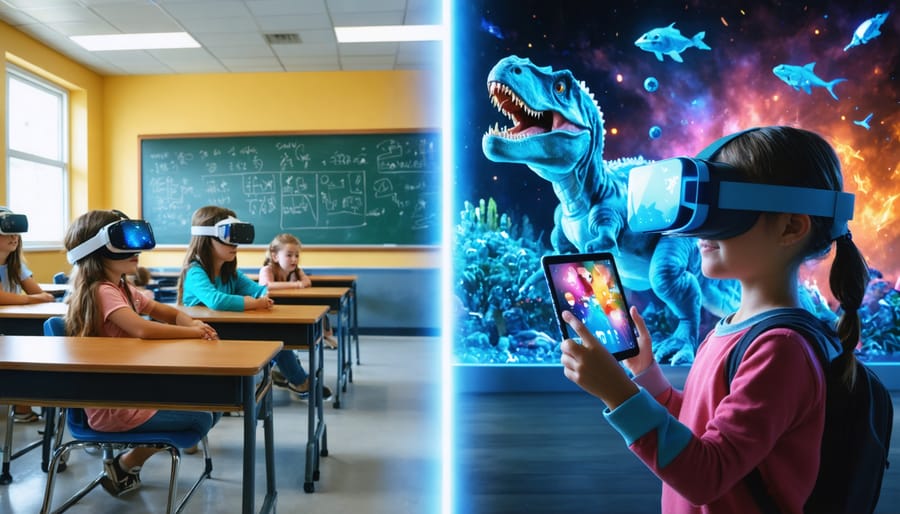
The integration of VR technology has transformed classrooms into immersive learning environments. By 2026, the market for VR in education is projected to reach $8.11 billion. Students engage in photorealistic simulations, such as walking through the Roman Senate and debating with AI-generated historical figures. This hands-on experience enhances memory retention and makes learning more engaging.
AI tutors, including platforms like Buddy and Kyron Learning, provide personalized support around the clock. These systems utilize voice recognition and facial analysis to gauge student engagement, adjusting content in real-time to maintain interest and challenge. Research indicates that this tailored approach has led to increased test scores by up to 62% by effectively addressing learning gaps before they escalate into failures.
The educational landscape in 2026 also features a shift towards Blockchain technology for credentialing. As the value of traditional degrees diminishes, micro-credentials recorded on a secure ledger offer verifiable proof of skills acquired. Students can earn badges for mastering specific modules, ranging from “Prompt Engineering” to “Quantum-Safe Ethics,” providing employers with an easily auditable record of competencies.
The role of educators has evolved significantly. By 2026, 69% of teachers reported that AI tools have enhanced their teaching capabilities, allowing them to focus on mentorship and fostering critical thinking—skills that AI cannot replicate. This shift frees educators from administrative burdens, enabling them to engage more deeply with their students on emotional and intellectual levels.
Additionally, AI plays a crucial role in stimulating business ideation among students. By offering data-driven insights and simulating market scenarios, educational institutions encourage risk-taking and creativity in a controlled environment. This approach prepares students for real-world challenges, equipping them with the skills necessary for future success.
In the realm of digital marketing for education, the landscape has transformed markedly. The concept of Generative Engine Optimization (GEO) has emerged, where AI directly answers over 75% of informational queries, such as course requirements. Educational marketers are now optimizing their digital presence to be recognized as credible sources by AI systems, ensuring that their programs are highlighted in AI-generated overviews.
The rise of corporate partnerships has further blurred the lines between education and employment. By 2026, 75% of Fortune 500 companies have adopted VR and AI for internal training, positioning themselves as educational hubs. Alumni can access ongoing training for a monthly fee, ensuring their skills remain relevant in a rapidly evolving job market.
Despite these advancements, challenges remain. The reliance on AI raises concerns about independent thought and the potential for students to lose sight of the “why” behind their learning. Ensuring that AI literacy becomes a fundamental skill is critical in helping students leverage technology effectively. Furthermore, incidents of algorithmic bias have drawn attention, urging the industry to develop ethical governance frameworks that promote equity and transparency in educational assessments.
As the world looks ahead to 2030, the vision is clear: No Learner Left Behind. With affordable AI tutors and satellite internet, a world-class education could become accessible to every child, regardless of their geographic location or socio-economic status. The convergence of technology, business, and education has created a dynamic and lifelong learning journey. By acknowledging that “information” is no longer the sole differentiator, educators in 2026 are prioritizing “agency” and the “ability to learn,” ensuring that as machines become smarter, so too do humans.