Dyson’s latest vacuum cleaner, the V16 Piston Animal, reflects the brand’s ongoing commitment to innovation and design, according to engineer Steph Parker. In a recent discussion, Parker addressed the challenges associated with weight and user comfort that have become central to the company’s design ethos.
In developing the V16 Piston Animal, Dyson aimed to maintain a manageable weight without sacrificing performance. Parker noted that minimizing weight was “a key focus” during the design process, particularly in comparison to the previous flagship model, the Gen5detect. The goal was to ensure that the V16 would not exceed the weight of its predecessor.
To achieve this, Dyson engineers made significant adjustments. “One way we did it was by switching the motor around, which allowed us to compress the overall size of the product,” Parker explained. “We’ve also done some fine-tuning of materials, running simulations to identify potential weight reductions, such as reducing wall thickness.” As a result, the V16 weighs 7.5 lbs (3.4 kg) with the wand and main floorhead attached, comparable to the Gen5detect.
Despite these improvements, Dyson vacuums are still considered heavier than many competitors in the market. The V15 Detect, which weighs 6.8 lbs (3 kg), has been noted for its lighter design, yet it is the model that has received top rankings from consumers for its comfort and ease of use.
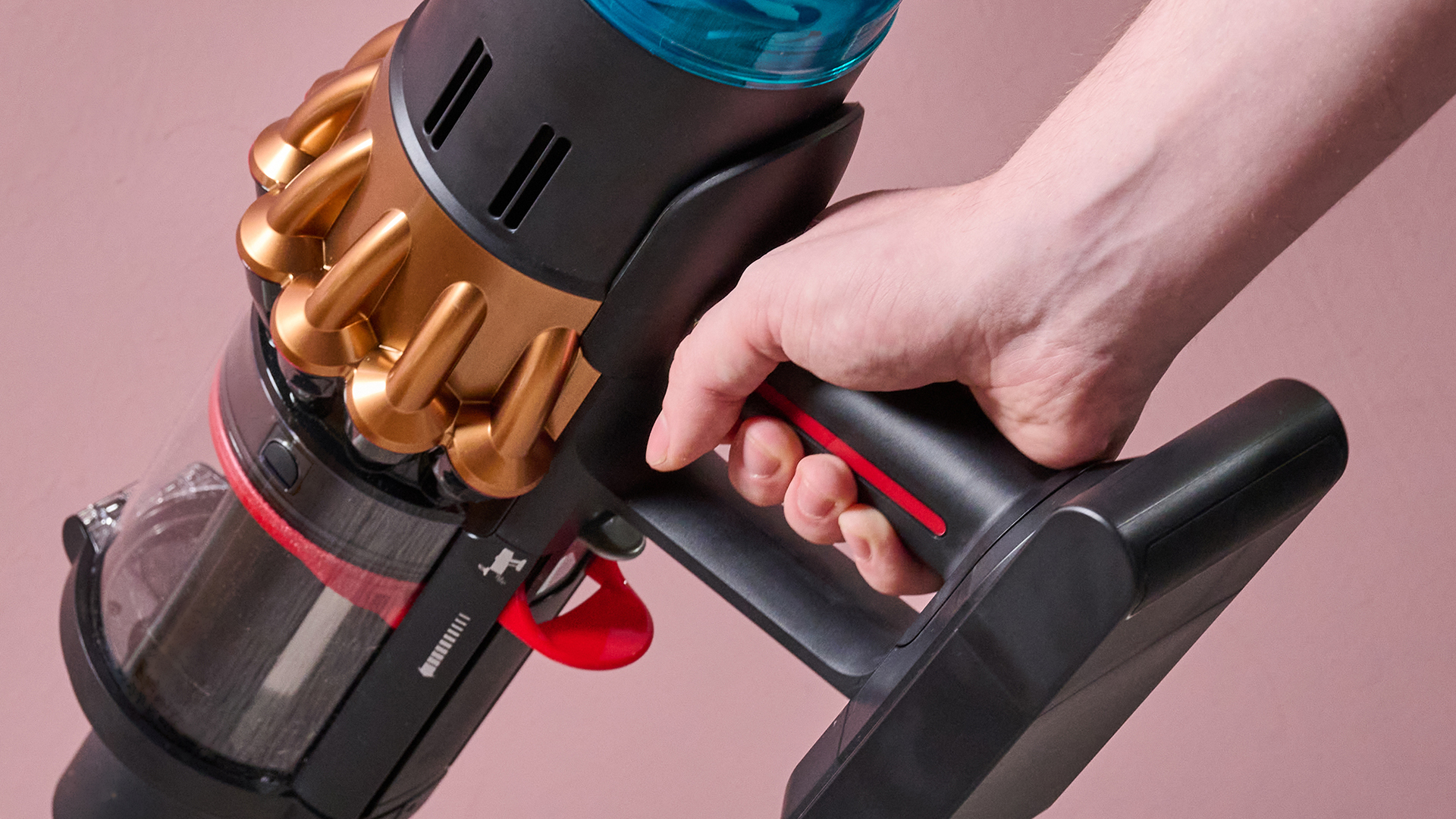
Parker acknowledged that while Dyson has introduced a cushioning pad above the handle on both the Gen5detect and the V16 Piston Animal, enhancing user comfort, there are still areas for improvement. “It’s designed to cushion the top of your hand, where the most weight is concentrated,” she noted. However, she expressed a desire to see similar features integrated into the lighter models.
Another aspect of comfort that has been a concern for users is the design of the vacuum handles. Unlike competitors that offer ergonomically shaped handles, Dyson’s models feature straight-edged designs. This can make handling the heavier models cumbersome, especially when used in handheld mode. When asked about the possibility of redesigning the handle for improved ergonomics, Parker stated that the company focuses on ensuring that handles are comfortable for the majority of users.
“We fine-tune the sizes of that handle depending on our 95 percentile,” she explained. “We conduct multiple tests with user trials to make sure it is as comfortable as possible.” Despite the challenges, she emphasized that the handle design prioritizes structural integrity and durability over aesthetics.
Parker elaborated on the brand’s design philosophy, highlighting that the focus is on creating robust products that are comfortable for most users. Dyson conducts rigorous testing to ensure the structural soundness of its vacuums, which ultimately informs design choices.
As Dyson continues to innovate in the competitive vacuum market, it appears that consumers may need to balance their desire for advanced technology with the realities of comfort and weight in the brand’s flagship models. For now, it remains clear that while Dyson vacuums excel in performance and cutting-edge features, comfort may not always keep pace with their advanced engineering.