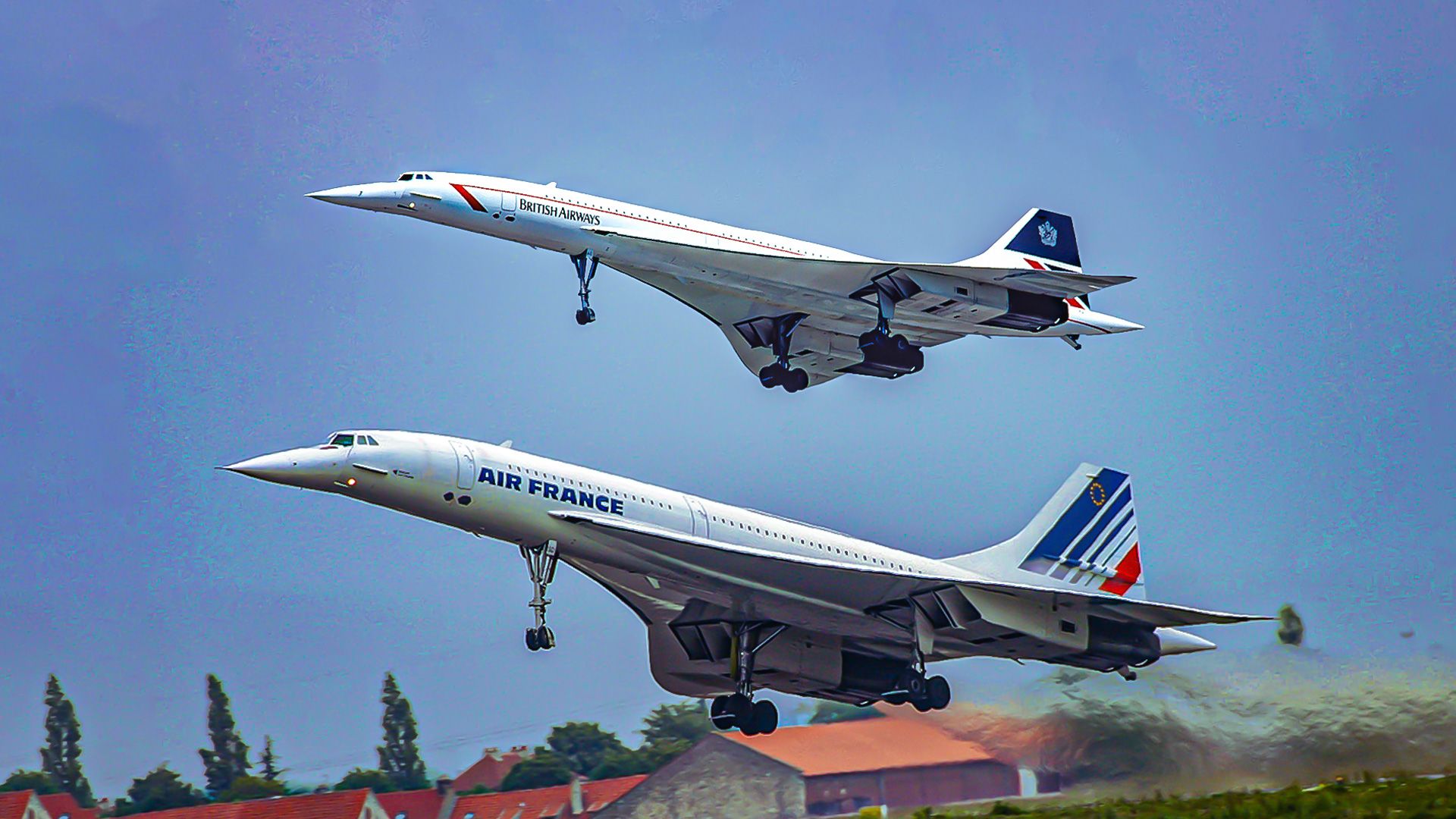
The iconic Concorde, a symbol of supersonic travel, was operated by both British Airways and Air France, with each airline managing a total of seven aircraft. This achievement marks the 50th anniversary of the Concorde’s entry into service. While its primary routes linked London and Paris to New York, its inaugural commercial flights took unexpected paths, with British Airways flying to Bahrain and Air France servicing Rio de Janeiro via Senegal.
The Concorde project extends beyond conventional aircraft development; it represents a significant geopolitical collaboration between the UK and France. This initiative led to the formation of Airbus and marked a historic partnership amid longstanding national rivalries. Understanding why British Airways and Air France each ended up operating seven Concordes provides insight into the aircraft’s unique legacy.
The Origins of the Concorde Fleet
The Concorde was not merely a commercial venture but rather a prestigious national program initiated by the UK and France. In 1963, British Overseas Airways Corporation (BOAC), which would later become British Airways, placed an order for six aircraft. This order was confirmed with an additional five in 1972. Concurrently, France’s national airline ordered six aircraft, with four confirmed in the same year.
Ultimately, all other orders were canceled, yet production continued. A total of 20 Concorde airframes were built, including two prototypes and two pre-production models. The final tally of 16 production aircraft resulted in only 12 being contracted by the two airlines, leaving four surplus aircraft—known as “white tails.” British Airways and Air France each received two of these additional aircraft, thus elevating their fleets to seven. The remaining two were primarily utilized for spare parts and limited flying.
Despite the operational capabilities afforded by seven Concordes, the economics of the aircraft posed significant challenges. Its high operational and maintenance costs, combined with substantial capital expenses, rendered profitability unattainable. Consequently, the airlines operated a fleet of five aircraft, with one or two in maintenance at any given time. The capital expenses were covered by national governments, with the aircraft famously sold to British Airways for £1 each in 1984 during its privatization process.
Global Interest and Orders for Concorde
Several airlines around the world expressed interest in the Concorde, placing nonbinding orders that ultimately fell through. Factors such as the crash of the Soviet Tu-144, regulatory challenges, and escalating costs led to the cancellation of orders by many potential customers. Notable airlines that initially ordered Concordes included Pan Am, Continental Airlines, TWA, and American Airlines, among others.
In total, U.S.-based airlines held options for 38 Concordes. Despite interest from various international carriers, the economic feasibility of operating the Concorde became increasingly uncertain. The order placed by Iran Air is particularly noteworthy, as it highlighted the aircraft’s potential as a national prestige symbol for the Shah of Iran, who envisioned using it on routes like Tehran to London and Tehran to New York. However, the Iranian Revolution in 1979 led to the cancellation of these plans.
The Concorde’s development occurred against a backdrop of intense competition between the United States and Soviet Union during the Cold War. For European nations like the UK and France, the development of advanced aerospace technologies was crucial for maintaining national pride and technological leadership. The 1962 Anglo-French Concorde Treaty emerged from this strategic perspective, representing a collaborative effort to compete with American aerospace giants.
While the Concorde’s commercial viability is often scrutinized, it succeeded as a symbol of European cooperation and technological ambition. It laid the groundwork for future multinational projects in aviation, culminating in the formation of Airbus, which has become a leading figure in the global aerospace industry. The legacy of Concorde endures today, having demonstrated that Europe could unite in the face of formidable challenges to produce groundbreaking technology.