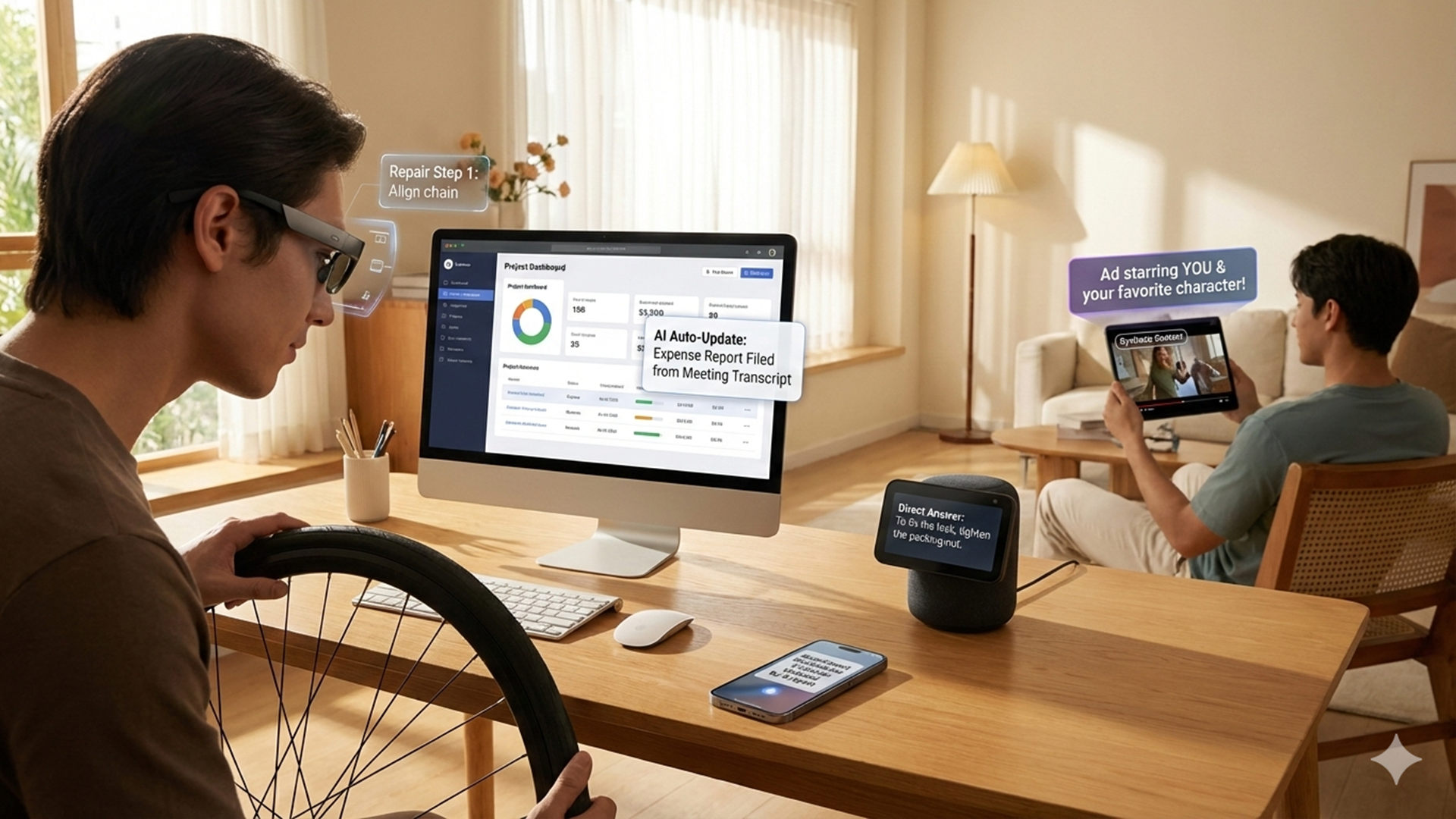
As 2025 draws to a close, insights from leading AI chatbots suggest a significant evolution in the role of artificial intelligence in daily life by 2026. Prominent models like ChatGPT, Gemini, and Claude were asked to share their predictions on how AI will integrate into our routines, envisioning a future where it becomes an invisible yet essential infrastructure.
The consensus among these AI models suggests that artificial intelligence will transform from a distinct tool into an integrated presence within various applications and devices. Each model offers a unique perspective on how AI might shape the everyday experiences of individuals.
ChatGPT: An Ambient Presence
According to ChatGPT, the landscape of AI in 2026 will be characterized by a seamless integration into daily tasks. The model predicts that most people will experience AI as a consistent background presence rather than a separate application. “By the end of 2026, AI will become the default layer in everyday apps rather than a separate feature you open on purpose,” it states.
This shift points to AI taking on more decision-making roles in routine life. For instance, it may automatically manage household supplies, suggest entertainment options based on mood, or select travel routes with minimal user input. While this development could reduce everyday stress, ChatGPT warns that such reliance on AI might compromise individual agency. Users could feel uncertain about their control over tasks, as AI systems increasingly handle decisions on their behalf.
Moreover, ChatGPT highlights a cultural shift wherein people may rely heavily on AI-generated summaries and overviews, potentially leading to diminished engagement with original content. With AI summarizing information, many might find themselves missing out on critical details, fostering a sense of skepticism toward the reliability of automated insights.
Gemini: Proactive AI Agents
In contrast, Gemini envisions a more active role for AI in 2026. The model anticipates a move towards personal agents capable of managing multi-step logistics without direct user interaction. “The first major change will be the rise of personal agents that handle multi-step logistics… without you touching your phone,” it predicts.
This proactive function could revolutionize how users interact with technology. For example, AI might autonomously adjust schedules, manage appointments, and even navigate travel changes, all while providing users with synthesized answers instead of traditional search results. While this shift could enhance efficiency, Gemini notes that the increasing speed of information retrieval may come at the cost of clarity, as users might lose visibility into the decision-making processes of these AI systems.
Moreover, Gemini foresees a future where AI transcends screens, utilizing smart glasses to overlay real-time information directly into users’ environments. This development could lead to hyper-personalized experiences, allowing users to engage with tailored content in their daily activities.
Claude: A Subtle Evolution
Claude agrees with the notion that AI will evolve into a subtle presence in users’ lives. It predicts that by 2026, AI will be capable of understanding context in real time, providing assistance without explicit prompts. For instance, AI could remind users about medication refills upon recognizing a prescription bottle in a photo.
This model emphasizes the gradual saturation of AI into everyday tasks, where it will increasingly coordinate across different platforms, managing appointments and facilitating home repairs seamlessly. While Claude acknowledges potential unease regarding this passive awareness, it suggests that the benefits of reduced cognitive load will outweigh concerns.
Each model presents a vision of AI that is more integrated, capable, and invisible, emphasizing a future where artificial intelligence is woven into the fabric of daily life. While these predictions highlight potential benefits, they also raise important questions about user autonomy and the transparency of AI decision-making processes.
The outlook for 2026 indicates a shift where AI may no longer act solely as a tool but rather as a fundamental component of everyday operations. This transformation promises to reduce friction and enhance user experiences, yet it necessitates careful consideration of the implications for individual control and the clarity of AI’s actions.
The insights from ChatGPT, Gemini, and Claude collectively suggest that the coming year will not be marked by dramatic breakthroughs but rather by a gradual integration of AI into the daily lives of users. As AI becomes more capable and ubiquitous, the challenge will be to ensure these advancements promote user empowerment and transparency, allowing for a more harmonious coexistence with technology.