The Supreme Court of Montenegro has ruled in favor of former chief special prosecutor Milivoje Katnić, dismissing claims that his assets were acquired through criminal activity. The court rejected a request from the Special State Prosecutor’s Office (SDT) to temporarily seize property belonging to Katnić in New Village, determining that the assets were built long before any alleged misconduct occurred.
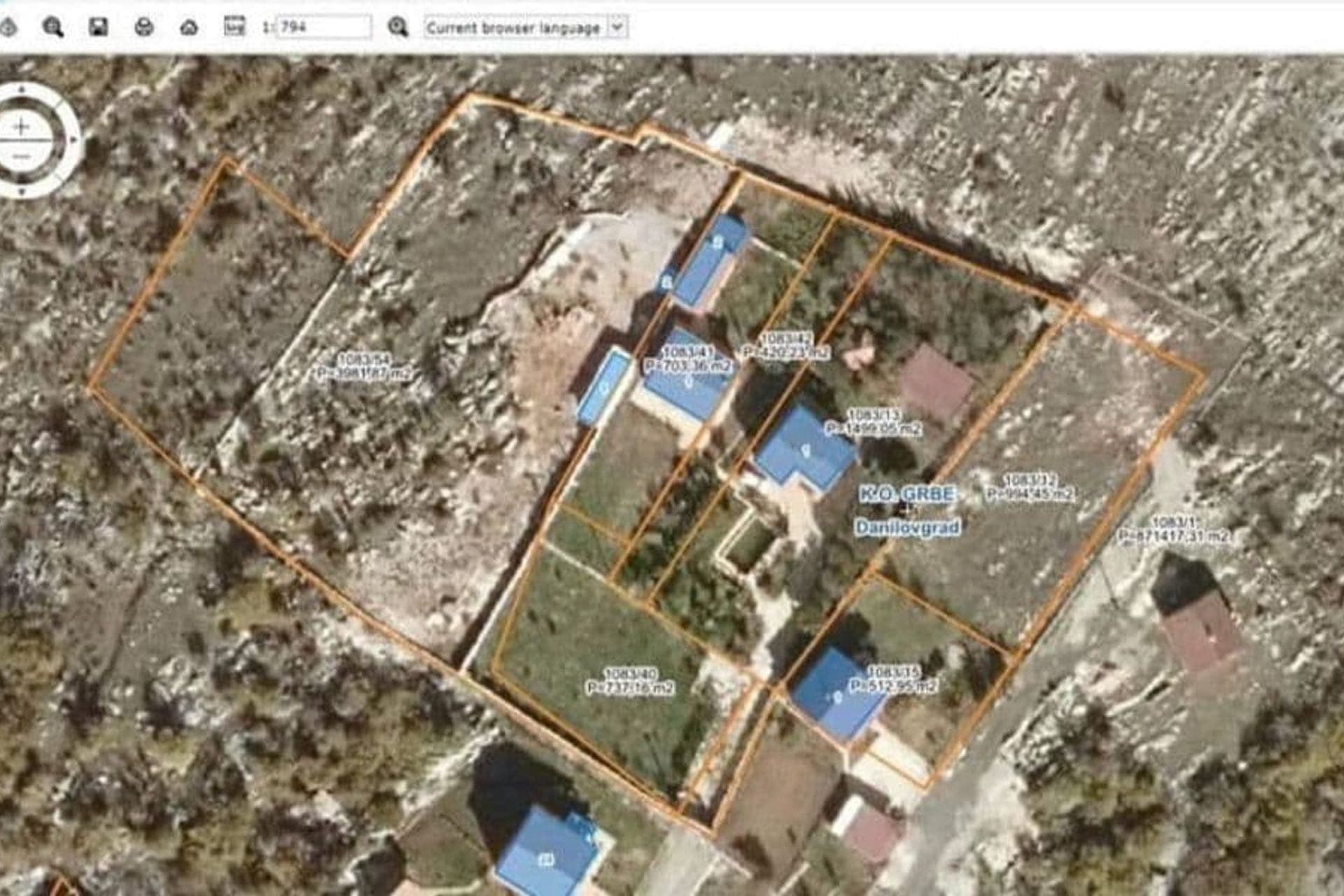
The court’s decision came at the end of December 2023, following an appeal by the SDT against a previous ruling by the High Court. The Supreme Court agreed with the High Court’s findings that there was no temporal link between the alleged criminal activities attributed to Katnić and the construction of properties in the cadastral municipality of Grbe, which took place in 2010.
According to the Supreme Court, the properties were constructed approximately 13 to 14 years prior to the initiation of criminal proceedings against Katnić, a fact deemed critical given the nature of the charges. Katnić’s attorney, Ljubomir Raković, emphasized that documentation clearly shows the properties were built well before the period referenced in the indictment, which alleges the formation of a criminal organization led by former high-ranking police official Zoran Lazović in March 2020.
In the indictment, it is claimed that this organization profited from illegal activities. Raković noted that evidence presented in court, including property records, substantiates that the properties in New Village were constructed in 2010 and 2016. “Therefore, there is no way these assets could have been acquired through criminal conduct,” he stated.
The Supreme Court’s ruling highlighted the inadequacy of the SDT’s arguments, noting that the legal framework does not permit the temporary seizure of property without clear evidence that it exceeds the lawful income of the individual involved and that it is connected to a crime.
It was further clarified that temporary seizure is not a punitive measure, but rather a security measure. The court stated that without sufficient evidence, such actions would be arbitrary and infringe upon property rights. Consequently, the decision partially lifted previous temporary measures restricting Katnić’s ability to manage his assets while the criminal proceedings were ongoing.
The court’s assessment underscored that the SDT failed to demonstrate any substantial link between the alleged commission of a crime and the construction of the properties. It noted that the prosecutor’s claims primarily focused on Katnić’s income from 2019 onward, neglecting evidence of lawful income he had generated as far back as 2005, including the period during which the disputed properties were constructed.
The Supreme Court found that the SDT did not provide specific figures regarding the alleged illegal gains or clarify which portions of Katnić’s assets were considered unlawful. The ruling indicated that the prosecution’s analysis was insufficient, lacking a comprehensive financial review of Katnić’s total income and assets.
As a result, the court confirmed that no clear evidence had been presented to establish a significant disparity between Katnić’s lawful income and the value of his properties. The absence of specific financial flows or evidence showing that the properties were enhanced or maintained through alleged criminal activities further weakened the prosecution’s case.
With this ruling, the Supreme Court affirmed that mere speculation regarding criminal activity is insufficient to infringe upon property rights. It reiterated established legal principles asserting that any interference with property rights must be grounded in concrete evidence.
Currently, the financial investigation concerning properties in Barjamovica will continue, as these assets remain under scrutiny. Raković indicated that witnesses involved in the construction of these properties will need to be heard, as they represent joint ownership among Katnić and his brothers, Radomir and Slavko.
The ongoing legal proceedings will require extensive documentation, including bank statements that demonstrate Katnić’s earnings during his tenure as a judge and later as chief special prosecutor. Raković concluded that this evidence will clarify the sources of Katnić’s income and further reinforce the legitimacy of his property holdings.