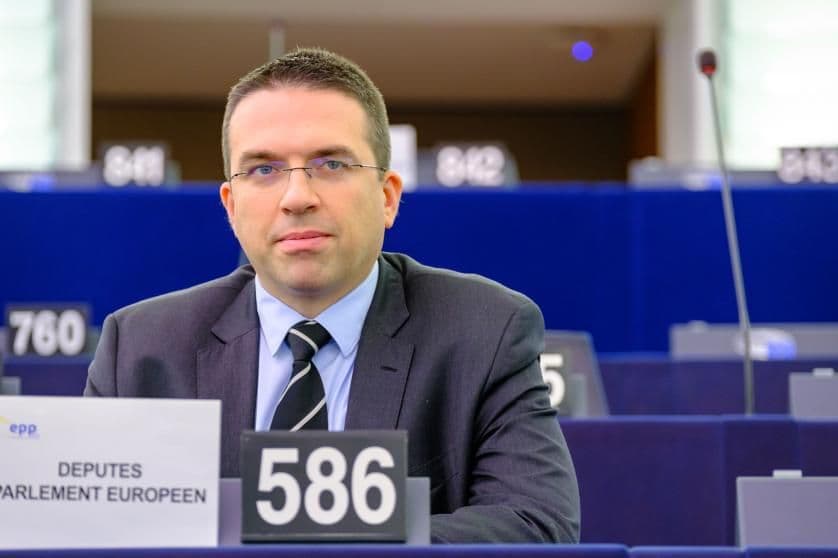
Andrija Mandic, the leader of Montenegro’s Assembly, has sparked controversy with his announcement of proposed constitutional changes. Tomislav Sokol, a Croatian Member of the European Parliament, criticized Mandic’s attempts to position himself as a European version of Serbian politics in Montenegro, stating, “the wolf changes its fur, but never its nature.” Sokol’s remarks came during a news segment on 24 Sata on October 27, 2023, where he emphasized the EU’s firm stance against such changes.
Challenges in EU Integration for Montenegro
Sokol highlighted the necessity for substantial effort and political will to advance Montenegro’s European Union integration process. He noted that the country has a unique opportunity for rapid accession, particularly following the context shift caused by the ongoing war in Ukraine. “Before the start of the war, there was little political will within the EU for any enlargement. However, the situation has changed, and now there is a desire for successful examples in Southeast Europe,” he stated.
Montenegro, strategically positioned at the entrance to the Mediterranean and a NATO member, is seen as a crucial player in the region. Sokol pointed out, “This area cannot remain a black hole where powers like China, Russia, and Turkey can exert influence.” He stressed that stabilizing the region is essential, particularly in light of the geopolitical shifts spurred by the Ukraine conflict.
Sokol argued that Montenegro is the furthest along in the integration process among Eastern European nations and that there is a genuine interest from the EU to expedite its membership. He added that Montenegro’s small size and economy would not significantly alter the balance of power within the EU, making its accession less contentious.
Concerns Over Serbian Influence
Despite the positive outlook for Montenegro’s EU aspirations, Sokol raised concerns about Serbia’s destabilizing influence in the region. He explained that while Montenegro may formalize EU membership criteria, the real challenge lies in achieving genuine societal transformation. “It is difficult to discuss real transformation when there is direct influence from Serbia,” he remarked. This influence is exemplified by the role of the Serbian Orthodox Church and certain political factions within Montenegro that threaten the country’s national identity.
Sokol indicated that Serbia, which opposes Montenegro’s EU membership before its own, is likely to engage in provocations to destabilize the accession process. He expressed concern about the long-term implications of Mandic’s proposed changes, which he views as a continuation of a larger agenda to undermine Montenegro’s independence and cultural identity.
On the topic of recent speculation regarding Croatia’s involvement in blocking Montenegro’s EU accession chapters, Sokol clarified that Croatia had no role in the temporary delays attributed to France. He suggested that any potential influence would more likely be found in the eastern bloc rather than the west.
“I am pleased that Montenegro is moving forward, and the closure of several chapters is a significant achievement,” he said, while reiterating that the destabilizing impact of Serbia remains a pressing issue. He expressed hope that Montenegrin politicians would recognize who they are truly dealing with and stop believing in those who feign western alignment.
Future Bilateral Relations and Reconciliation
Looking ahead, Sokol expressed optimism about continued bilateral negotiations between Montenegro and Croatia concerning unresolved issues. He underscored the importance of resolving matters such as compensation for war prisoners and victims, which he believes are nearing resolution. “Croatia is a friend of Montenegro and wants to see it in the EU,” he affirmed, emphasizing the necessity for Montenegro to maintain its sovereignty and pro-European stance.
In conclusion, as Montenegro navigates its complex political landscape, the implications of Mandic’s proposed constitutional changes raise significant questions about the country’s future direction and its relationship with both the EU and Serbia. With regional stability at stake, the path forward will require careful negotiation and a commitment to genuine transformation.