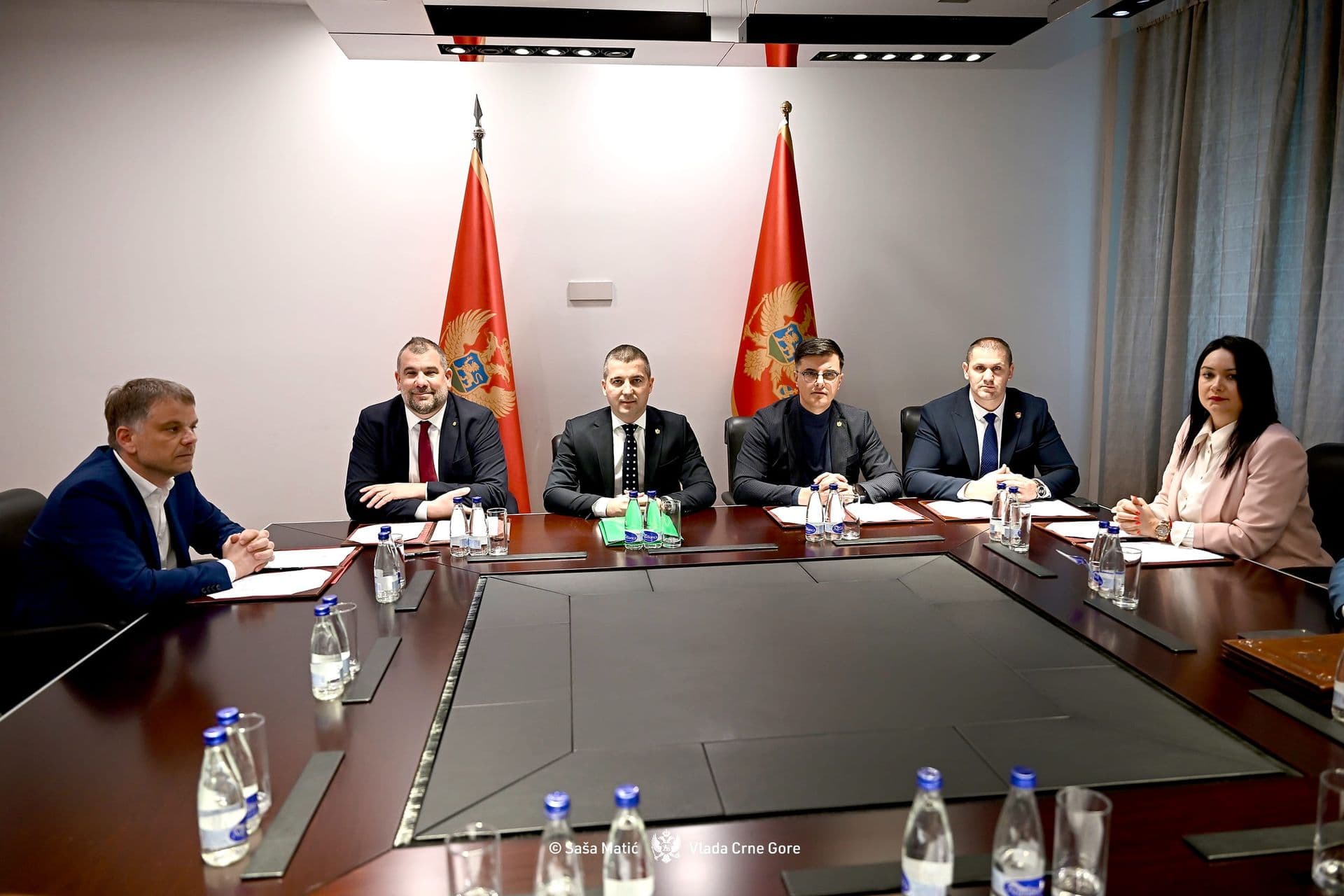
The Montenegrin government has taken a significant step towards enhancing national security by signing an agreement on the utilization of the national “watch” list. This agreement was formalized by key officials, including Minister of Internal Affairs Danilo Šaranović, Minister of Defence Dragan Krapović, Police Director Lazar Šćepanović, National Security Agency Director Ivica Janović, and acting Customs Administration Director Maja Vučić.
The signing took place under the auspices of the Bureau for Operational Coordination of the Intelligence and Security Sector (BOK), led by Deputy Prime Minister for Security, Defence, and Internal Policy Aleksa Bečić. This agreement establishes general operational rules for cooperation between the national watch list organizational unit and the contact points of state authorities involved in monitoring security, financial, and criminal risks.
The national watch list includes individuals and entities monitored for potential threats, referencing government lists from organizations such as Interpol, the FBI, and the Office of Foreign Assets Control (OFAC), as well as sanction lists from the United Nations and the European Union.
Bečić emphasized that the signing of these documents expands the foundation for improving direct intelligence data exchange related to terrorism and organized crime. He noted that this initiative follows months of work by an inter-agency task force established by BOK in February 2024, which has successfully accomplished all defined tasks under the provisions of the Law on the Basics of the Intelligence and Security Sector.
At a recent meeting held on December 20, 2023, BOK identified interoperability among intelligence and security bodies as a strategic priority. This includes establishing channels for data access and exchange based on legal regulations governing their jurisdiction.
BOK also highlighted the importance of cooperation with maritime information units to combat serious crimes such as drug trafficking, human smuggling, and arms trafficking, which have cross-border implications. The agreement aims to facilitate collaboration in these areas, leveraging both Montenegrin ports and international maritime routes to enhance security efforts.
Looking ahead, BOK indicated that the ongoing implementation of the agreement will remain a key priority. The bureau aims to develop standards that will enable greater automation in data exchange among intelligence and security bodies. This effort is crucial for planning and undertaking activities aimed at protecting national security, citizens’ safety, and constitutional rights.
As a part of its commitment to enhancing cooperation, BOK has already signed several agreements on the exchange of criminal intelligence data between various agencies, including the Police Directorate and the Agency for the Execution of Criminal Sanctions. A further agreement is in preparation to regulate cooperation between the Police Directorate and the Ministry of Defence’s Intelligence Security Directorate.
In summary, the signing of the national watch list agreement marks a pivotal moment in Montenegro’s efforts to bolster its security framework, enhance cooperation among governmental bodies, and address emerging threats effectively.