Milan Knezevic, leader of the Democratic People’s Party (DNP), has voiced strong criticism of the Montenegrin government’s approach to environmental issues, stating that the demands being placed on the municipality of Zeta are disproportionately burdensome. He contends that these demands are significantly less than what Croatia is currently asking of Montenegro. Knezevic’s remarks come amid ongoing discussions about the installation of a wastewater treatment system in Zeta and the implications for Montenegro’s European Union (EU) accession process.
In an interview with Novosti, Knezevic expressed skepticism about the notion that Montenegro’s path to EU integration hinges on the installation of the wastewater collector in Zeta. He remarked, “If someone had told me twenty years ago that Montenegro’s European journey would be paved with sewage, I would have suggested using toilets less frequently.” He emphasized that Zeta should not be forced to accommodate such infrastructure, particularly given that an overwhelming majority of its residents—98.5%—voted against the construction in a referendum.
Knezevic pointed out that no other country permits one municipality to install critical infrastructure on the territory of another against the will of its citizens. “Nobody in Zeta opposes the construction of a collector, but it should be on the territory of Podgorica,” he asserted. He further criticized the government for misleading citizens by claiming that the completion of Chapter 27 (environment) negotiations with the EU depends on this project, questioning the integrity of such statements.
He continued, stating that the persistent issues of organized crime and corruption are more significant barriers to Montenegro’s EU aspirations than any language or identity concerns. “If the judiciary were functioning properly, Chapters 23 and 24 would likely have been closed by now,” he added. Knezevic’s call for the Serbian language to be recognized as official and for changes to citizenship laws reflects a broader struggle for identity and recognition within Montenegro’s political landscape.
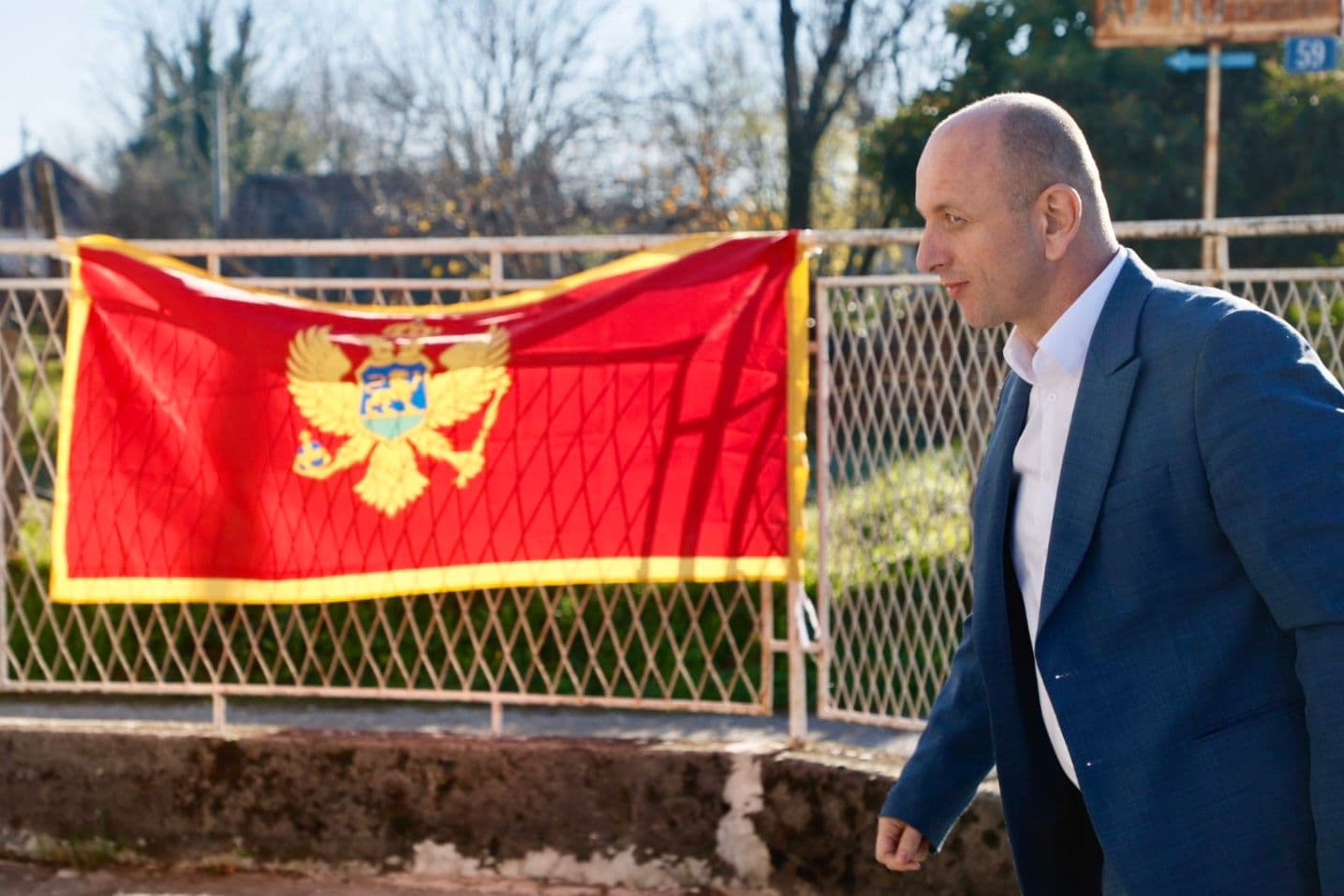
The upcoming government session is set to address these identity issues, with DNP representatives proposing constitutional amendments to establish the Serbian language as official and to recognize the national flag. Knezevic argued that these proposals are modest compared to Croatia’s demands and should not be viewed as hindrances to the European integration process.
Amid these discussions, the political stability of Prime Minister Milojko Spajic’s government remains a concern. Knezevic has indicated that while his party’s demands are significant, they do not threaten the ruling coalition’s majority. “Even if we exit the parliamentary majority, the government will still have a stable majority,” he asserted.
Knezevic has been a prominent figure in Montenegrin politics for over a decade, often positioning himself against the former regime of Milo Djukanovic. He reminded the public that he and his coalition partner, Andrija Mandic, have fought against Djukanovic’s administration, enduring arrests and legal challenges throughout their political careers.
The DNP leader also commented on the regional dynamics affecting Montenegro’s foreign policy, emphasizing that the country’s ties with Kosovo remain strong, particularly as long as representatives of the Serbian community do not hold significant positions in government. He noted the recent electoral performance of the coalition “For the Future of Montenegro,” which garnered 15% of the vote in the 2023 elections, reflecting a shift in public sentiment among Serbian nationals.
Knezevic’s remarks extend beyond domestic politics, touching upon Montenegro’s relationships with its neighbors. He expressed concerns regarding the potential for misinterpretation of Montenegro’s intentions towards Greenland, following President Jakov Milatovic’s comments about wanting a unified Kingdom of Denmark. He humorously suggested that if former U.S. President Donald Trump were aware of Montenegro’s ambitions, he might demand Boka Kotorska in return.
In conclusion, Knezevic maintains a firm stance on the need for the Montenegrin government to address the concerns of the Serbian community while navigating the challenges of EU accession. He remarked, “If we cannot change anything, then I choose not to be an unwilling accomplice in denying the basic rights of my people.” As Montenegro continues to grapple with its identity and aspirations for EU membership, the discussions surrounding language, citizenship, and regional relationships are likely to remain at the forefront of political debates.