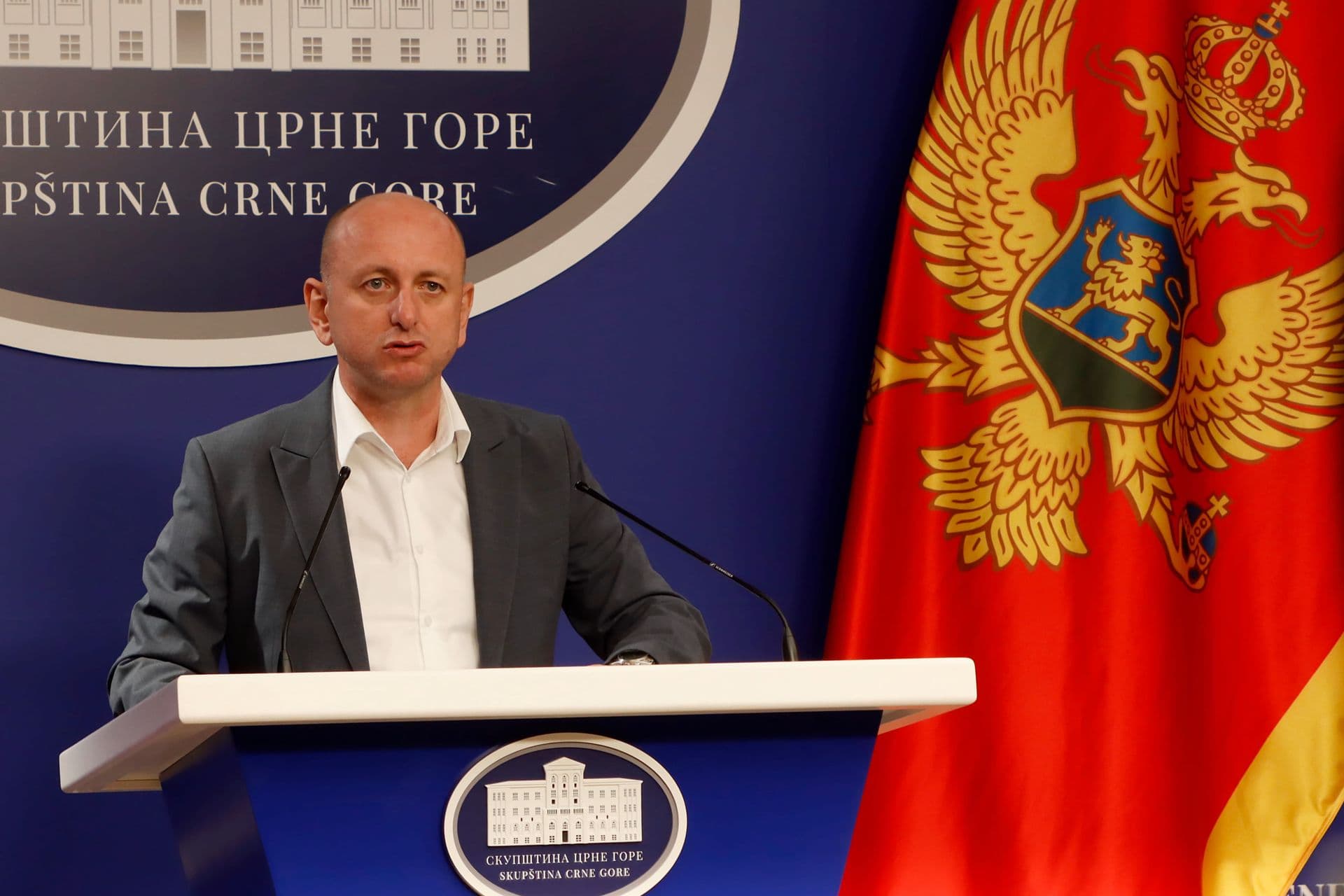
During a press conference, leader of the Democratic People’s Party (DNP), Milan Knežević, asserted that the government document regarding guarantees for the residents of Botun does not include any provisions for changing the location of the wastewater treatment plant. Knežević emphasized that the decision ultimately rests with the citizens of Botun, rather than political leaders.
Knežević expressed concern over the government’s lack of responsiveness to the key demand for a location change, stating, “What we received in the media is a compilation of what Mujović proposed. There are obligations mentioned, but not the change of location, which is the main request of the people of Botun.” He also highlighted that members of the government had not yet seen the document, noting that it was made available to the media and the public first.
He urged Prime Minister Spajić to reach out to the residents of Botun if the document is approved during the government meeting. Knežević called for negotiations to ease tensions and find a compromise based on the government’s current proposal. He reiterated that both he and Mihailo Asanović are not the ones to respond to the government’s offer; instead, it is vital for the citizens of Botun to engage in discussions directly with the Prime Minister.
Knežević also mentioned the recent gathering in Botun, which he described as the largest since 2020. He clarified that the event was not organized by himself or Asanović, but was a grassroots demonstration by the citizens. “We are facing a dirty media campaign aimed at portraying us as obstacles to EU integration and development,” he stated, referencing the allegations against him and his coalition partners.
Meanwhile, Mihailo Asanović, the President of the Zeta Municipality, condemned the proposal to store hazardous waste near the former Aluminum Plant Podgorica (KAP). He labeled the temporary storage of dangerous waste as unacceptable due to its proximity to residential areas, which he claimed poses a direct threat to resident health.
Asanović emphasized the long-standing promise from the government to address the issue of the red sludge pool, stating, “We have been hearing promises for 10 to 15 years, and it is symptomatic that while the government promises remediation, they simultaneously decide to store dangerous materials next to that very site.” He noted that the government has shown signs of retreating from this plan.
The ongoing discussions regarding waste management in the region reflect deep-seated concerns among local residents, and both Knežević and Asanović continue to advocate for the community’s voice to be heard in the decision-making process. As the situation progresses, the response from the government and the engagement of Botun’s residents will be crucial in determining the future of the proposed wastewater treatment plant and related environmental issues.