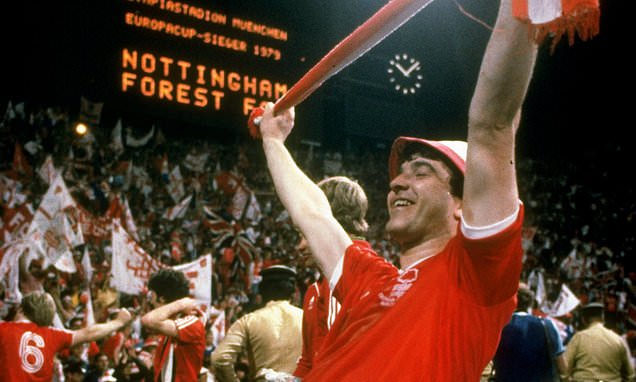
John Robertson, a pivotal figure in Nottingham Forest’s history, passed away on Christmas Day at the age of 72. His contributions to the club, particularly during the late 1970s and early 1980s, solidified his status as an unlikely hero under the management of Brian Clough. Robertson’s journey from being on the transfer list to becoming a European champion epitomizes the transformative power of determination and skill.
Robertson’s most memorable moment came during the 1979 European Cup final, held at the Munich Olympiastadion. In a match that would define Nottingham Forest’s legacy, he delivered a precise cross that allowed Trevor Francis to score the winning goal against Malmö FF. This moment not only secured the trophy but also marked a historic achievement for English football. Francis reflected on Robertson’s talent, stating, “He crossed the ball like a metronome… It was all about him, really. He never really knew it, but he was a bloody genius.”
The Scottish winger was instrumental in securing a second consecutive European Cup title for Forest in 1980, scoring the winning goal against Kevin Keegan‘s Hamburg. This success was particularly remarkable given Robertson’s unassuming demeanor and physical appearance. Often described as unfit and scruffy, he defied expectations by showcasing his exceptional footballing abilities on the pitch.
Robertson’s early days at Nottingham Forest were marked by skepticism. When Clough took charge in 1975, he described Robertson as a “scruffy, unfit, uninterested waste of time.” Yet, beneath the surface lay a player who could read the game intuitively, making him a key playmaker from the wings. His ability to deliver accurate passes and crosses, combined with a keen understanding of team dynamics, made him a vital asset to Clough’s squad.
Notably, a recent poll among Forest supporters named Robertson the club’s greatest player of all time. His legacy is deeply intertwined with that of Nottingham Forest, a connection that is emblematic of his impact on the team. John McGovern, a teammate, remarked, “He may not have looked like George Best but he was as good as him in every way. We would not have won those European Cup finals without him.”
Born in Lanarkshire, Scotland, Robertson earned 28 caps for the national team and participated in the 1982 World Cup in Spain. His career was marked by memorable moments, including scoring a winning goal against England in 1981. Despite his success, he maintained an aura of humility, often downplaying his achievements.
Following his playing career, which included a second spell at Nottingham Forest after a stint at Derby County, Robertson transitioned into coaching. He served as an assistant to Martin O’Neill at various clubs, including Wycombe, Norwich, Leicester, Celtic, and Aston Villa. His straightforward approach to management and his rapport with players contributed significantly to the success of the teams he coached.
O’Neill, who forged a close bond with Robertson during their time together at Forest, will mourn the loss of his friend. The dynamic between O’Neill’s analytical style and Robertson’s instinctive understanding of football created a successful partnership. Clough, who passed away in 2004, once referred to Robertson as the greatest player he had ever known, a testament to the profound respect he commanded within the footballing community.
As Nottingham Forest reflects on their storied past, Robertson’s legacy will remain a vital part of their identity. His contributions to the club and English football at large are irreplaceable. The bond between Robertson and Forest is woven into the fabric of history, a reminder of how one player’s talent and tenacity can leave an indelible mark on the world of sport.