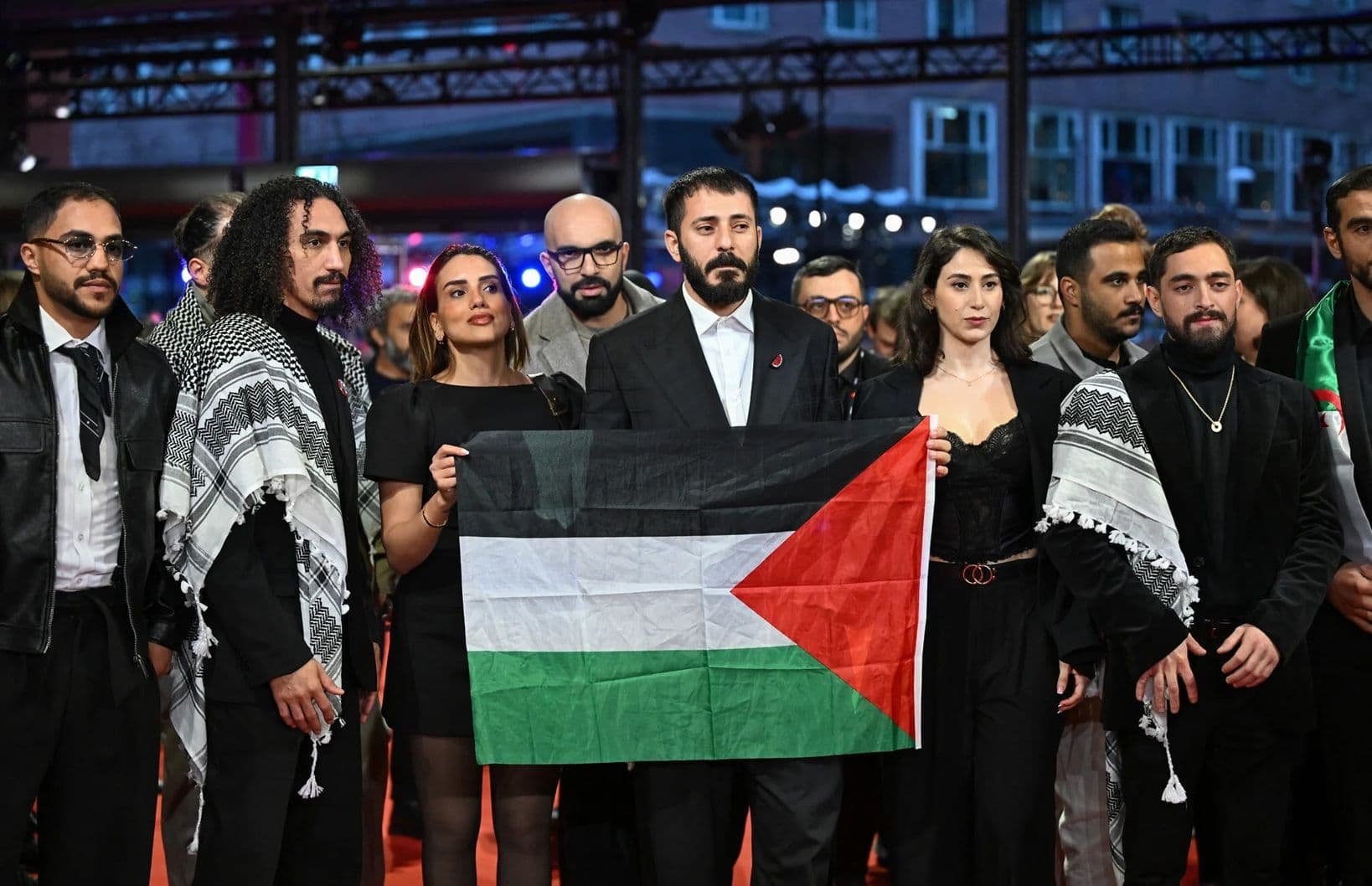
The opening of the 76th Berlinale has ignited significant controversy following comments made by renowned director and jury president Wim Wenders. During a press conference, Wenders stated that “there is no place for politics in art” and urged filmmakers to steer clear of political themes. This statement has been interpreted by many as a call for apolitical art, a notion that clashes sharply with the festival’s historically political character, especially in the context of ongoing global conflicts.
Wenders’ remarks have sparked varied reactions in the public sphere. Notably, acclaimed author Arundhati Roy walked out of the jury in protest, expressing her dismay at his comments. Additionally, the film magazine Variety published an open letter signed by 81 international film professionals, which criticized the Berlinale for its perceived failure to take a clear stance on the conflict between Israel and Hamas. The signatories also accused Wenders of censorship, while festival director Trisha Tait faced backlash from German politicians for not preventing political speeches during the event, leading to calls for her resignation.
This “Berlin earthquake” has reignited a longstanding debate regarding the separation of aesthetics from ethics in art. It raises questions about whether artists can afford to maintain neutrality in a world rife with injustice. To gain perspective on this issue, we spoke with several Montenegrin creators: director Gojko Berkuljan, visual artist Luka Lagator, and film critic and selector of UnderhillFesta Vuk Perovic.
Berkuljan noted that Wenders’ comments were taken too literally and criticized the director for failing to recognize the inherent political nature of art. He suggested that Wenders, in attempting to be “politically correct,” inadvertently contradicted himself. “Art is fundamentally about understanding human problems,” Berkulan stated. He emphasized that while Wenders may have intended to refer to a narrow definition of politics, the broader societal implications of art make it impossible to separate the two.
According to Berkuljan, politics in its broader sense encompasses all social causations and interactions. He argued that Montenegrin art is deeply socially engaged, with music, theater, and literature often reflecting societal issues. “Every film produced in recent years in Montenegro addresses social phenomena such as consumerism, social stratification, and ecological problems,” he said. He emphasized that these works do so through individual stories, giving them a human dimension that transcends mere political analysis.
Lagator echoed Berkuljan’s sentiments, analyzing the global political landscape and expressing a desire for art to remain distanced from politics. He remarked, “While it is legitimate to want art to be separate from politics, it’s unrealistic to suggest that it should be completely removed from it.” He described the artist as someone who must respond to societal events, and failing to do so would diminish the credibility of their work.
Lagator highlighted the achievements of Montenegrin artists, particularly in visual arts and film. He mentioned the international recognition of Montenegrin caricaturists and filmmakers as evidence of a vibrant artistic community. While he personally does not engage in political activism, he maintains that art should provoke thought and dialogue rather than serve as a vehicle for antagonism.
Perovic, like his peers, criticized Wenders’ statement as clumsy. He pointed out that Wenders has a long history of engaging with political issues through his films. “The festival has always been proud of its political stance,” Perovic noted, adding that Wenders’ comments have spurred necessary conversations about the relationship between art and politics. He observed that many filmmakers at this year’s Berlinale felt compelled to address global political situations in their work.
In light of the tensions surrounding the festival, Perovic noted that the German government attempted to hold Tait accountable for the political content of speeches during the closing ceremony, where several filmmakers voiced pro-Palestinian views. This incident demonstrates the complex interplay between politics and art, highlighting the challenge of maintaining artistic autonomy in a politically charged environment.
Berkuljan also reflected on how the surreal political climate in Montenegro has influenced his work. He explained that two of his three feature films contain elements of political thrillers, illustrating how the chaotic political landscape has become a source of inspiration. “In a world where reality often surpasses fiction, it is crucial to find ways to shape that chaotic reality into narratives that resonate with audiences,” he explained.
The unfolding debate at Berlinale underscores the inextricable link between art and politics, challenging creators to navigate their roles in a world filled with injustice. The question remains: can one truly create art that is free from the influence of political realities? The voices from the Montenegrin arts community suggest that such a separation may be an unattainable ideal, urging creators to engage with the world around them through their work.