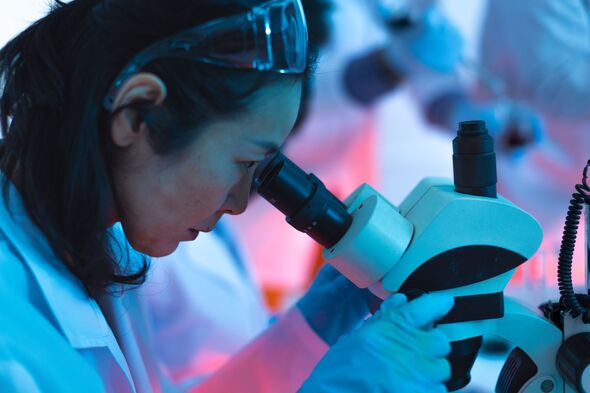
A remarkable discovery has emerged from the depths of a laboratory at the oldest university in the United States, William & Mary. Biology Professor Jon Allen has identified the world’s oldest ribbon worm, a creature named Baseodiscus the Eldest, affectionately referred to as “B.” This unexpected find highlights the potential for significant scientific breakthroughs in the study of invertebrates.
The ribbon worm, residing in a tank filled with mud in Allen’s lab, has garnered attention not only for its age but also for the implications of its discovery. Allen’s passion for invertebrates led him to this moment, marking another instance where scientific discovery occurred by chance. The creature’s age adds a new chapter to the history of the species, which is known for its remarkable resilience and adaptability.
Baseodiscus the Eldest is believed to be significantly older than many of its counterparts, with estimates suggesting it could be over 100 years old. This remarkable lifespan raises questions about the biological mechanisms that allow such longevity in ribbon worms. Understanding these processes could shed light on similar phenomena in other species, potentially offering insights into aging and longevity more broadly.
The discovery has sparked interest within the scientific community, drawing attention to the importance of preserving biodiversity and studying lesser-known organisms. Allen emphasizes the need for continued research in this area, as many invertebrates remain understudied and could hold secrets to understanding ecological balance and health.
Invertebrates like ribbon worms play a crucial role in their ecosystems, often serving as indicators of environmental health. Their resilience can teach scientists about adaptation and survival in changing conditions. As research continues, the findings related to B may contribute to broader ecological studies and conservation efforts.
The story of Baseodiscus the Eldest serves as a reminder of the wonders that can be found in our natural world. William & Mary continues to be a beacon of research and discovery, demonstrating that sometimes the most significant breakthroughs arise from the simplest of observations. With Allen leading the charge, the university remains at the forefront of biological research, exploring the mysteries of life, one organism at a time.