Researchers have made significant strides in understanding how twisted light-matter systems can give rise to unusual topological phenomena. This groundbreaking discovery, published on October 12, 2023, highlights the potential for these properties to remain stable even when materials undergo deformation, such as stretching or bending.
Topological properties are essential characteristics that define the behavior of materials under various conditions. They play a crucial role in the emergence of unique physical effects that can be observed in specific systems. This new research reveals that by manipulating the interaction between light and matter, scientists can unlock new states of matter that were previously thought to be unattainable.
Understanding Topological Properties
Topological properties are defined by their resilience; they do not change even when a material is altered. This stability can lead to significant implications in areas such as quantum computing and materials science. The ability to maintain these properties under various conditions opens up new avenues for innovation.
According to the research team from the University of California, these twisted light-matter systems can exhibit a range of behaviors that challenge previous understandings. The findings suggest that the interplay between light and matter can create new topological states, which could lead to advancements in technology that rely on these properties.
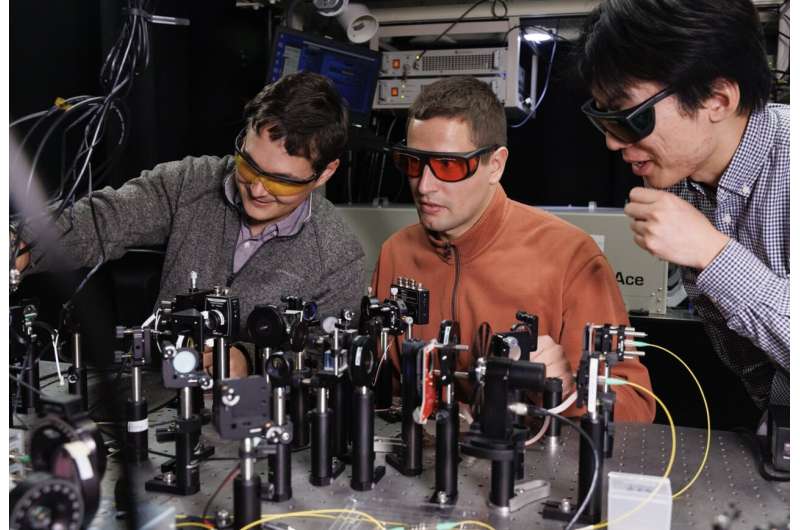
The researchers conducted a series of experiments to observe how these twisted systems behave under different physical conditions. The results demonstrated that certain configurations could lead to the emergence of new topological phenomena, paving the way for further exploration in this field.
Implications for Future Research
The implications of these findings extend beyond theoretical discussions. The discovery of new topological states could influence the design of future materials with enhanced properties for use in electronics and other technologies. By harnessing these unusual phenomena, researchers may be able to create systems that are more efficient, stable, and adaptable.
As scientists continue to investigate the complexities of twisted light-matter systems, the potential applications remain vast. The research opens up the possibility for developing new technologies that leverage these unique properties, which could have far-reaching effects across multiple industries.
In conclusion, the study of twisted light-matter systems reveals exciting opportunities for understanding and utilizing topological properties. As researchers delve deeper into these phenomena, the future holds promise for innovations that could transform our approach to materials science and technology.