Teleportation of quantum data has transitioned from theory to reality, thanks to a groundbreaking experiment conducted by researchers at Oxford University in February 2025. For the first time, the team successfully demonstrated the transfer of quantum information between two independent quantum processors using a phenomenon known as quantum entanglement. This achievement signifies a pivotal moment in the field of quantum computing.
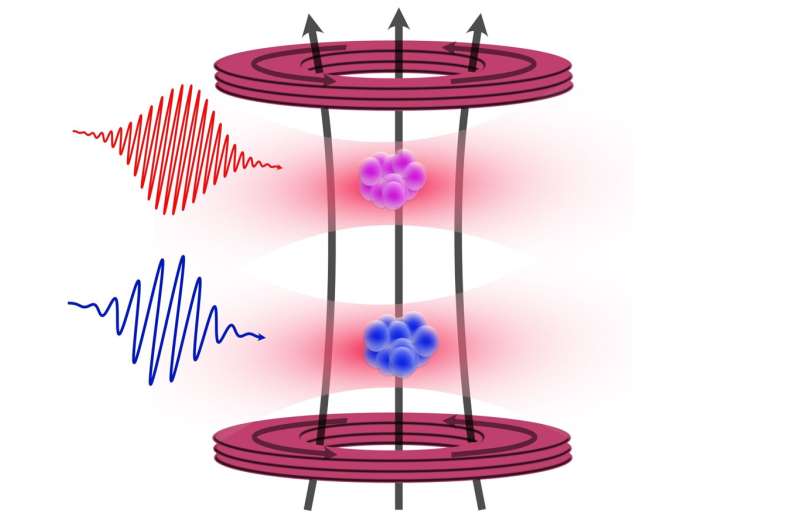
The Oxford researchers aimed to showcase a practical application of quantum teleportation, moving beyond the theoretical underpinnings that have long fascinated scientists. Their experiment builds on previous work, which included transferring a quantum algorithm known as Grover’s algorithm between two processors. By programming and entangling the processors, the team was able to execute operations as a cohesive unit, establishing a new benchmark in the realm of quantum computing.
This recent advancement marks the first instance of teleportation between fully functional quantum computers, as opposed to merely single particles. The implications of this breakthrough are profound, suggesting a future where data transfer and internet connectivity may be revolutionized. The concept of a quantum internet could emerge, characterized by super-fast, secure data transmission that transcends current limitations.
To understand the significance of this development, it is essential to grasp the fundamental differences between classical computers and quantum computers. Traditional devices operate using bits, which represent binary states of 0 or 1. In contrast, quantum computers utilize quantum bits (qubits), which can exist in a state of superposition—meaning they can hold both 0 and 1 simultaneously until measured. This unique property allows qubits to become entangled, linking their states in a way that transcends physical distance.
During the teleportation process, researchers measure the state of the first qubit. This measurement, combined with signals sent to the second computer, enables the second qubit to adopt the same state. Although the original qubit’s information is technically destroyed and re-created in the second processor, the term “teleportation” is used to describe this phenomenon due to its unique nature.
Unlike typical wireless communications, which transmit physical signals carrying bits from one device to another, quantum teleportation allows for the instantaneous transfer of quantum states without the need for physical travel. In the Oxford demonstration, the first qubit’s state vanished in one location and reappeared in another, illustrating the power of quantum entanglement.
It is important to note that while no physical particle traveled between the two computers, the researchers still needed to measure the initial qubit and send classical signals to facilitate the recreation of its state in the second qubit. This process ensures that any attempt to eavesdrop or intercept the entangled link would disturb the quantum state, alerting the researchers to the intrusion.
The successful teleportation of quantum data represents a significant leap in scientific research. It lays the groundwork for quantum computers that could operate at speeds up to 20,000 times faster than conventional computers, seamlessly collaborating across the globe. Additionally, this advancement paves the way for more secure networks, forming the backbone of a true quantum internet.
As the field of quantum computing continues to evolve, the work undertaken by the Oxford University team will undoubtedly influence future research and applications, driving the technology toward unprecedented levels of performance and security.