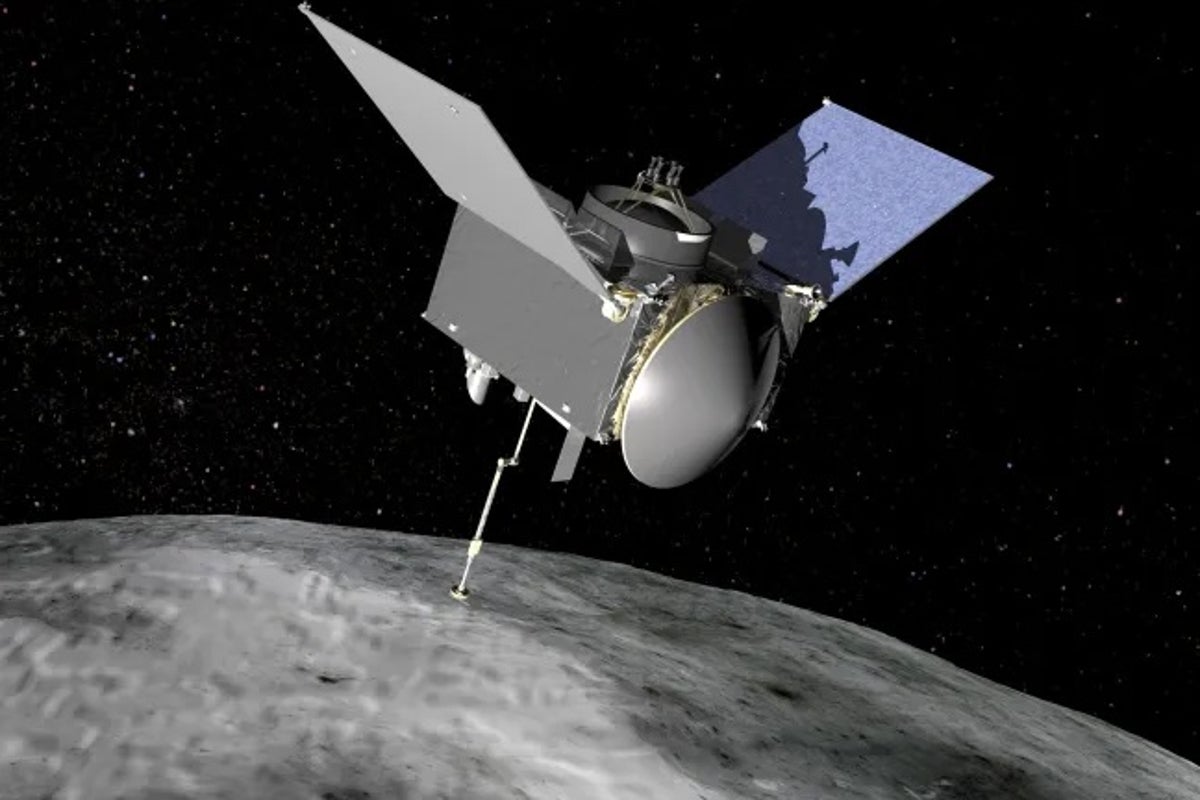
NASA has made a groundbreaking discovery by finding essential sugars on the ancient asteroid Bennu, which dates back approximately 4.6 billion years. In samples collected by the OSIRIS-REx spacecraft in 2020, scientists identified glucose, a vital energy source for humans, and ribose, a key component of RNA. This significant finding, announced on October 3, 2023, marks the first time ribose has been detected in an extraterrestrial sample.
Although these sugars do not confirm the existence of extraterrestrial life, they suggest that critical ingredients for life’s chemistry are prevalent throughout the solar system. The OSIRIS-REx spacecraft, which launched in 2016 and returned to Earth in 2023, collected samples from the 1,600-foot-wide asteroid, which was discovered by scientists in New Mexico in 1999 and is currently orbiting approximately 160 million miles from Earth.
Significance of Ribose and Sugars in Astrobiology
Dr. Yoshihiro Furukawa from Tohoku University in Japan noted, “All five nucleobases used to construct both DNA and RNA, along with phosphates, have already been found in the Bennu samples brought to Earth by OSIRIS-REx.” The discovery of ribose indicates that all components necessary to form RNA molecules are present on Bennu.
Earlier in 2023, NASA reported signs of past microbial life in samples from Mars, underscoring the importance of exploring our solar system for traces of life. Although ribose was previously detected in meteorites recovered on Earth in 2019, the absence of deoxyribose, another crucial sugar foundational to DNA, raises intriguing questions about the origins of life. The findings suggest that ribose may have been more abundant than deoxyribose in early solar system environments, supporting the theory that early life forms relied on RNA for survival.
Dr. Furukawa elaborated, “Present-day life is based on a complex system organized primarily by three types of functional biopolymers: DNA, RNA, and proteins. However, early life may have been simpler.” This insight opens new avenues for understanding the evolution of life on Earth.
Mysterious Discoveries and Their Implications
In addition to sugars, researchers discovered an unusual substance described as “space gum” in Bennu’s samples. This translucent, rubber- and plastic-like material has never been observed before in extraterrestrial rocks. NASA suggests that this ancient substance may have played a role in the development of life on Earth and was likely formed during the early days of the solar system’s formation.
The larger parent asteroid from which Bennu originated consisted of materials from the primordial cloud of gas and dust that eventually created our solar system. Previous research indicated that this parent asteroid underwent various chemical processes involving heat and water during its formation. As it warmed due to radiation, a compound known as carbamate emerged, which subsequently reacted with other molecules to create the flexible “gum” found in the samples.
“This strange substance represents, quite possibly, one of the earliest alterations of materials that occurred in this rock,” said Dr. Scott Sandford, a research scientist at NASA’s Ames Research Center. “On this primitive asteroid that formed in the early days of the solar system, we’re looking at events near the beginning of the beginning.”
The discoveries made by NASA not only enhance our understanding of the origins of life but also emphasize the potential for similar building blocks to exist elsewhere in the universe. As research on Bennu continues, the implications for astrobiology and the search for life beyond Earth remain profound.