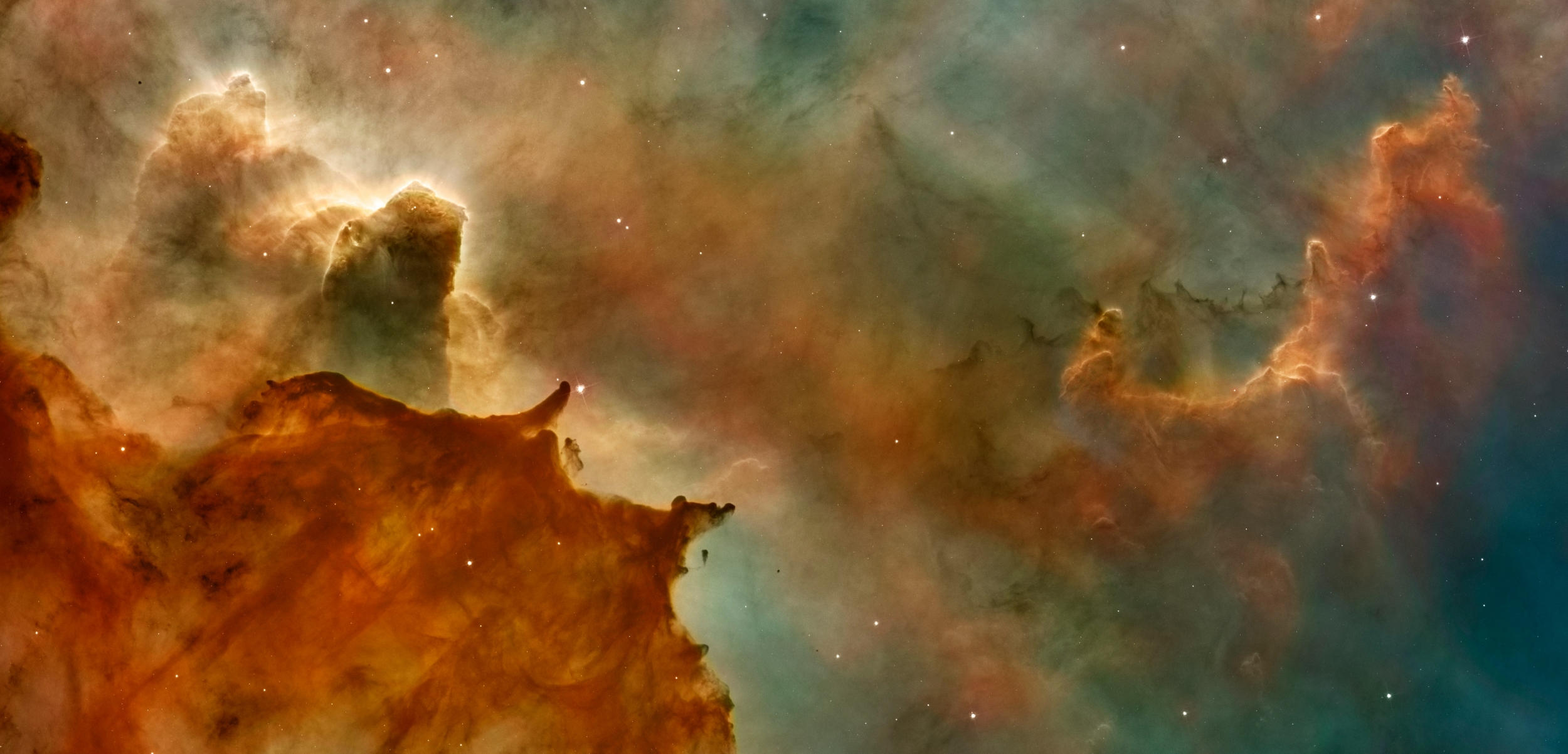
The **James Webb Space Telescope (JWST)** continues to revolutionize our understanding of the universe with its breathtaking imagery and advanced capabilities. By capturing stunning infrared photographs, JWST reveals structures and phenomena that were previously obscured to astronomers. The telescope’s observations provide insights into galaxies that are approximately **13.5 billion years old** and unveil stellar nurseries with remarkable detail.
JWST’s powerful **6.5-meter mirror** and sophisticated infrared sensors deliver visuals that surpass traditional space imagery, showcasing a universe filled with gas pillars, gravitational lenses, and newborn stars. These images not only serve scientific purposes but also evoke a sense of wonder about the vastness and mystery of the cosmos.
Highlighting the Best of JWST’s Imagery
Among its most iconic captures, **SMACS 0723** stands out. This image is JWST’s ultra-deep field, unveiling thousands of galaxies in a patch of sky no larger than a grain of sand held at arm’s length. The galaxy cluster acts as a natural telescope, magnifying background objects due to its gravitational lensing effect. It remains the deepest infrared view ever captured, making it a significant achievement in the telescope’s early showcase.
In addition, the **Pillars of Creation** have taken on new life through JWST’s lens. This image highlights vibrant colors, revealing not just silhouettes but also gas filaments and shockwaves within towering dust pillars. Located **6,500 light-years away**, this image documents the ongoing cycle of star formation and destruction.
Another remarkable photograph from JWST captures the **Carina Nebula**, where boiling gas and radiation sculpt intricate shapes across hundreds of light-years. The sharp contrast in this image outlines protostars ejecting high-speed jets, showcasing the dynamic processes occurring in this stellar environment.
Exploring Galactic Collisions and Planetary Details
JWST’s capabilities extend beyond distant galaxies to illustrate events closer to home. The telescope’s image of **Stephan’s Quintet** depicts five galaxies engaged in an intergalactic dance about **40 million light-years** away. This striking visual captures the shockwaves generated as these galaxies collide and merge, highlighting the violent processes that shape galaxies, including our own.
The telescope’s observations of **Jupiter** have also captivated scientists. JWST reveals intricate atmospheric layers beneath the planet’s thick clouds. The Great Red Spot appears particularly striking in infrared, glowing with ammonia ice crystals. The telescope’s clarity also captures Jupiter’s rings, small moons, and surrounding auroras, offering a glimpse of **Europa**, a moon believed to harbor a subsurface ocean.
JWST’s images of **Pandora’s Cluster**, a massive megacluster, illustrate how the combined gravity of multiple clusters bends spacetime. This phenomenon creates gravitational arcs that magnify distant galaxies, revealing structures previously unseen. The image showcases galaxies more than **12 billion light-years** away, demonstrating the telescope’s ability to utilize gravitational lensing as a powerful scientific tool.
The **Tarantula Nebula**, known as the largest and most active star-forming region near the Milky Way, is another highlight. JWST captures this nebula in stunning detail, revealing hollowed-out stellar nurseries where young stars create massive cavities in surrounding gas. The intricate filaments visible in the image indicate ongoing star formation, marking it as one of the clearest observations of a cosmic factory producing massive stars.
The ongoing releases of JWST’s visuals reshape humanity’s understanding of the universe. They capture galaxies, nebulae, and cosmic structures with unparalleled clarity. Each image allows astronomers to peer back into the earliest eras of the universe, uncovering objects that formed only a few hundred million years after the **Big Bang**.
JWST is not merely an upgrade over its predecessor, the **Hubble Space Telescope**; it represents a transformational leap in astronomical research. As the telescope continues to unveil the hidden architecture of the cosmos, it opens new avenues for exploration, revealing that the universe still holds countless mysteries waiting to be discovered.
In summary, the images produced by the James Webb Space Telescope provide a vivid glimpse into the universe’s workings, from star nurseries bursting with newborn stars to gravitational lenses distorting the light from ancient galaxies. As scientists analyze these visuals, they gain invaluable insights that will undoubtedly deepen our understanding of the cosmos for years to come.