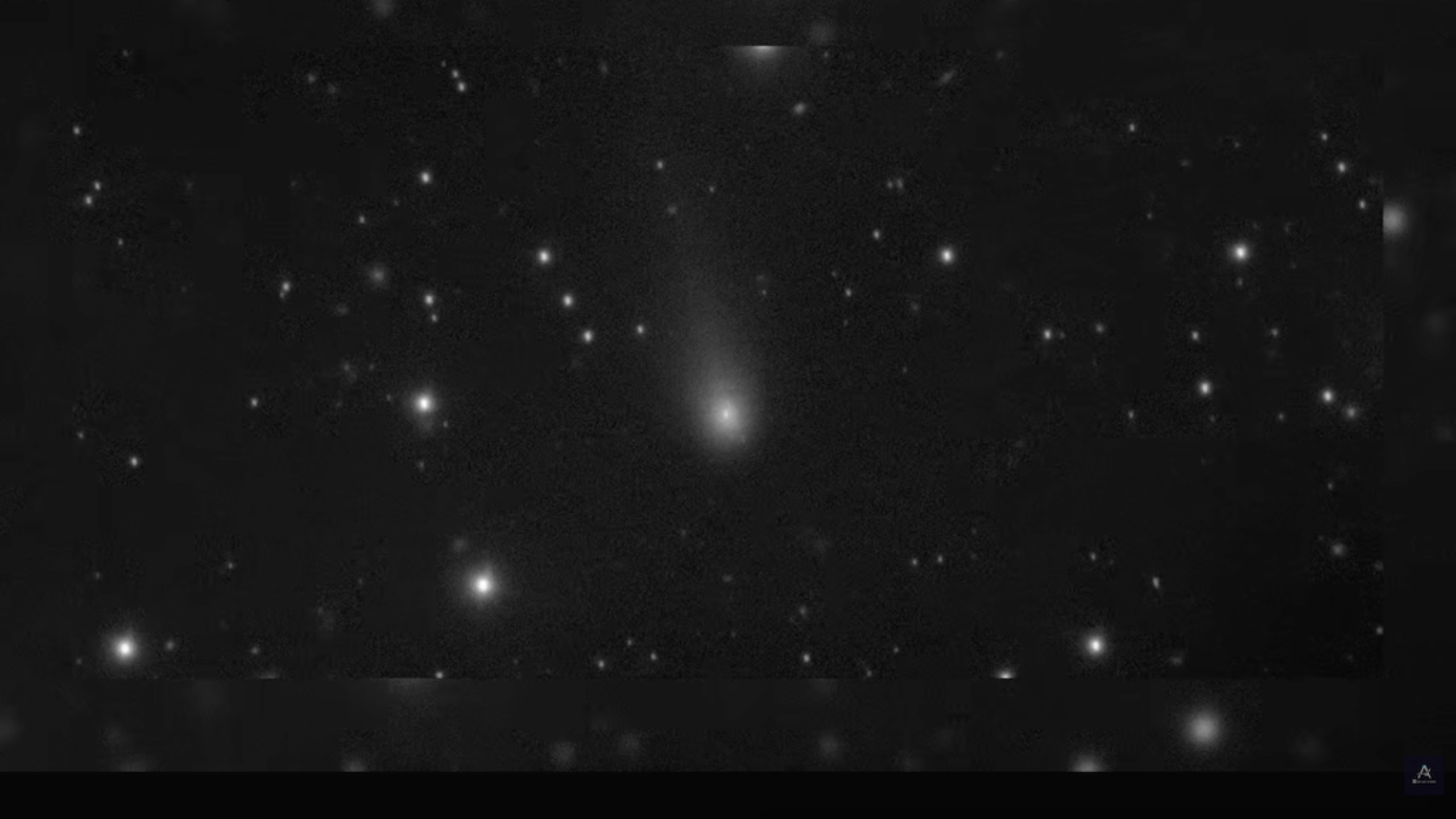
A newly identified interstellar object, designated 3I/ATLAS, has captured both scientific interest and public attention following its recent observations. This celestial body is the third confirmed interstellar object to travel through our solar system, following the famous ‘Oumuamua and 2I/Borisov. Despite rising speculation regarding its trajectory, scientific data confirms that 3I/ATLAS is on a hyperbolic path, indicating it originated from outside our solar system and will soon exit, never to return.
3I/ATLAS was initially detected on July 1, 2025, and its trajectory has been meticulously tracked by numerous international observatories, including the NASA network and the Asteroid Terrestrial-impact Last Alert System (ATLAS). The object reached its closest approach to Earth on December 19, 2025, coming within approximately 1.8 astronomical units—about 170 million miles or 270 million kilometres—a distance well outside Earth’s orbit.
Scientific Observations and Composition
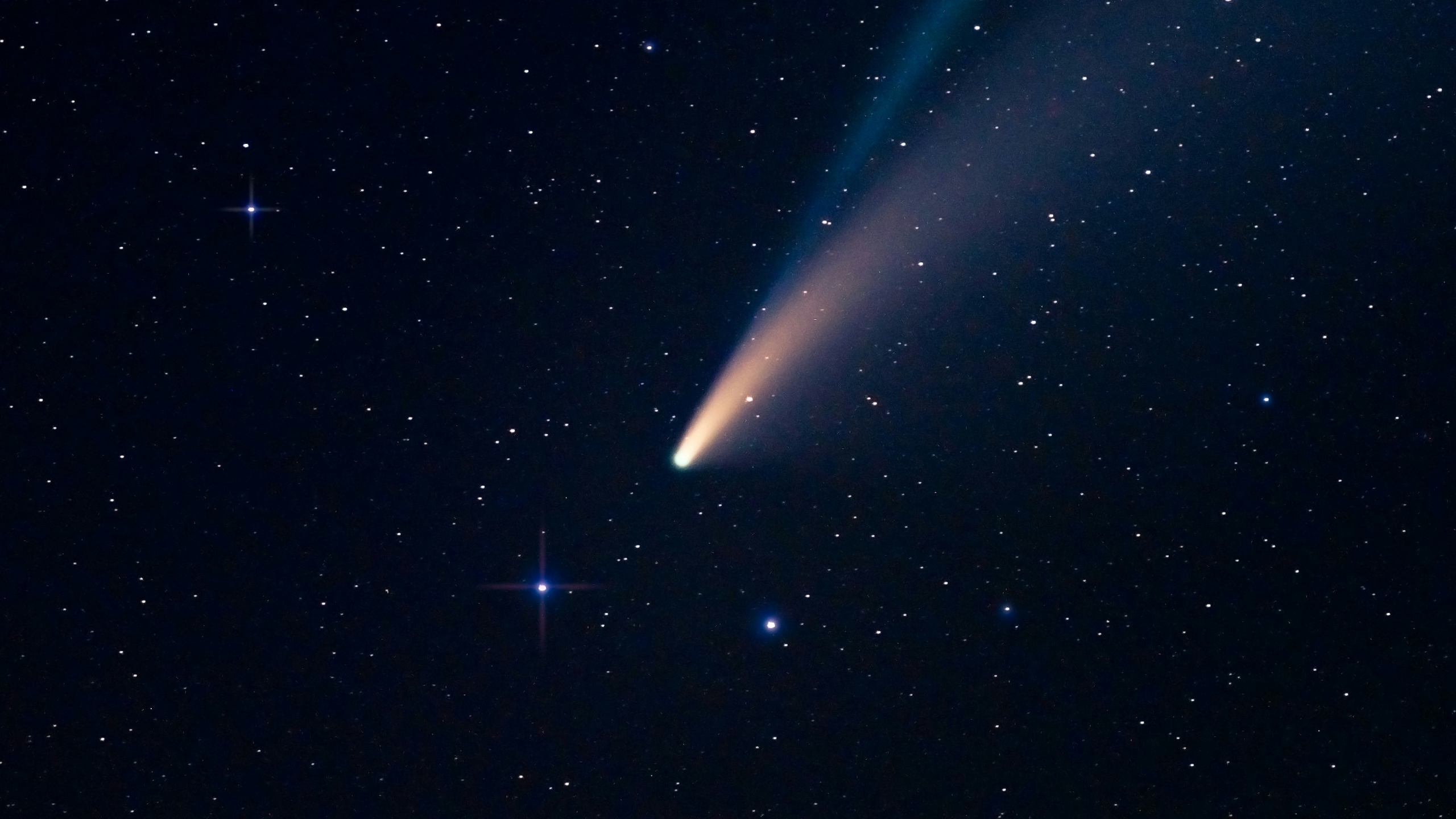
The James Webb Space Telescope and other NASA instruments have provided high-resolution images of 3I/ATLAS, revealing a comet-like coma and a tail composed primarily of gas and dust. These features are characteristic of icy bodies that vaporize when exposed to solar radiation. Analysis has shown that the coma is dominated by carbon dioxide (CO2), with traces of water and carbon monoxide, indicating its primitive cometary structure.
Despite its interstellar origin, scientists assert that 3I/ATLAS poses no danger to Earth. The object’s trajectory and physical properties align with natural comet behavior, with no credible evidence suggesting it is maneuvering or exhibiting controlled actions. Notably, orbital measurements indicate that any non-gravitational acceleration is consistent with the typical outgassing observed in other comets.
Public Speculation and Misunderstandings
Despite the scientific consensus, speculation surrounding 3I/ATLAS has proliferated, particularly on social media platforms. Some narratives suggest that the object could be alien technology or potentially on a collision course with Earth. These theories gained traction following interviews with Avi Loeb, a Harvard astrophysicist who has expressed concerns about anomalies in the object’s behavior and alleged NASA’s withholding of certain images from the Mars Reconnaissance Orbiter.
While Loeb’s comments have sparked discussion, they remain speculative and lack support from primary scientific sources. Independent experts in planetary science emphasize that the claims regarding 3I/ATLAS do not align with peer-reviewed data or mission logs. Reports of pulsing signals or unusual behaviors have not been corroborated by any verifiable measurements.
The fascination with interstellar objects like 3I/ATLAS stems from their rarity and the insights they provide into the formation of planetary systems beyond our own. As 3I/ATLAS continues on its journey, it represents a unique opportunity for scientists to study materials shaped in a distant stellar nursery.
As our understanding of 3I/ATLAS evolves, one fact remains clear: this interstellar visitor will soon exit our solar system, never to return, allowing scientists to analyze the data collected during its brief encounter with our celestial neighborhood.