A captivating lecture on polar exploration, titled “A History of Polar Exploration in 50 Objects,” was held at the Guildhall Arts Centre in Grantham on February 25, 2024. The event, presented by historian Anne Strathie, brought to life the legacy of explorers such as Captain James Cook, Ernest Shackleton, and Roald Amundsen through a unique collection of historical artefacts.
Exploring the History Through Artefacts
Strathie’s lecture began with a focus on Cook’s pioneering circumnavigations, setting the stage for a discussion on subsequent expeditions to the polar regions. The presentation featured a diverse array of objects associated with these journeys, ranging from navigational tools like compasses to significant items such as a ship’s bell. Strathie also touched on more unusual artefacts, including a whaling lookout and a tin of canned meat that had been consumed over two decades after its packaging.
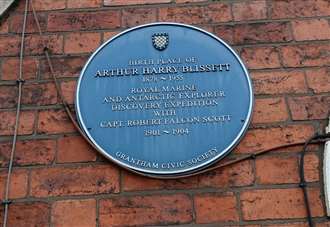
The informative nature of the talk was enhanced by the inclusion of audience interaction. Strathie engaged attendees by inviting them to share their own experiences in the polar regions. Many were eager to discuss their own connections to the history being presented. Notably, Grantham resident John Aldous contributed to the conversation by mentioning Arthur Blissett, a Royal Marine who volunteered for Scott’s British Antarctic Expedition. Aldous noted that Blissett has a blue plaque commemorating his service, placed by the Grantham Civic Society on Manthorpe Road.
Strathie expressed enthusiasm about learning more on Blissett, indicating her intent to explore this local historical figure further. Her lecture built upon previous discussions of polar history, serving as an excellent follow-up to an illustrated account of Shackleton that had taken place at the same venue the previous year.
A Call to History Enthusiasts
The lecture was well attended, drawing a crowd eager to delve into the fascinating narrative of polar exploration. For those who could not attend, the book accompanying the lecture, titled “A History of Polar Exploration in 50 Objects,” is available for purchase at the Reading Room, George Centre.
Individuals interested in the rich geographical history of polar expeditions are encouraged to explore further resources available through the Royal Geographical Society at their website, www.rgs.org/join-us. This engaging lecture series serves as a reminder of the enduring appeal of polar exploration and its significant impact on our understanding of the world’s remote frontiers.