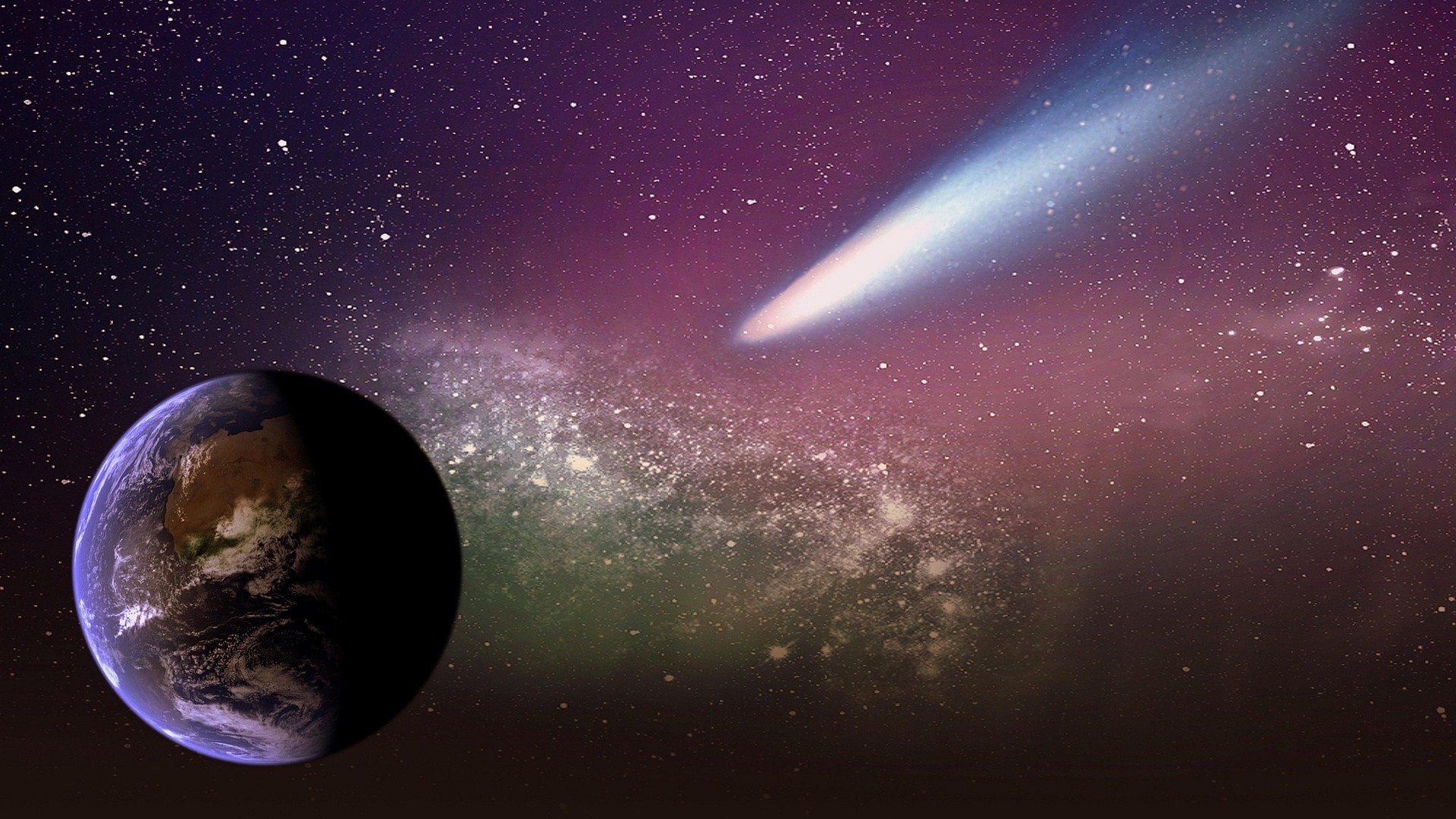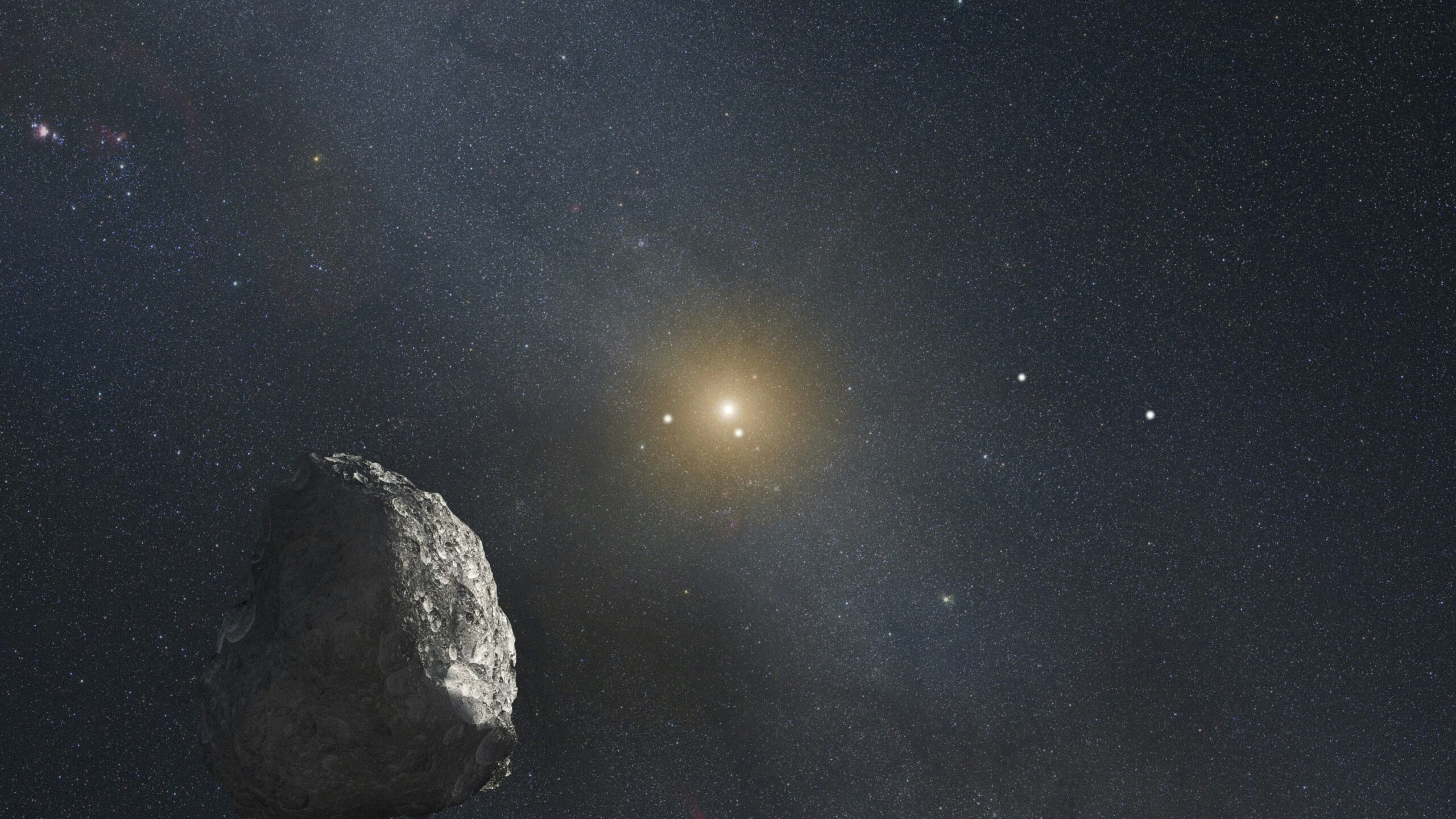
The discovery of interstellar comet 3I/ATLAS has ignited a fierce debate in the scientific community, particularly between those advocating for the existence of intelligent extraterrestrial life and mainstream astronomers. On December 19, 2025, 3I/ATLAS made its closest approach to Earth, travelling at an astonishing speed of approximately 153,000 mph, a velocity that suggests an origin outside our solar system. While many celestial visitors are understood to be remnants from planetary formation, the unusual characteristics of this comet have led to speculation about its nature.
Leading the charge for the extraterrestrial hypothesis is Avi Loeb, a physicist at Harvard University. He has raised concerns regarding the unusual chemical properties of 3I/ATLAS, specifically the presence of nickel and iron atoms in its coma—the envelope of gas and dust surrounding the nucleus. According to Loeb, the temperatures at which such comets are typically observed are too low to vaporize heavy elements, prompting him to suggest that this object could represent a form of alien technology. In a blog post, he stated, “At the distances at which comets are observed, the temperature is far too low to vaporise silicate, sulphide, and metallic grains that contain nickel and iron atoms.”
Despite the captivating allure of Loeb’s claims, NASA has firmly pushed back against the notion of extraterrestrial origins. Agency scientists assert that there is “overwhelming evidence” indicating that 3I/ATLAS is a natural comet. Tom Statler, a lead scientist at NASA, emphasized that the object’s behavior closely resembles that of known comets. “It looks like a comet. It does comet things. It very, very strongly resembles, in just about every way, the comets that we know,” Statler remarked. He acknowledged that while 3I/ATLAS may display some unusual properties, these differences do not necessitate an artificial explanation. “The evidence is overwhelmingly pointing to this object being a natural body. It’s a comet,” he concluded.
The debate surrounding 3I/ATLAS has captured the imagination of both scientists and the public alike. Loeb’s dramatic analogy regarding the potential threat of alien technology adds an element of intrigue. He likened the encounter with interstellar objects to a “blind date of interstellar proportions,” suggesting that one can never be sure whether the visitor is friendly or dangerous.
Following its flyby, 3I/ATLAS is now set on a trajectory that will take it beyond the outer reaches of our solar system. Current models predict that it will pass by Jupiter in early 2026, and it will continue to travel outward, clearing the orbital distances of Saturn, Uranus, and Neptune by 2028. As it moves further away, the comet will eventually drop below the detection threshold of our instruments, retreating into the vast interstellar medium.
In summary, as the scientific community grapples with the implications of 3I/ATLAS, the debate between the possibility of advanced extraterrestrial life and the natural origins of celestial bodies continues to unfold. The coming months may reveal more about this enigmatic interstellar visitor and its place in our understanding of the cosmos.