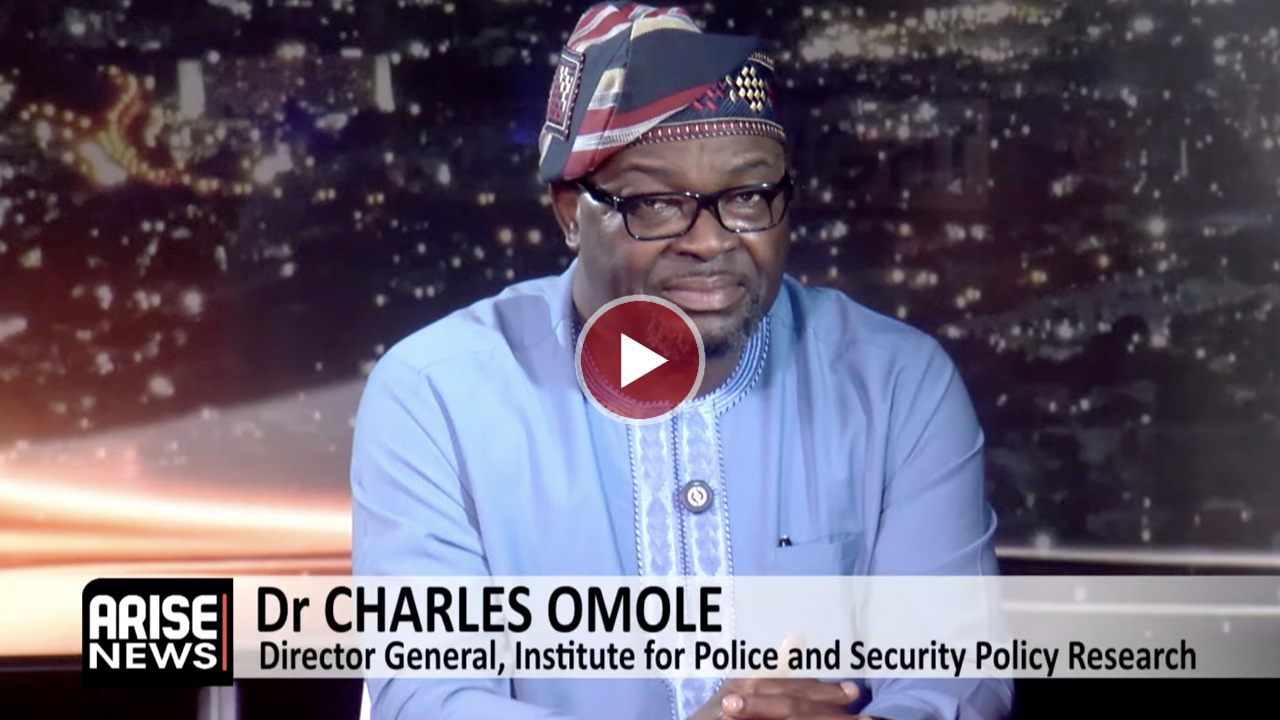
Dr. Charles Omole, the Director-General of the Institute for Police and Security Policy Research, has outlined essential measures needed for successful state policing in Nigeria. In a recent interview with ARISE NEWS, he emphasized that without stringent safeguards, the initiative may struggle to achieve its objectives. His comments follow an appeal from President Bola Tinubu to the Senate, urging them to prioritize constitutional amendments for establishing state police throughout the nation.
Dr. Omole pointed out that the concept of state policing is not new in Nigeria, tracing its history back to colonial times. He noted, “The colonial masters actually started what we call the ‘local native police.’” He further elaborated that until 1960, Nigeria operated under a system that included the Nigeria Police Force, akin to a federal police system.
The discussion around state policing has revealed a split among governors regarding its implementation, largely due to financial implications. Dr. Omole explained that the centralization of police services and prisons in the late 1960s has created a logistical challenge. “If we are going back to state police, states must now establish their own prisons, and it will come at a cost,” he added. Currently, the costs associated with prison management are borne by the Federal Prison Service, making the transition potentially burdensome for state governments.
Establishing Effective State Policing
Dr. Omole identified several critical guardrails necessary for the implementation of state police. He stressed the importance of maintaining a balance to prevent any one group from dominating the police forces at the state level, advocating for the adoption of the Federal Character Principle. “This can be crafted in the laws that are put in place,” he stated.
He suggested that the President should establish an expert panel similar to the one formed for tax reform, noting that the success of that initiative stemmed from having a non-political head. “There has to be uniformity in ranking across the states,” he emphasized, warning against discrepancies that could arise if a sergeant in one state is equivalent to an inspector in another.
In outlining the operational requirements, Dr. Omole highlighted the need for standardized training protocols and equipment across state police forces. He pointed out that interoperability between states is crucial, stating, “We don’t want to have 36 different policing systems in Nigeria and then A can’t talk to B.” The effective storage and sharing of crime data between states must also be established to ensure a cohesive approach to law enforcement.
The Path Forward
While Dr. Omole expressed optimism about the feasibility of state policing, he acknowledged the complex legal landscape that needs to be navigated. He indicated that significant constitutional and legal reforms will be necessary for the transition to state policing, stating, “Change in Constitution, then there are laws that we need to be repealed, there are new laws that we need to be written.”
Given these complexities, he estimated that the establishment of state police may take two to two and a half years to materialize. Dr. Omole’s insights present a comprehensive framework for the necessary steps to implement state policing in Nigeria effectively, highlighting both the potential benefits and the challenges that lie ahead.