Christmas often invites a break from routine, but it also offers a unique opportunity to engage family and friends in fun science experiments. Leading experts have shared various home experiments that can introduce scientific concepts while enhancing holiday cheer.
Engaging the Senses with Flavor Experiments
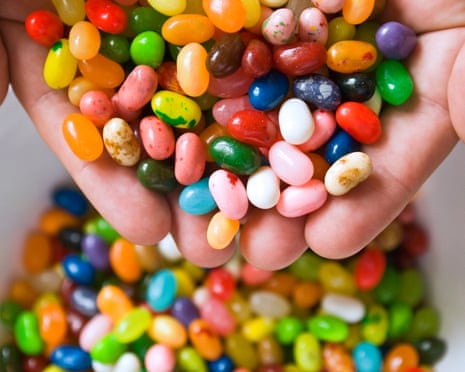
Matthew Cobb, a professor of zoology at the University of Manchester, suggests a simple yet revealing taste test. Using a jellybean, participants should close their eyes and pinch their noses while chewing. Cobb explains that this method typically results in only a vague identification of sweetness. After five seconds, participants can release their noses, triggering a more vivid flavor perception.
Cobb elaborates that a more extreme version involves tasting grated onion and apple under the same conditions. “They should taste the same—until you take your fingers off your nose,” he notes. This experiment highlights the critical role of smell in flavor perception, a finding that gained particular relevance during the first outbreak of Covid-19, when many experienced a temporary loss of smell.
The Social Science of Laughter
With festive crackers being a holiday staple, Sophie Scott, a professor of cognitive neuroscience at University College London, proposes an exploration of humor through laughter. She encourages participants to read jokes aloud in different settings to observe variations in laughter responses.
Scott points out that laughter is largely a social phenomenon. “You are 30 times more likely to laugh if there is someone else with you than if you are on your own,” she explains. Consequently, a joke read alone is less likely to elicit laughter than in the company of friends or family. Understanding this dynamic can add a layer of enjoyment to holiday gatherings.
Exploring Anatomy with Your Christmas Turkey
For those preparing a festive meal, Steve Brusatte, a professor of palaeontology and evolution at the University of Edinburgh, recommends examining the turkey’s anatomy. After cooking, Brusatte encourages families to investigate how the bones fit together. This can provide insights into biomechanics and the movements of flight.
Brusatte recalls a recent Thanksgiving where he demonstrated this to his family. “I got an enormous turkey, cooked it for a few hours, and then showed how the bones move,” he says. Such hands-on learning reinforces understanding through direct observation, making it a memorable experience.
Another expert, Sue Black, a forensic anthropologist at the University of Oxford, suggests boiling the carcass to create a 3D model of the bird’s skeleton. This activity allows families to reconstruct the bird’s anatomy, enhancing their grasp of motion and bodily function.
Creating Ice Cream with Science
Andrea Sella, a professor of inorganic chemistry at University College London, introduces a delectable experiment to make ice cream. The process requires full-fat milk or cream, egg yolks, sugar, and ice. By mixing salt with crushed ice, participants can create a freezing environment that allows the custard mixture to become ice cream almost instantly.
Sella explains that this phenomenon occurs because the dissolved salt prevents the liquid water from refreezing, resulting in a rapid temperature drop. “It’s practical magic—also known as science,” he asserts. This experiment not only produces a tasty treat but also illustrates practical applications of chemical principles.
Mathematical Fun with Buffon’s Pine Needles
For a mathematical twist, Kit Yates, a professor of mathematical biology and public engagement at the University of Bath, shares “Buffon’s Pine Needles.” This activity approximates the value of π using pine needles and a ruled piece of paper.
Participants scatter pine needles on the paper and count how many cross the lines. By applying a specific formula, they can derive an approximation of π. Yates notes, “This demonstrates how π seems to crop up in really unusual places.” It’s a playful way to engage with probability and mathematics during the festive season.
These experiments not only add a layer of scientific inquiry to holiday traditions but also foster engagement and connection among family and friends. The holiday season, often focused on indulgence and relaxation, can also serve as a backdrop for exploration and learning, making it memorable in more ways than one.