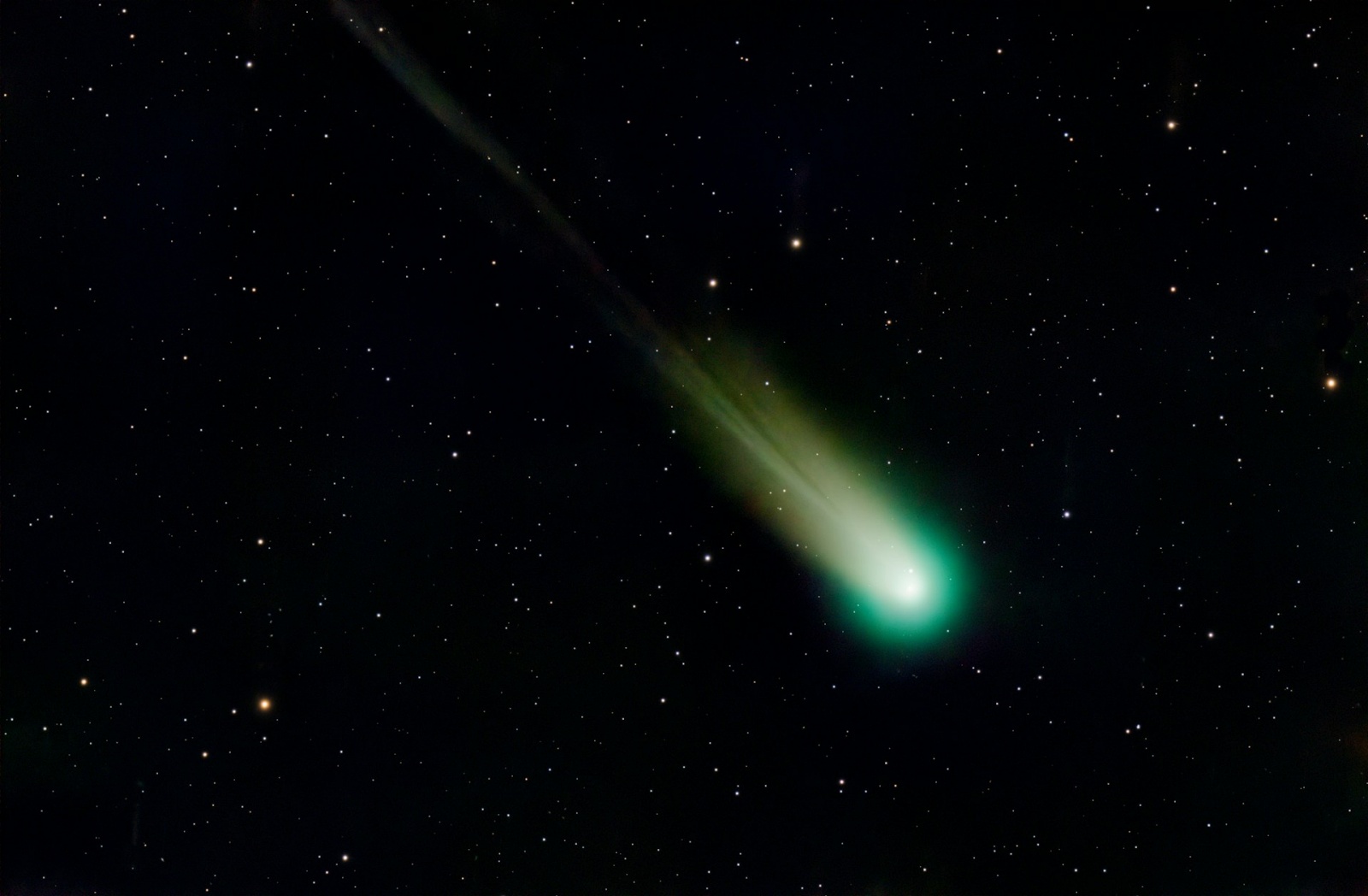
In a remarkable astronomical event, scientists have confirmed the existence of an unusual feature on the interstellar object known as 3I/ATLAS. Discovered in July 2025 by the NASA-funded ATLAS survey telescope, this object is only the third confirmed interstellar body, following 1I/’Oumuamua and 2I/Borisov. What sets 3I/ATLAS apart is not just its origin from beyond our solar system, but the extraordinary anti-tail phenomenon observed by the Hubble Space Telescope.
This anti-tail, which appears to trail towards the sun instead of away from it, has left astronomers puzzled. Typically, cometary tails are pushed away from the sun due to solar wind and radiation pressure. However, 3I/ATLAS defies this convention, exhibiting a tail that seems to fly in the opposite direction as it travels at an astonishing 137,000 miles per hour.
Understanding the Anti-Tail
To grasp the significance of the anti-tail, it is essential to understand the mechanics of cometary tails. Comets are often described as “dirty snowballs,” releasing gas and dust when they approach the sun. This material is swept away by solar forces, creating the iconic comet tail that points away from the sun. In contrast, the anti-tail of 3I/ATLAS is a result of perspective and the object’s unique orbital geometry, rather than a genuine ejection of material towards the sun.
As the comet moves farther from its closest approach to the sun, its dust trail continues along its original path. The size and weight of the dust particles play a crucial role; larger particles are less influenced by solar pressure, causing them to lag behind. Currently, as Earth’s orbit crosses that of 3I/ATLAS, we see this lagging dust appear to project ahead of the comet, creating the illusion of a tail directed towards the sun.
Dr. Robert McNaught from the Australian National University explains, “The anti-tail is merely an optical effect, not a violation of physics, but it requires a very specific set of viewing conditions to be visible.” This phenomenon showcases a fascinating alignment of celestial mechanics, putting Earth in the right spot to witness this cosmic spectacle.
Key Findings from Hubble’s Observations
The observations made by Hubble indicate that 3I/ATLAS will not approach Earth any closer than 170 million miles (270 million kilometers) on December 19, 2025. This ensures that while the object is a captivating sight, it poses no threat to our planet. The distinct nature of the anti-tail suggests that 3I/ATLAS is likely composed of larger, more resilient dust grains than those typically found in solar system comets.
The significance of this discovery extends beyond the visual anomaly. When an interstellar object breaks apart or “outgasses,” it provides scientists with valuable samples from outside our solar system. Hubble’s clear imaging suggests that the icy nucleus of 3I/ATLAS has a diameter of at least 1,400 feet (440 meters), surrounded by a teardrop-shaped dust cocoon. If the dust particles were smaller, solar radiation would push them away more effectively, resulting in a diminished anti-tail effect.
Recent analyses conducted by Dr. Martin Cordiner from NASA have revealed that 3I/ATLAS is venting significant amounts of hydrogen cyanide and an impressive 40 kilograms per second of methanol vapor. This chemical composition differs dramatically from typical comets in our solar system and suggests that the object is transporting essential ingredients for life from another star system.
Implications for Cosmic Understanding
The trajectory of 3I/ATLAS further confirms its non-local origins, as it follows a hyperbolic path that will ultimately eject it from our solar system. This once-in-a-lifetime flyby offers astronomers a unique opportunity to study an alien object without the need for a costly space probe. The data collected from its unusual anti-tail is reshaping our understanding of the diversity within our galaxy and challenging previous assumptions about the composition of comets.
3I/ATLAS serves as a time capsule from a distant star system, pushing scientists to rethink the fundamental aspects of cosmic chemistry and formation. As this interstellar visitor races away, teams at NASA and the European Space Agency (ESA) are working diligently to extract every possible piece of information from its fleeting presence. The findings from 3I/ATLAS may very well provide insights into the building blocks of other planetary systems and illuminate the origins of materials that could support life beyond our own.